

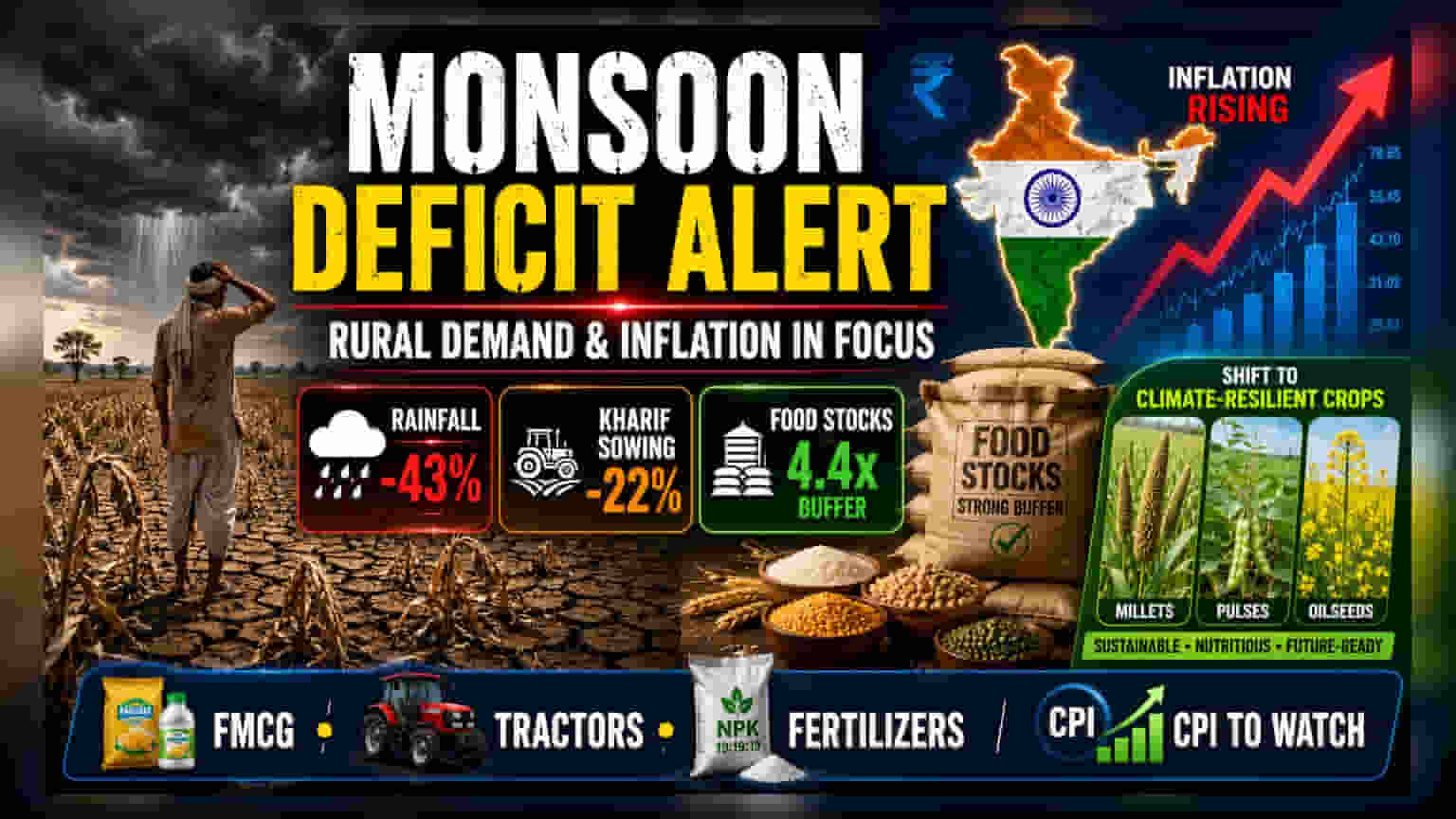
The Finance Ministry has raised alarms over a 43% rainfall deficit, which has led to a 22% drop in Kharif crop sowing. The government is now pushing for a shift toward climate-resilient crops to manage water usage. This development may impact rural demand, agriculture-related sectors, and food inflation, making rainfall progress in July and August a critical monitorable for investors.
What Happened
The Indian Finance Ministry has issued a caution regarding the country’s agricultural sector due to a significant monsoon deficit. As of June, cumulative rainfall was 43% below the long-period average, causing the sowing area for Kharif crops to drop by 22%. While the government maintains that food grain stocks remain robust—currently at 4.4 times the required buffer norms—the ministry is now urging a major policy shift. The government wants to move agricultural pricing and cultivation policies toward climate-resilient crops that require less water, rather than water-intensive ones.
Why This Matters For Investors
The monsoon is a primary driver for the Indian rural economy. When sowing is delayed or reduced, it impacts the entire rural value chain. For investors, this creates three main areas of focus: rural demand, input costs, and food inflation.
First, if agricultural output is lower, rural income suffers. This often leads to a slowdown in demand for consumer goods (FMCG), two-wheelers, and tractors. Companies that rely heavily on rural sales for revenue may face pressure on volume growth.
Second, agriculture-linked companies—such as fertilizer and pesticide manufacturers—may see a shift in demand patterns. If farmers reduce planting, the demand for inputs can fluctuate, depending on whether they switch to shorter-duration or less water-intensive crops.
Third, the government's shift toward climate-resilient crops is a long-term structural change. Companies that supply seeds or processing technology for millets, pulses, or oilseeds may eventually benefit from government support and policy incentives.
The Inflation And Food Security Angle
Food inflation is a key component of India's retail inflation basket. The Finance Ministry’s mention of building water buffers shows the government is focused on managing supply-side risks to keep food prices stable. The fact that food grain stocks are currently 4.4 times above the required limit gives the government a strong cushion to prevent panic in supply chains.
However, the ongoing deficit means that the harvest outcomes later in the year remain uncertain. If rainfall does not improve, the government may need to continue restrictive policies on exports of key staples to prioritize domestic availability, which could affect companies involved in agro-exports.
Global Energy And Cost Factors
The ministry also noted a moderation in crude oil prices, which is a positive sign for the economy. Lower energy costs generally help in keeping logistics and manufacturing expenses in check. This provides some relief against the potential agricultural-related inflationary pressures.
What Investors Should Track Next
The most important monitorable for the market is the progression of rainfall through July and August. These two months are crucial for Kharif crop recovery.
Investors may also watch for:
- Monthly sales volume data from tractor and fertilizer companies to gauge if the planting deficit is impacting their order books.
- Commentary from FMCG companies in upcoming quarterly results regarding rural demand recovery.
- Updates on government policies that may incentivize the shift toward climate-resilient crops, as this could impact specific agro-processing and seed businesses.
- Retail inflation (CPI) data, which will reflect the impact of any supply-side shocks caused by the weather.