

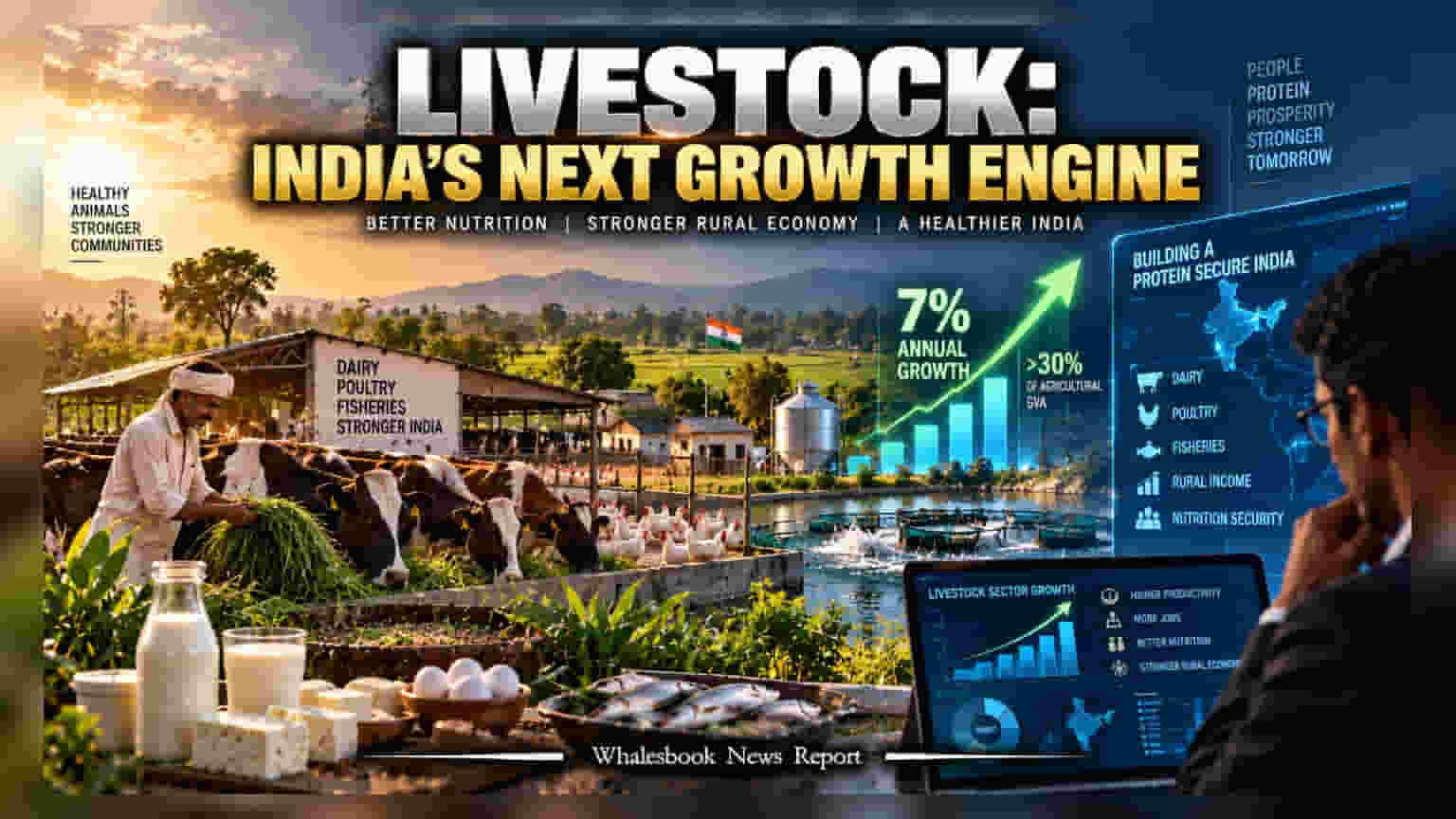
Experts are calling for a structural shift in India's food security policy to prioritize livestock alongside cereal production to bridge protein gaps. With the sector contributing over 30 percent to agricultural GVA, this policy pivot could drive formalization, investment in cold-chain infrastructure, and rural credit expansion. Market observers are tracking whether this leads to enhanced government support for livestock insurance and market stability, which may impact rural agri-business.
The framework of India’s food security strategy has long focused on grain production, a legacy that successfully secured caloric intake following the Green Revolution. However, a growing consensus among policy experts suggests that the current reliance on cereal-centric goals is insufficient to address the nation's persistent protein deficiencies. By integrating livestock assets—including dairy, poultry, and fisheries—into the core food security narrative, the government could address nutritional needs while bolstering rural economic stability.
The livestock sector has been a silent powerhouse of the Indian economy, growing at an annual rate of 7 to 7.4 percent since 2014-15. It currently accounts for more than 30 percent of the agricultural Gross Value Added. Historical success in the dairy industry, most notably through Operation Flood and the cooperative models that boosted per capita milk consumption from 107 grams in 1970 to 459 grams by 2022-23, serves as a blueprint. Proponents argue that applying these cooperative frameworks to other livestock sectors could bridge the protein gap and provide landless households with sustainable income streams.
Despite its growth, the livestock industry operates under significant systemic constraints compared to traditional grain farming. While cereal producers benefit from Minimum Support Prices and established procurement networks, livestock farmers often struggle with high market price volatility and limited access to formal credit. Furthermore, the lack of widespread, affordable insurance makes these small-scale producers highly vulnerable to climate-related disasters, such as floods, which can wipe out livelihoods overnight.
From an economic standpoint, a policy pivot would likely require addressing administrative fragmentation. Currently, responsibilities for animal husbandry, fisheries, and disaster management are often siloed, preventing a cohesive national strategy. Investors and industry stakeholders are monitoring whether future government initiatives will focus on creating robust market infrastructure, streamlining disaster relief for livestock, and encouraging private sector investment in processing and cold-chain logistics.
For the broader agricultural economy, the move toward a livestock-inclusive strategy could spur demand for advanced veterinary services, improved fodder management, and financial products tailored to rural livestock owners. The primary monitorable for the coming quarters will be any budgetary allocations or legislative changes that aim to bring livestock production under a structured support framework similar to the one currently enjoyed by the grain sector.