

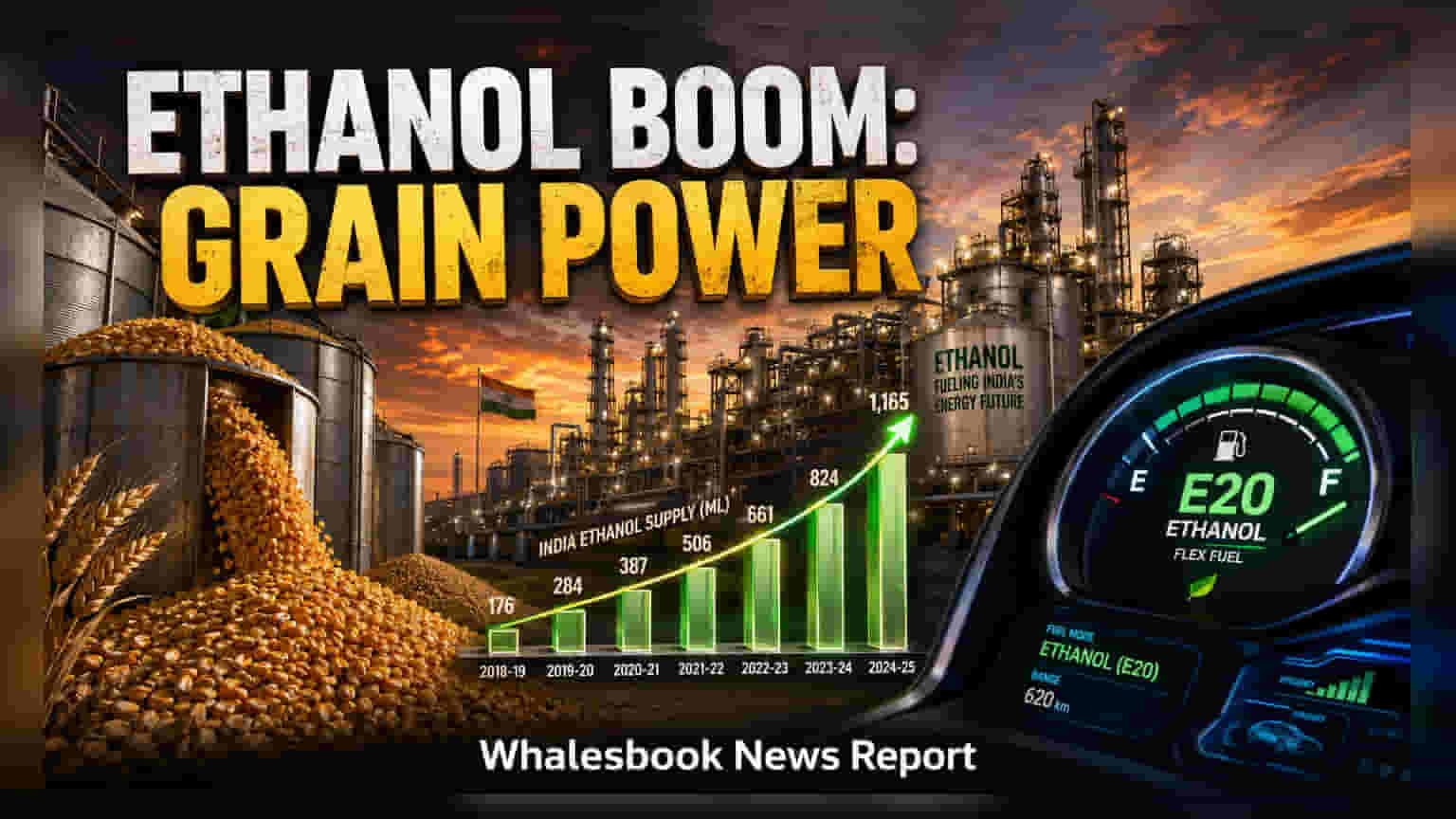
India's ethanol production has surpassed 800 crore litres for the 2025-26 supply year. Grain-based feedstocks like maize and FCI grains now account for 76% of output, highlighting a shift away from sugarcane. For investors, this diversification manages feedstock risks but introduces new variables regarding profit margins and raw material costs.
India has reached a key milestone in its biofuel roadmap, with cumulative ethanol supplies surpassing the 800-crore-litre mark for the 2025-26 Ethanol Supply Year (ESY). This production capacity demonstrates the industry's ability to scale rapidly to meet national blending targets. However, for investors and market watchers, the most significant development is the dramatic shift in the production mix, with grain-based feedstocks now firmly taking the lead.
In July, grain-based feedstocks contributed roughly 76% of the total monthly ethanol output, while sugarcane-derived production fell to approximately 24%. This is a clear departure from historical trends where sugarcane molasses provided the bulk of the ethanol supply. The industry is increasingly relying on maize and surplus grains from the Food Corporation of India (FCI), which together accounted for the majority of the grain-based supply in July.
This feedstock shift is driven by the economics of the sugar market. When domestic sugar prices rise, sugar mills often find it more profitable to produce sugar for the market rather than diverting juice or molasses to create ethanol. By leveraging grain-based production, distilleries are effectively diversifying their feedstock sources, which helps them maintain production levels regardless of the sugar cycle. This move is crucial given that India’s total annual distillation capacity has now reached approximately 2,019 crore litres.
For investors, this transition carries both opportunities and risks. The primary challenge lies in profit margins. While grain-based production offers a hedge against the seasonality of sugar, it introduces exposure to the volatility of grain prices. If the procurement prices paid by Oil Marketing Companies (OMCs) for ethanol remain fixed, but the costs of maize or other grains spike, distillery margins could come under pressure. Companies with backward integration or long-term grain procurement contracts may be better positioned to manage these cost fluctuations than those relying on spot market purchases.
Environmental and resource constraints also remain a factor for the long term. The water-intensive nature of grain-based ethanol production is drawing greater attention, and any shift in government policy regarding water usage or grain allocation for fuel could impact operational costs. Additionally, the success of this capacity expansion relies heavily on steady demand, specifically the adoption of E20 blending—petrol with 20% ethanol—and the rollout of Flex-Fuel vehicles.
Investors monitoring this sector should track three main areas: the stability of ethanol procurement pricing, the trend in domestic maize and grain prices, and the pace of Flex-Fuel vehicle adoption. These factors will determine whether the current surge in production translates into sustainable long-term profitability for the distillery and sugar industries.