

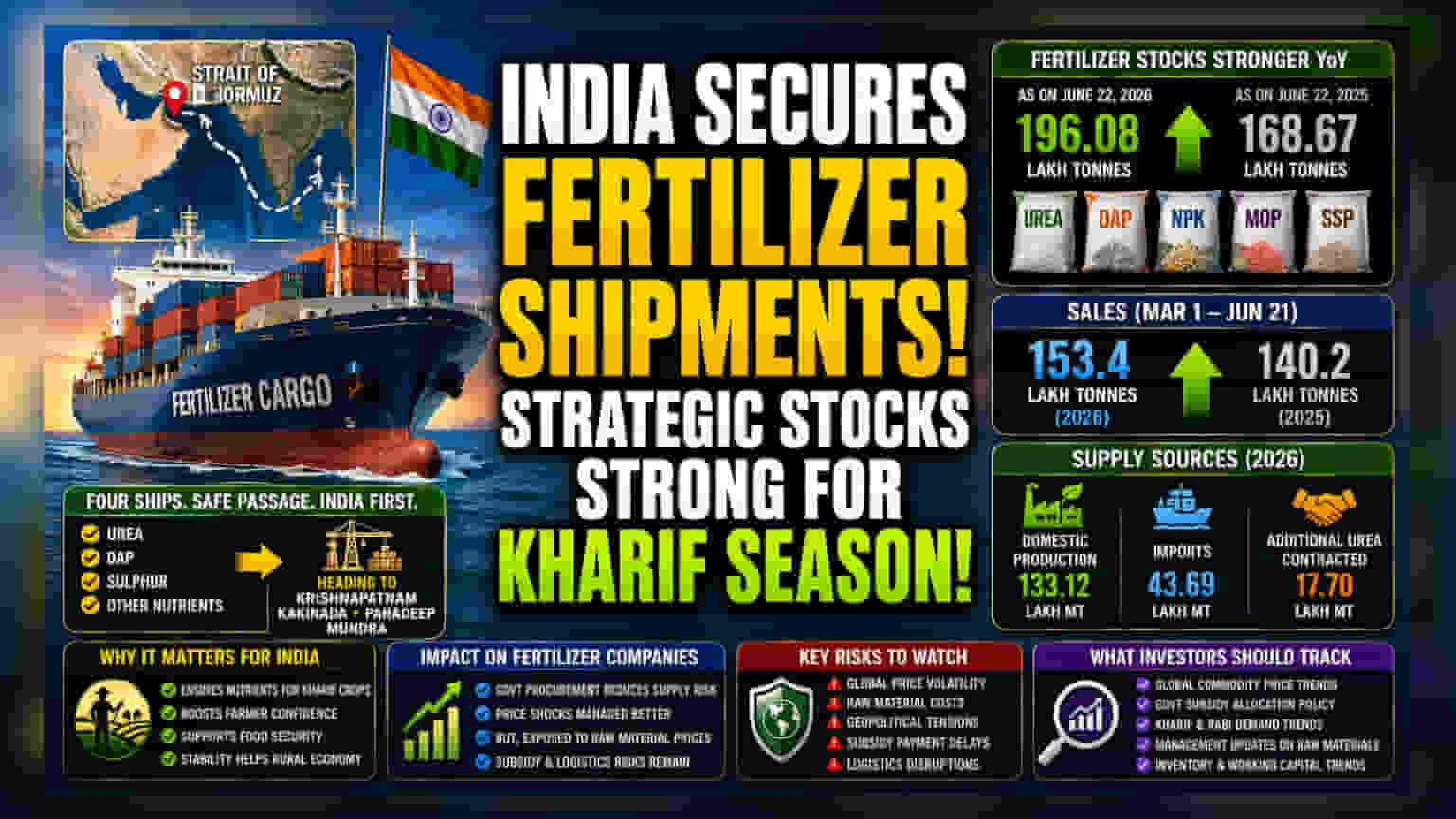
India successfully navigated four cargo ships carrying urea and DAP through the Strait of Hormuz, securing vital supplies for the Kharif season. Cumulative fertilizer stocks have reached 196.08 lakh tonnes, up from 168.67 lakh tonnes last year. This move helps stabilize domestic availability and reduces risks from global supply chain volatility.
What Happened
India has secured the safe passage of four cargo ships carrying critical fertilizers—urea, diammonium phosphate (DAP), and sulphur—through the Strait of Hormuz. These vessels are currently heading to major Indian ports, including Krishnapatnam, Kakinada, Paradeep, and Mundra. This transit is part of a broader government effort to ensure the country has enough nutrients for the ongoing Kharif agricultural season, which is essential for crop yields and food security.
The Supply and Inventory Picture
Government data shows that the country is prioritizing high stock levels. As of June 22, 2026, cumulative fertilizer stocks stood at 196.08 lakh tonnes. This is a noticeable increase from the 168.67 lakh tonnes recorded at the same time last year. The inventory includes urea, DAP, NPK, MOP, and SSP fertilizers.
Strong demand has been a key factor, with total sales reaching 153.4 lakh tonnes between March 1 and June 21, 2026, compared to 140.2 lakh tonnes in the same period last year. To support this, India has combined domestic production—which totaled 133.12 lakh metric tonnes—with strategic imports of 43.69 lakh metric tonnes. Furthermore, the government has contracted an additional 17.70 lakh metric tonnes of urea through global tenders.
Why This Matters For Investors
For investors, the stability of the fertilizer supply chain is closely linked to the health of the Indian rural economy. When fertilizer is available and affordable, farmers can plan their planting cycles more effectively, which generally supports crop output.
For fertilizer companies, the government's active procurement and import strategy helps manage the risk of global price shocks. However, listed fertilizer companies remain sensitive to several external factors. These include the prices of raw materials like phosphoric acid and potash, as well as the cost of natural gas, which is the primary feedstock for urea. Additionally, any delay in subsidy payments from the government or unexpected logistics hurdles can impact the working capital cycle of these firms.
Risks and Global Dependencies
The reliance on imports for products like urea and DAP means India remains exposed to global commodity price volatility and logistics risks. The Strait of Hormuz and the Red Sea are critical routes for global trade. Geopolitical tensions in these regions often create risks of shipping delays or higher freight costs. While the current shipment has navigated the Strait of Hormuz safely, continued reliance on these routes means investors should remain mindful of geopolitical developments that could influence supply costs or timelines.
What Investors Should Track
Looking ahead, the key monitorables for the sector include global commodity price trends, which directly affect import costs, and the government's subsidy allocation policy. Investors may also track local demand trends through the Kharif and Rabi seasons, as these define the sales volume for domestic fertilizer players. Management commentary from leading fertilizer manufacturers regarding raw material procurement and inventory management will also provide insight into how companies are navigating global price fluctuations.