

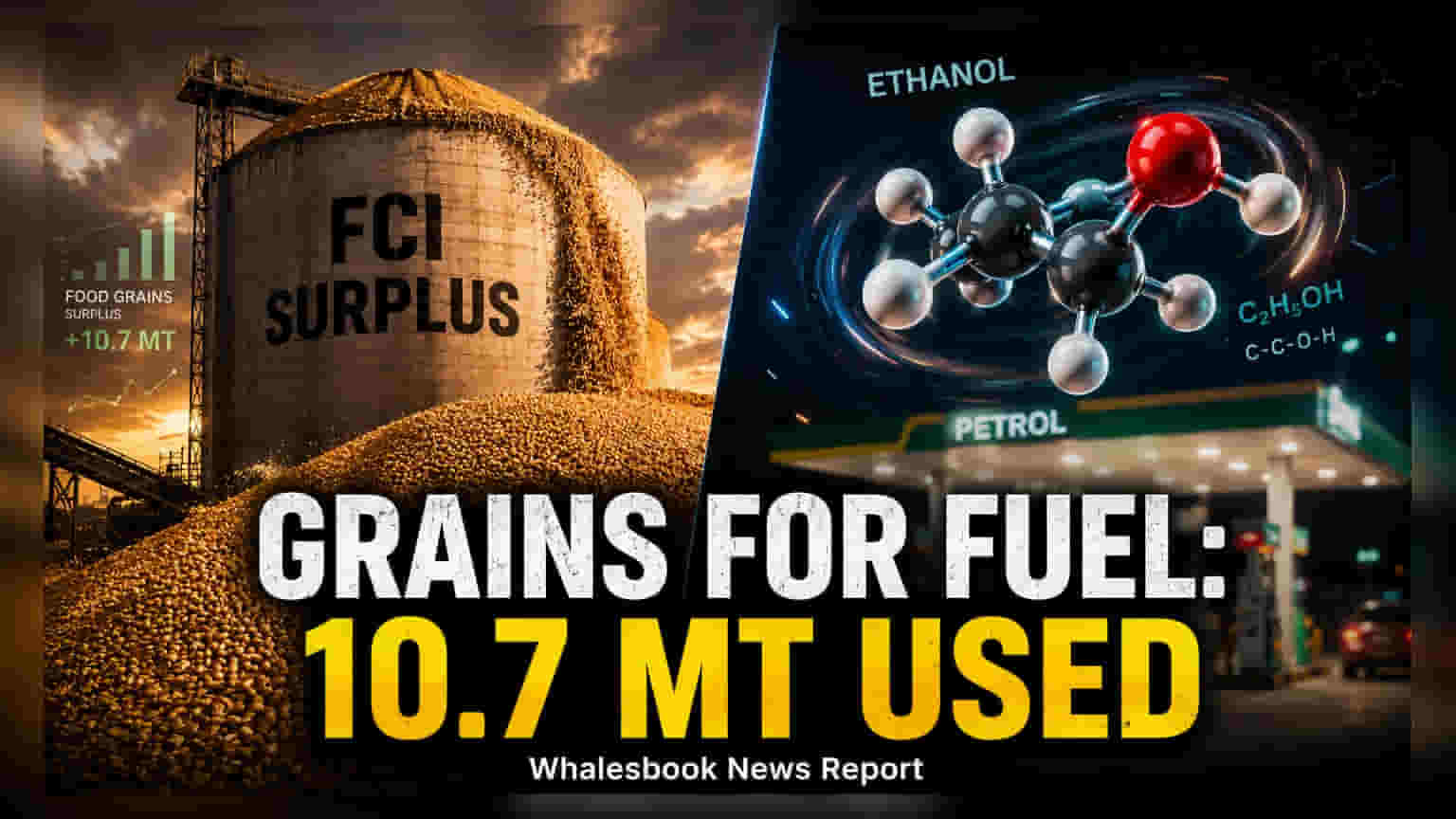
India used 3.9 million tonnes of FCI rice and 6.8 million tonnes of maize for ethanol production through June 2026. The government maintains this 'waste-to-wealth' strategy uses only surplus grain, posing no threat to national food security. Ethanol procurement by oil companies has seen a sharp rise, reaching 705.43 crore litres in the current supply year.
Detailed Coverage
India’s ethanol blending program reached a significant milestone in the 2025-26 Ethanol Supply Year (ESY), with the government diverting 10.7 million tonnes of food grains for fuel production as of June 2026. This total comprises 3.9 million tonnes of rice from the Food Corporation of India (FCI) and 6.8 million tonnes of maize. The program aligns with India's broader push to achieve 20% ethanol blending in petrol, aiming to reduce dependence on crude oil imports and lower carbon emissions.
Food Security and Pricing Concerns
During a Rajya Sabha session held on July 20, 2026, Minister of State for Petroleum & Natural Gas, Suresh Gopi, addressed concerns regarding the impact of grain diversion on domestic food supply. The government clarified that ethanol production exclusively utilizes grain stocks that exceed the requirements of the National Food Security Act (NFSA) and established buffer stock norms. According to the government, the focus remains on surplus, damaged, or broken grains that are not suitable for human consumption, effectively utilizing agricultural resources that would otherwise go to waste.
Retail sugar prices, which are also influenced by the diversion of sugar syrup and B-heavy molasses for ethanol, have remained relatively stable. Data indicates that annual retail sugar price growth is limited to approximately 2.5% compared to the 2024-25 sugar season. This suggests that current policies are managing the balance between biofuel production and food price stability.
Procurement Growth and Market Impact
Public Sector Oil Marketing Companies (OMCs) have aggressively increased their procurement of ethanol to meet blending targets. In the 2023-24 supply year, OMCs purchased 679.04 crore litres of ethanol. This volume rose substantially to 1,033.31 crore litres in 2024-25, representing a significant increase in business for ethanol producers, including sugar mills and grain-based distilleries. For the current year ending June 2026, OMCs have already procured 705.43 crore litres valued at ₹49,577.36 crore.
Investors in the sugar and distillery sectors often track these procurement figures, as higher volumes typically translate to consistent revenue streams for manufacturers. However, future growth for companies in this space will remain tied to the government’s ability to ensure a steady supply of feedstock—either surplus grain or sugar—without triggering food inflation. The government also confirmed that there are no plans to introduce non-blended petrol at retail outlets, reinforcing its commitment to the long-term transition toward biofuels.
Looking ahead, market participants will likely monitor the upcoming crop harvest data and any adjustments to the government's feedstock allocation policies, which remain the primary drivers of capacity utilization for grain-based and sugar-based ethanol plants.