

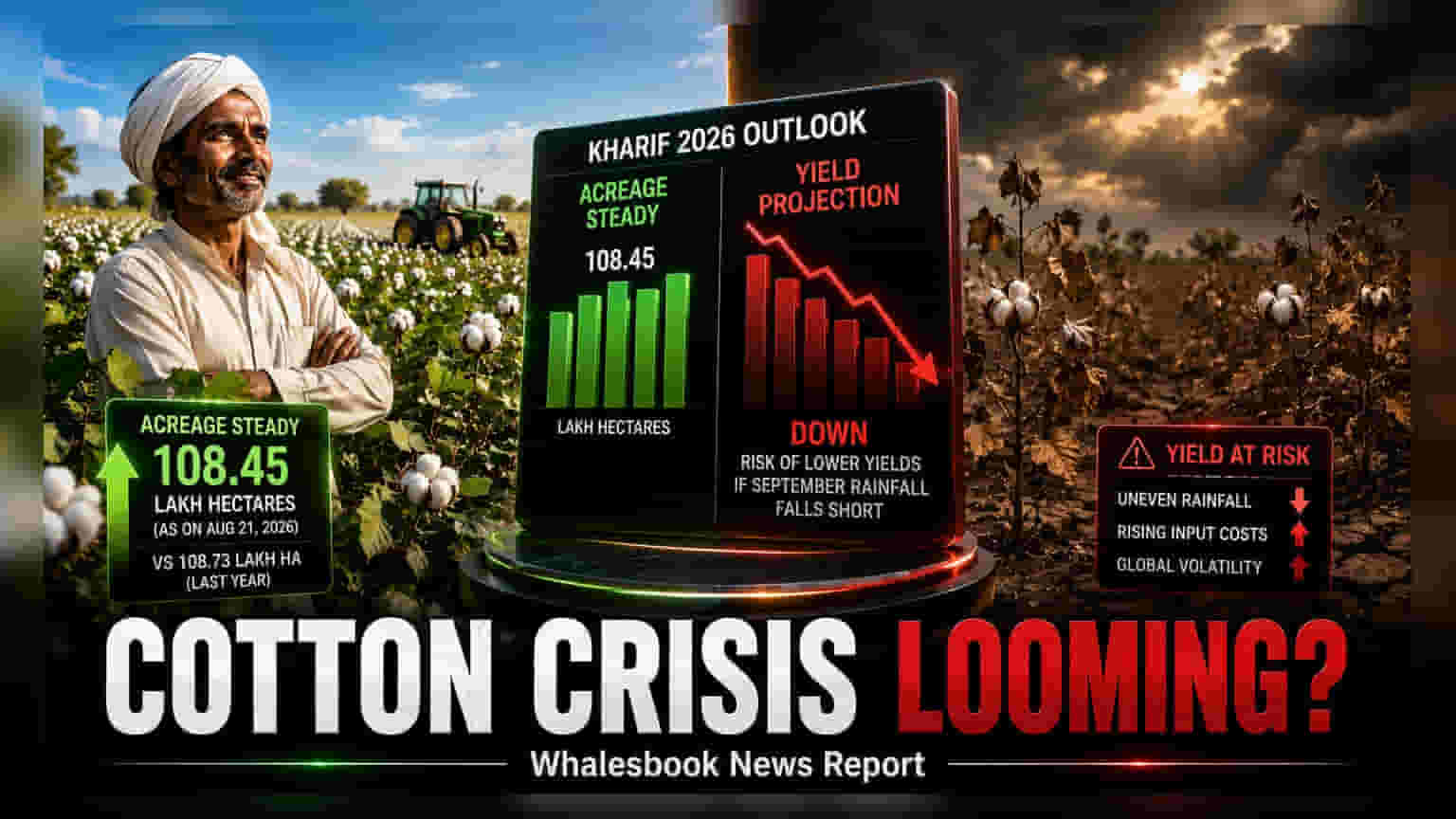
India’s cotton sowing for the 2026 season has reached 108.45 lakh hectares, matching last year's levels despite regional planting shifts. While sowing is mostly complete, the focus for textile markets has now turned to September rainfall, which will determine final crop yields and influence raw material costs.
India's cotton planting for the 2026 Kharif season has remained stable, reaching approximately 108.45 lakh hectares as of August 21. This figure is nearly on par with the 108.73 lakh hectares recorded during the same period last year. For the textile and agriculture sectors, this steady acreage indicates that the country is on track to maintain its production capacity, assuming weather conditions remain favorable through the end of the harvest cycle.
Regional Planting Shifts
The most notable trend in this year's planting data is the clear shift in regional focus. Farmers in northern states, including Rajasthan, Haryana, and Punjab, have reduced cotton acreage due to various factors, such as shifting crop preferences and local water availability. Rajasthan alone saw a reduction of over 1 lakh hectares. However, these declines have been effectively offset by increased planting in southern and central regions.
Telangana has emerged as a key driver of this expansion, reporting a significant rise in acreage. Gujarat and Karnataka have also seen healthy increases in land dedicated to cotton. This geographical migration in planting is important for regional supply chains, as it changes where processing mills may need to source their raw material during the upcoming harvest season.
The Importance of September Rainfall
While the total acreage is steady, industry experts caution that the final crop size is not yet guaranteed. According to the Cotton Association of India (CAI), the next 30 days are critical for determining final yields. The crop condition is currently reported as good, but the plants require adequate moisture to mature properly during September.
Even with a 7% increase in output projected by the US Department of Agriculture (USDA) for the 2026-27 marketing year, the actual market supply will depend on these final weeks of the monsoon. If rainfall is uneven or insufficient in key growing regions like Gujarat and Andhra Pradesh, it could lead to lower-than-expected yields. For textile manufacturers and spinning mills, this creates a situation where raw material costs could remain volatile.
Market and Cost Factors
Beyond rainfall, farmers and the industry are managing other economic pressures. Rising costs for fertilizers and chemicals, which are often linked to global crude oil prices, continue to impact the cost of production. Investors in the textile sector often monitor these input trends, as high raw material prices can put pressure on profit margins. At the same time, global demand and currency exchange rates play a significant role in how domestic cotton prices are set.
The next major update for the market will be the assessment of crop yields in late September. Investors and industry participants will be tracking both official weather reports and supply updates from major producing states to understand if the current acreage will translate into the expected increase in production.