 Whalesbook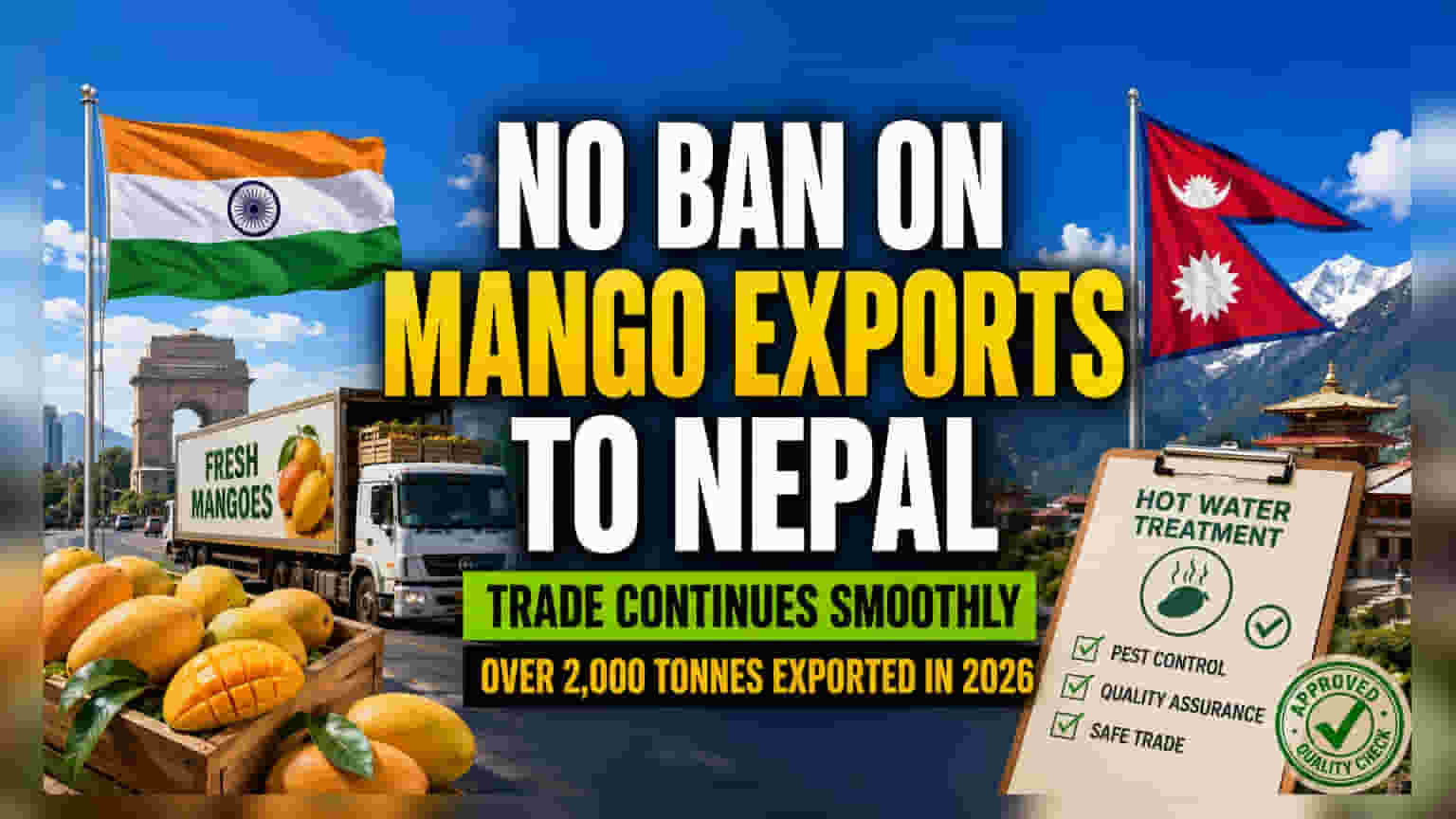


India has dismissed reports of a mango export ban to Nepal. Trade continues under new phytosanitary rules, though both nations are engaging in talks regarding implementation standards.
What Happened
The Indian government has officially refuted media reports alleging that Nepal has imposed a ban on mango imports from India. The Ministry of Agriculture and Farmers Welfare described these claims as misleading and confirmed that cross-border trade is functioning without disruption. Official data reinforces this, showing that over 2,000 tonnes of mangoes have been exported to the neighboring country since the beginning of 2026, with consistent shipments continuing through June. Nepal’s own Plant Quarantine and Pesticide Management Centre also issued a clarification confirming that no ban is in effect and that trade remains open for those meeting the necessary quality standards.
The Regulatory Context
The confusion stems from Nepal’s recent update to its import requirements, specifically the introduction of mandatory Hot Water Treatment (HWT) for mangoes. Hot Water Treatment is a standard process used in the fruit industry to control pests like fruit flies, which can otherwise damage crops and lead to quarantine restrictions. While such measures are common in international trade, the dispute concerns the implementation process. India has expressed concerns to Kathmandu regarding the introduction of these new phytosanitary measures without prior consultation or adequate notice to exporters. The matter is currently being discussed through official diplomatic and trade channels, adhering to the framework provided by the World Trade Organization’s Sanitary and Phytosanitary Agreement.
How Investors May Read This
For market participants involved in the agricultural and logistics sectors, this event highlights the operational risks associated with cross-border trade. While the immediate fear of a total trade ban has been resolved, the shift toward stricter regulatory standards like Hot Water Treatment represents a form of non-tariff barrier. For companies exporting perishable goods, such rules can increase operational costs and create logistical bottlenecks if the infrastructure to support these treatments is not readily available. The focus for stakeholders is no longer on the risk of a ban, but rather on the ease of doing business and the speed of clearance at the border.
The Bigger Trade Picture
Nepal is a significant destination for Indian agricultural produce due to geographical proximity, which allows for lower logistics costs compared to other international markets. When regulatory requirements change suddenly, exporters face immediate pressure to upgrade their processing facilities or adjust their supply chains to ensure compliance. The diplomatic intervention by India indicates a priority on maintaining smooth trade flows, which is essential for preserving the profit margins of agricultural exporters who rely on these markets. The current situation reflects a broader trend where importing nations are increasingly tightening quality and safety standards for imported food products.
What Investors Should Track
The primary monitorable for investors and stakeholders is the stability of trade flows and the efficiency of the new compliance process. Investors may look for updates on whether the existing infrastructure at border points is sufficient to handle the new Hot Water Treatment requirements without causing delays, as delays for perishable goods like mangoes can lead to spoilage and financial loss. Furthermore, the outcome of the ongoing bilateral discussions regarding the implementation timeline will be important, as a smoother transition would reduce the risk of future trade friction. Market participants will also watch for any similar regulatory updates from other trading partners, as this could signal a wider trend toward more stringent phytosanitary compliance for Indian fruit exports.