

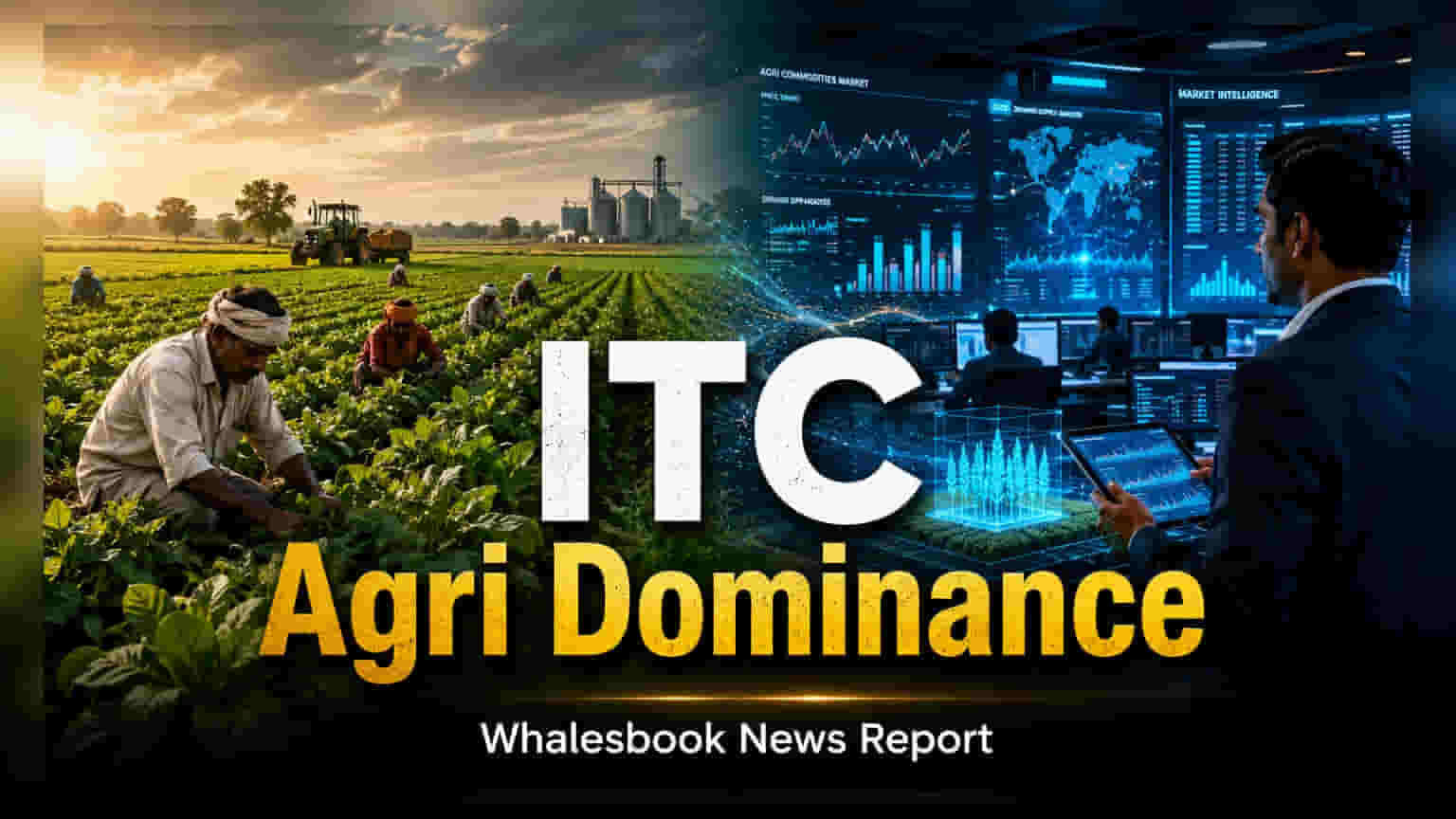
ITC's agriculture division has doubled its revenue to nearly ₹20,300 crore in five years. The company is now scaling its ITCMAARS digital platform to support 10 million farmers by 2030 through precision farming and new produce clusters.
Detailed Coverage
ITC Limited’s agri-business division has reported significant growth, with revenue doubling to approximately ₹20,300 crore over the last five years. Chairman and Managing Director Sanjiv Puri announced this performance at the company’s 115th annual general meeting, emphasizing the integral role of agriculture across 94% of ITC’s diverse business segments. This growth aligns with the 'ITC Next' strategy, which focuses on modernizing agricultural supply chains through technology and value-added product expansion.
Scaling Digital Farming and Farmer Outreach
A primary driver of this growth is the ITCMAARS phygital—physical and digital—ecosystem. This platform provides Farmer Producer Organizations with digital tools, advisory services, and direct market access. The initiative has expanded to include 2.6 million farmers across 11 states, with a stated target of reaching 10 million farmers by 2030. According to company data, these practices have contributed to yield improvements of 15% to 20% and an increase in farmer net returns by 25% to 30%. By reducing intermediaries and improving logistics, ITC aims to create a more efficient and traceable supply chain.
Investment in Controlled Environment Agriculture
To address the growing demand for high-quality fresh produce, ITC is shifting toward controlled environment agriculture. Following a successful pilot, the company is establishing four new hybrid clusters that combine open-field farming with controlled-environment technology. These facilities are designed to maintain consistency in quality, which is critical for meeting the standards of both domestic and export markets. This transition represents a shift toward more scientific and predictable cultivation methods.
Value-Added Portfolio Growth
Beyond basic commodities, ITC has prioritized a value-added portfolio that includes certified organic crops, premium coffee, aquaculture, and food-safe spices. The company reported a 33% compound annual growth rate in this portfolio over the past five years. By focusing on attribute-specific commodities, such as high-starch maize and high-gluten wheat, the company is attempting to capture higher margins compared to traditional raw commodity trading.
Strategic Considerations for Investors
While the expansion of the agri-business segment provides ITC with a broader footprint, investors should monitor the capital spending associated with these new agricultural clusters and technology deployments. The success of these initiatives depends heavily on the company's ability to maintain high utilization of new capacity and manage the complexities of a large-scale, tech-enabled supply chain. Additionally, as the company moves into higher-value products, it faces competition from both established food processors and niche agritech players. Future progress will likely be measured by the scalability of the ITCMAARS platform, the efficiency of the new production clusters, and the company's ability to sustain profit margins in the competitive value-added agriculture segment.