

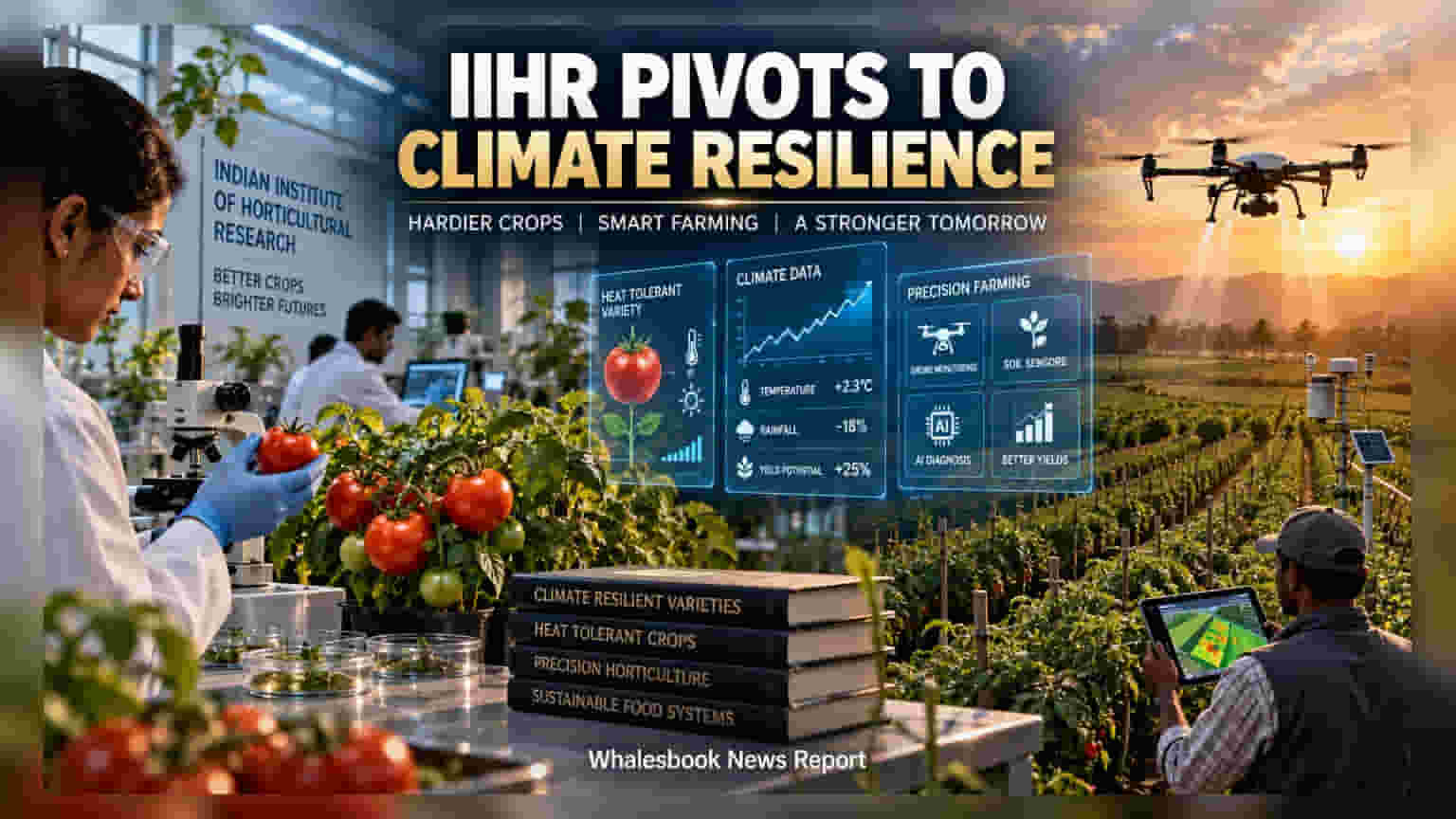
The Indian Institute of Horticultural Research (IIHR) is pivoting its breeding strategy to prioritize heat-tolerant crop varieties. This move aims to stabilize yields in the face of erratic weather patterns. For investors in the agri-input and seed sectors, this push toward climate resilience and technology-based farming models could reshape distribution, product demand, and the way scientific innovations reach smallholder farmers.
The Indian Institute of Horticultural Research (IIHR) has officially shifted its research focus toward climate-resilient crop development. The new agenda prioritizes breeding varieties of fruits and vegetables, such as mango, tomato, and onion, that can withstand rising temperatures and unpredictable rainfall. This strategic shift addresses a growing concern in Indian horticulture, where temperature increases of just a few degrees can cause significant yield loss and quality degradation.
The Shift to Climate-Resilient Breeding
For the broader agricultural market, this research focus is significant. Climate change is a primary risk factor for listed seed and agri-input companies, as erratic weather can lead to reduced harvest quality and lower farm incomes. By developing heat-tolerant varieties, the IIHR is working to mitigate these risks. If successful, such innovations are typically licensed or adopted by private seed companies and agri-input firms, which then distribute the seeds to farmers. This creates a potential pipeline for higher-value, climate-ready products that command better market stability.
Technology Adoption and Service-Provider Models
Beyond breeding, the institute is scaling up the integration of precision agriculture tools, including drones, IoT sensors, and artificial intelligence for disease diagnosis. A critical challenge for these technologies in India has been the high cost of equipment, which is often out of reach for small-scale farmers. To address this, the IIHR is championing a service-provider model. Under this framework, Farmer Producer Organizations (FPOs) and rural entrepreneurs act as intermediaries, providing drone spraying and digital advisory services to individual growers.
This shift is notable for the agri-tech sector. By encouraging a model where farmers rent services rather than buying expensive machinery, the IIHR is trying to overcome the barrier of high capital expenditure. This could lower the threshold for technology adoption, potentially increasing the demand for diagnostic services and specialized inputs across wider rural geographies.
The Distribution Hurdle
While the research pipeline appears strong, the institute has identified the last-mile delivery of quality planting materials as a major obstacle. Even with advanced scientific breakthroughs, the actual impact on national productivity depends on how effectively these innovations reach the field. To bridge this gap, the IIHR is deepening collaborations with state-level agricultural departments and FPOs.
For stakeholders and observers of the agri-sector, the success of this initiative will hinge on the efficiency of these local networks. Investors should monitor how effectively these research-backed varieties and precision farming services move from government-led pilot projects to widespread commercial adoption. If these networks successfully lower the cost of inputs and increase farmer productivity, it could stabilize the supply chain for food processors and exporters who rely on consistent, high-quality raw materials.