

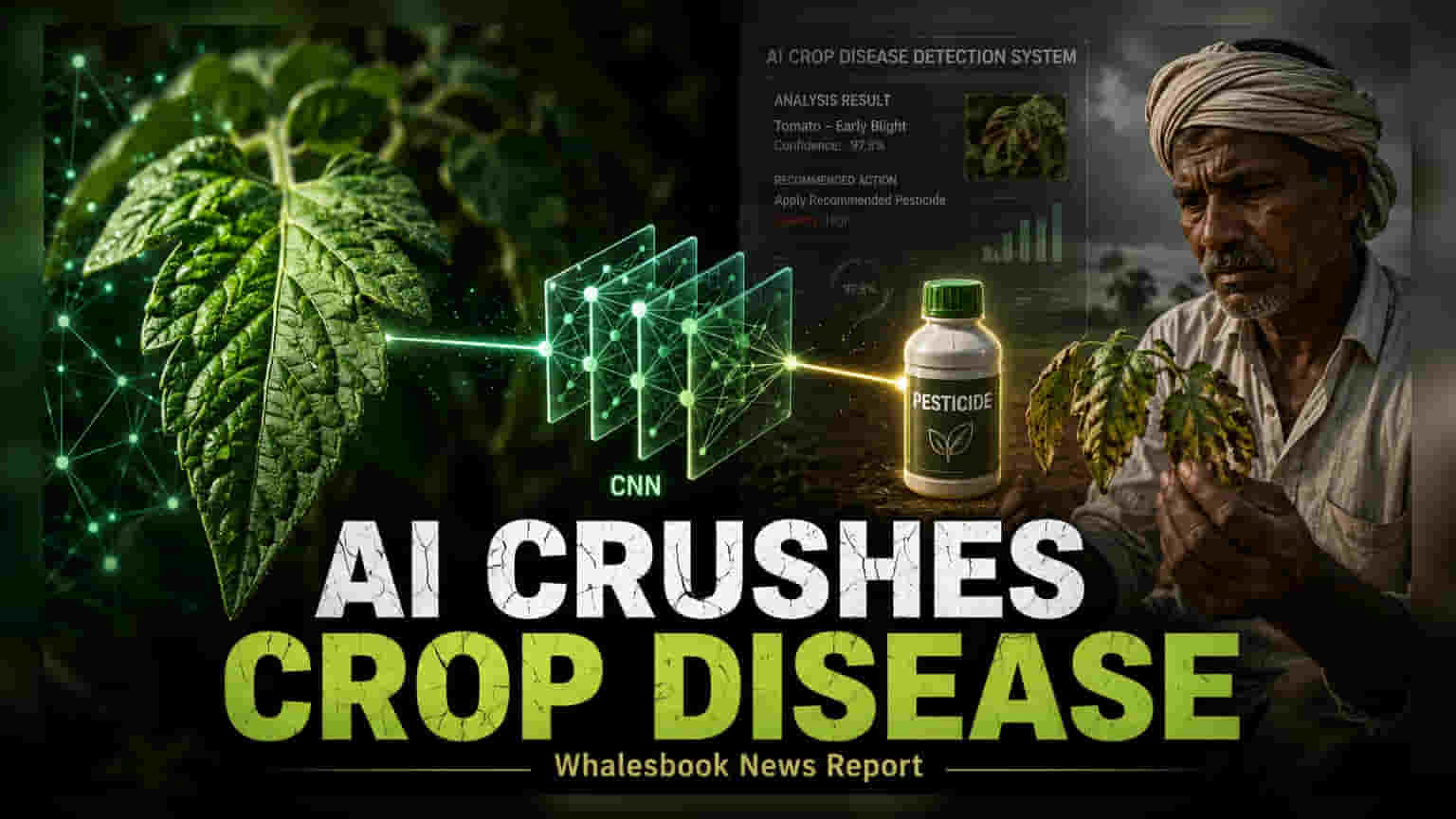
A team at VNR Vignana Jyothi Institute has patented an AI system that identifies crop leaf diseases with 96% accuracy. This technology, which analyzes images to suggest pesticide treatments for tomato, potato, and pepper crops, aims to help farmers reduce yield loss. The team is currently working to transition the tool from a web interface to a mobile application for broader field use.
Detailed Coverage
A research team from the VNR Vignana Jyothi Institute of Engineering and Technology in Hyderabad has received a patent for an artificial intelligence system designed to improve crop health management. The technology, officially titled the Leaf Disease Detection System Using Convolutional Neural Networks, reached the patent stage in April 2026 after four years of development. By leveraging a dataset of over 20,000 plant images, the system provides a digital diagnostic tool for farmers, specifically targeting common ailments in tomato, potato, and pepper plants.
How the Technology Functions
The AI system utilizes a method known as Convolutional Neural Networks, a common branch of machine learning used for analyzing visual imagery. By processing leaf images, the software identifies patterns associated with fungal, bacterial, or pest-related diseases. Beyond mere detection, the system is designed to provide actionable advice by recommending specific pesticides. This is intended to address the traditional challenges of manual disease identification, which is often slow and prone to human error. For farmers, this move toward technology-assisted diagnosis could help prevent the overuse of chemicals by ensuring treatments are better matched to the specific disease detected.
Scaling Agricultural Innovation
While the technology currently operates through a web-based interface, the research team is in the process of developing a dedicated mobile application. This is a critical step for widespread adoption, as field-based farmers often require immediate, on-the-go access to diagnostic tools rather than browser-based solutions. The project, led by doctoral student Vijaya Saraswathi, seeks to solve the persistent problem of crop loss that directly impacts food security and farm-level income.
From an investor and agricultural perspective, the success of such tools depends heavily on ease of use, reliable internet connectivity in rural areas, and the accuracy of the pesticide recommendations provided under diverse field conditions. While this development represents a technical milestone in agritech, the next phase for the researchers will involve real-world testing, integration with existing farming workflows, and potential commercial partnerships. Investors monitoring the growing agritech sector may track how quickly such AI-driven diagnostic tools can move from academic research to scalable, commercial applications that gain significant traction among Indian farming communities.