 Whalesbook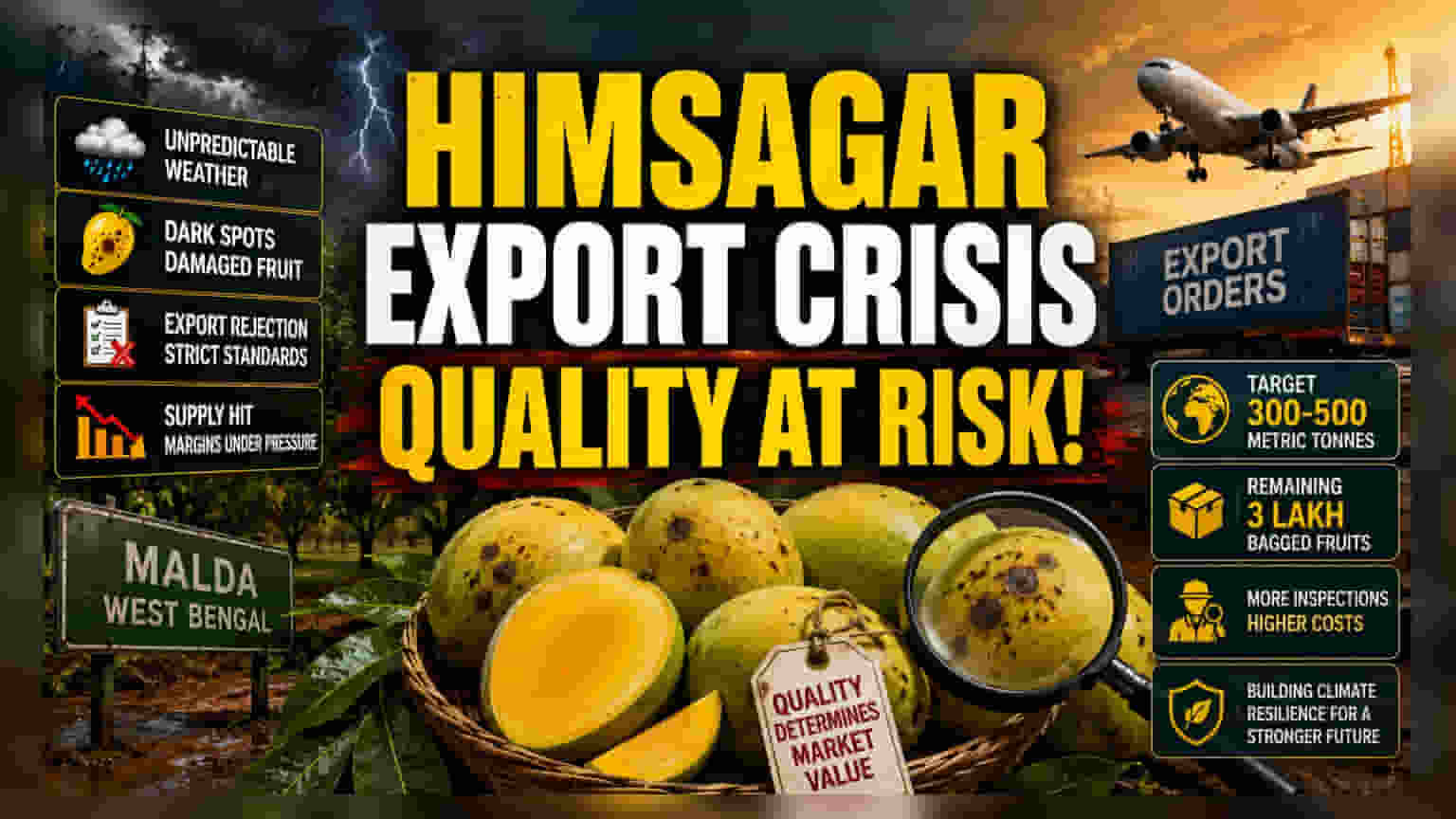


The Quality Bottleneck
The economic viability of this season’s Himsagar mango harvest has shifted from volume-driven growth to a defensive struggle against climate-induced volatility. The emergence of dark spots on the fruit, triggered by an ill-timed sequence of heavy rainfall during the bagging phase followed by intense thermal spikes, has invalidated a significant percentage of the export-ready yield. This development creates a direct friction point between existing international purchase agreements and the physiological reality of the crop. Importers in the United States and elsewhere maintain stringent phytosanitary standards that mandate blemish-free fruit; consequently, even minor symptomatic infections necessitate the wholesale disqualification of consignments, effectively removing that supply from high-margin retail channels.
Scaling Challenges in Agricultural Export
While industry participants previously forecasted an ambitious leap in export volume from 15 metric tonnes to a target range of 300 to 500 metric tonnes, the current reality highlights the fragility of scaling specialized agricultural exports. The industry transition toward Good Agricultural Practices and scientific fruit bagging was intended to stabilize supply, yet the failure to mitigate environmental impact suggests that current infrastructure remains vulnerable to extreme weather patterns. This discrepancy between forecasted exponential growth and localized biological failure illustrates the inherent risks in institutionalizing fruit production for global markets where quality-control tolerances are near zero.
The Forensic Bear Case
The reliance on a localized crop cycle exposes exporters to significant concentration risk. Unlike diversified fruit distributors capable of sourcing across multiple geographic regions to hedge against climate disruption, Malda-based firms remain tethered to the performance of a single regional harvest. Furthermore, the reliance on high-cost scientific interventions like fruit bagging and post-harvest handling increases the break-even cost per unit. If a larger-than-anticipated percentage of the three lakh remaining bagged fruits also fails to meet export-grade aesthetics, the resultant margin compression will likely affect the short-term liquidity of regional exporters. The industry now faces a binary outcome: the successful salvage of the remaining harvest to meet contractual obligations or a reputational setback that could complicate future price negotiations with international buyers.
Market Outlook and Operational Resilience
Moving forward, the focus will remain on the efficacy of the remaining inventory to satisfy the backlog of orders. Stakeholders are balancing the optimism regarding available supply against the mounting costs of secondary inspections. The long-term success of the sector hinges not just on yield, but on the ability to develop climate-resilient storage and handling protocols that can withstand the increasingly erratic weather patterns currently plaguing West Bengal’s fruit-producing districts.