

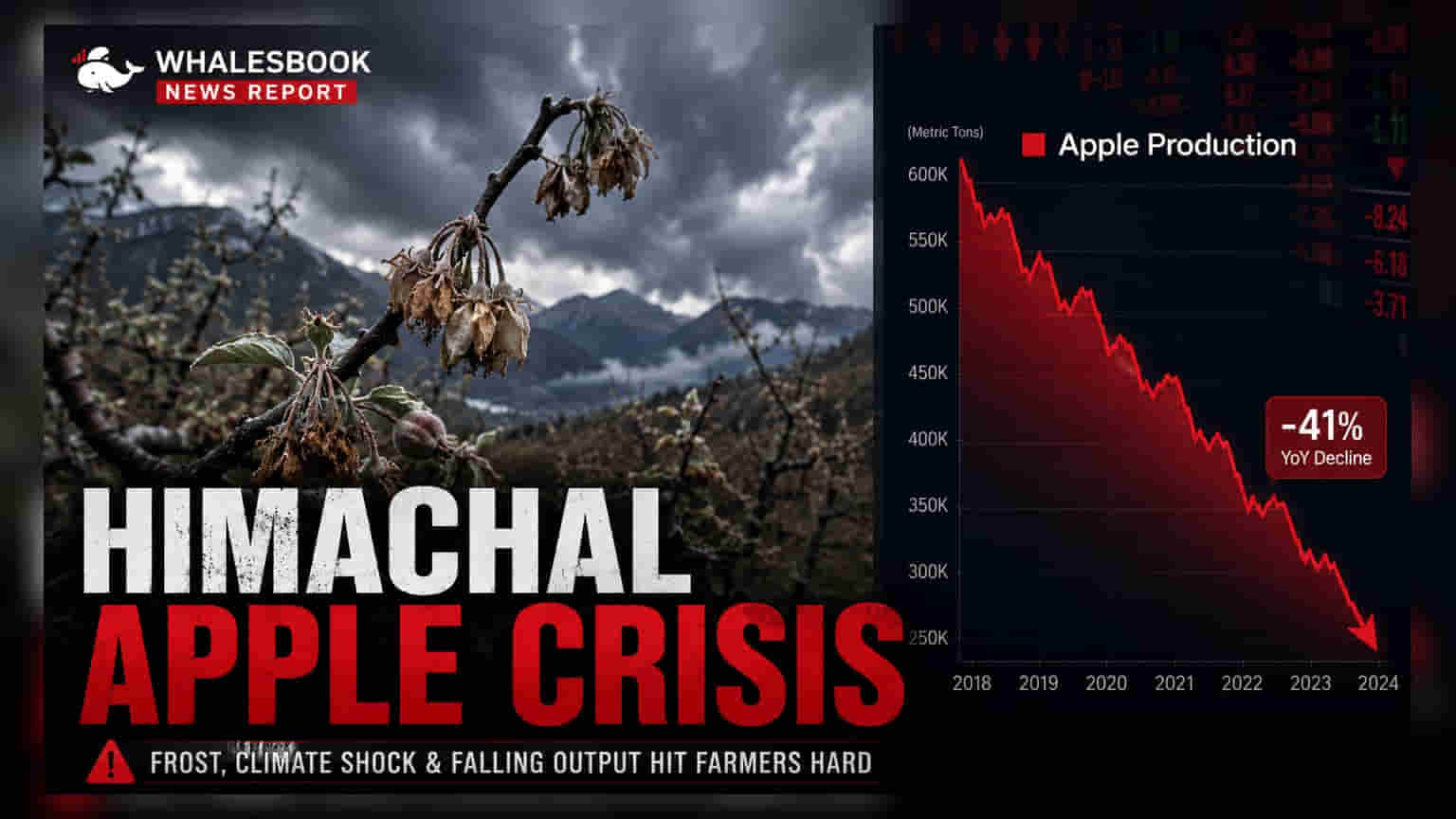
Himachal Pradesh's Rs 5,000 crore apple economy faces a 40% production decline this season due to unseasonal rains and erratic weather. This drop impacts 2.5 lakh families and highlights the growing financial strain on orchardists as cultivation costs rise.
The apple farming sector in Himachal Pradesh, which supports a local economy valued at roughly Rs 5,000 crore, is facing a major production shortfall. Official projections indicate that output will decline by nearly 40% this season, falling from 6.99 lakh metric tonnes in the previous year to an estimated 4.36 lakh metric tonnes. This reduction translates into a loss of approximately 2.15 crore boxes of produce, presenting significant economic challenges for the region.
Climate and Production Hurdles
The state's horticulture department has identified a combination of poor winter snowfall, untimely spring rains, and inconsistent temperatures as the primary reasons for the decline. These conditions have disrupted the development of the fruit across eight districts, where apple cultivation occupies about 1.16 lakh hectares of land. This area accounts for nearly 50% of the state's total fruit-growing region. Beyond the primary apple crop, other stone fruits like apricots and cherries have also been affected by the shifting climate, which has seen local temperatures rise by 1 to 1.5 degrees Celsius in recent years.
Impact on Farm Economics
For the 2.5 lakh families involved in the trade, the season poses a dual threat of lower volumes and higher operating expenses. Growers are reporting that the cost of necessary agricultural inputs, including specialized medicines and farming machinery, has risen, putting further strain on household incomes. Because traditional apple varieties need specific environmental conditions—specifically 1,200 to 1,600 chilling hours below 7 degrees Celsius—the changing climate is creating long-term cultivation risks that are becoming increasingly difficult to manage.
To manage these risks, farmers are seeking government support to improve irrigation infrastructure and expand access to crop insurance schemes. These tools are seen as essential for providing a financial buffer against future weather-related income loss. As the season progresses, the key monitorable for the agricultural economy will be how effectively these infrastructure improvements and insurance programs are implemented to support the long-term viability of orchard operations in the state.