

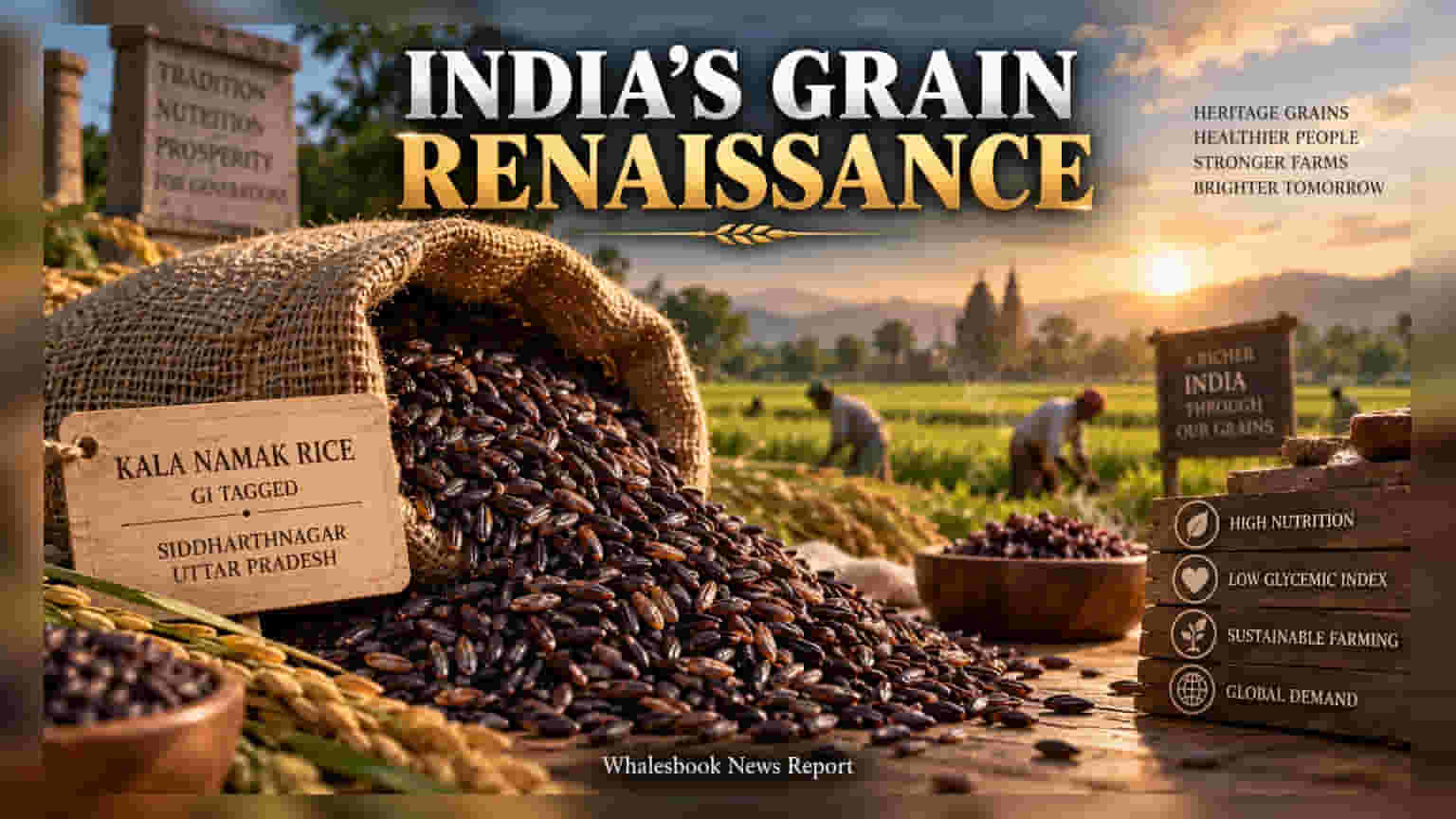
India's heritage grains are gaining commercial traction as health-conscious demand drives premiumization in the food sector. For listed rice processors, this trend offers a potential path to move beyond traditional commodity products toward higher-margin, traceable offerings. Investors may watch how companies navigate the supply chain and scaling challenges associated with these niche varieties.
The market for Indian heritage grains, such as the GI-tagged Kala Namak rice, is seeing a shift from traditional regional consumption to organized retail, driven by a growing interest in nutritionally dense, sustainable food. For investors observing the agricultural and food processing sectors, this trend represents a broader move toward premiumization. As consumers increasingly prioritize health profiles—such as glycemic index and micronutrient content—food processors are finding that heritage crops can offer higher value compared to standard commodity rice varieties.
Business Value of Geographical Indication
Geographical Indication (GI) tags are currently acting as a business advantage for producers. By legally linking a product like Kala Namak rice to its origin in Siddharthnagar, Uttar Pradesh, producers can protect their brand identity and ensure traceability. For companies involved in rice processing and exports, such as KRBL Ltd, LT Foods, and Chaman Lal Setia Exports, the ability to offer certified, traceable products is a key competitive factor. These tags reduce information gaps, allowing companies to command better pricing in both local and international markets where there is a premium on authentic, heritage-based food products.
Scaling and Supply Chain Challenges
While the demand for these grains is rising, the transition from a niche product to a large-scale commercial offering involves significant hurdles. The primary monitorable for investors is the supply chain. Heritage grains often lack the high-yield characteristics of modern varieties, and their cultivation is tied to specific ecosystems. This makes supply consistency a risk. To achieve scale, processors must invest in modern warehousing, hygienic processing facilities, and robust logistics to maintain quality standards that global retail chains require. Without significant investment in this infrastructure, companies may struggle to move beyond limited, premium batch sales.
Risks and Market Realities
Investors should also consider the inherent risks in this space. Agricultural output remains heavily dependent on climate and weather patterns. Furthermore, the specialized nature of these crops means that companies cannot easily switch sourcing if a crop cycle fails in a particular region. Unlike mass-market basmati rice, where sourcing can be diversified across large geographies, heritage grains often rely on concentrated production hubs. Additionally, the success of this strategy depends on whether the company can successfully market these grains to mainstream consumers who are often used to lower-priced commodity alternatives. The potential impact on profit margins will depend on the company's ability to balance the higher cost of sourcing and processing these specialty grains with the price the consumer is willing to pay.
The next important update for investors to follow will be how organized players in the rice sector integrate these varieties into their wider portfolios and whether they report volume growth in these niche segments in their upcoming quarterly results. Watching the capital spending on processing infrastructure for these specialty grains will also be useful for understanding how serious companies are about scaling this segment.