

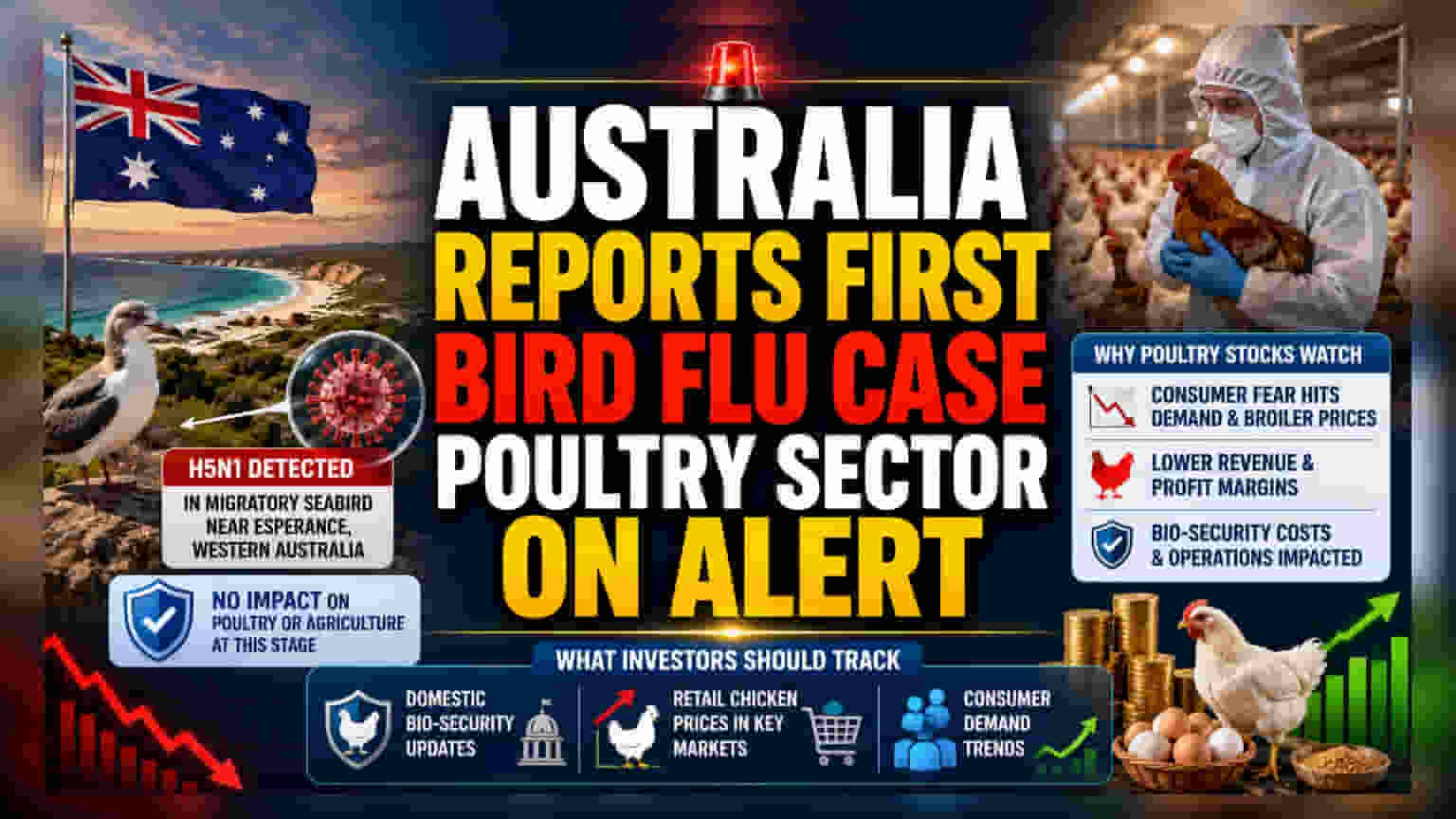
Australia has confirmed its first mainland case of H5N1 avian influenza in a migratory seabird. While there is no direct impact on Indian poultry, global outbreaks often influence market sentiment. Investors in the poultry sector monitor such news closely, as bird flu scares can lead to temporary shifts in consumer demand and price volatility within the industry.
What Happened
Australia has confirmed its first mainland case of the H5N1 avian influenza virus, also known as bird flu. The virus was detected in a migratory seabird found near Esperance in Western Australia. Until this development, Australia had been the only continent to remain free of this highly pathogenic strain of the virus on its mainland. While the Australian government has pledged to take all necessary actions to restrict any potential spread, officials noted that there is no evidence of the virus affecting the poultry or agriculture sector at this stage.
Why The Poultry Sector Watches Global News
For investors in the poultry sector, global news regarding bird flu is often closely watched. Poultry stocks are highly sensitive to information about viral outbreaks, regardless of where they occur. Even when an outbreak is thousands of kilometers away, headlines about the virus can sometimes influence local market sentiment.
Historically, the Indian poultry industry has seen temporary volatility following reports of bird flu. The primary concern is not just the virus itself, but the impact on consumer behavior. When news of bird flu circulates, consumers often reduce their intake of chicken and eggs due to fears of contamination. This drop in demand can lead to a decline in broiler prices, which are the prices farmers receive for their birds. This, in turn, can affect the profit margins of poultry companies.
Business And Financial Impact
Poultry companies, such as Venky's (India) and others in the sector, operate on tight margins that are sensitive to both feed costs and selling prices. When demand slows down because of health scares, companies may face a period of lower revenue.
Past outbreaks in India have shown that these periods of reduced demand are often temporary. However, they can create short-term financial pressure, particularly for smaller farmers and integrated poultry firms that rely on steady volumes. The industry typically manages this by strengthening bio-security measures, which are the practices used to keep farms safe and prevent the introduction and spread of diseases.
Risk Factors To Consider
While the Australian situation is currently limited to wild birds, the global persistence of H5N1 serves as a reminder of the inherent risks in the livestock sector. The main risks for shareholders in this industry include:
- Consumer Sentiment: Sudden changes in food preferences during a disease scare can hit demand.
- Supply Chain Disruptions: In severe cases, regional or national trade restrictions can limit the movement of live birds or poultry products.
- Operational Costs: Maintaining high-level bio-security to prevent infection adds to the operational expenses of poultry farms.
What Investors Should Track Next
Investors typically focus on a few key monitorables in this sector:
- Domestic Bio-security Updates: Any announcements from the Indian government or poultry associations regarding biosecurity protocols.
- Retail Chicken Prices: Trends in broiler and egg prices in major markets like Maharashtra, Andhra Pradesh, and Telangana, which are key production hubs in India.
- Consumer Demand Trends: Whether there is any shift in protein consumption patterns or a drop in demand for poultry products.
This event in Australia underscores that bird flu remains a global challenge. While the local poultry industry continues to operate normally, maintaining an understanding of the sector's sensitivity to such health-related headlines remains a part of tracking these stocks.