

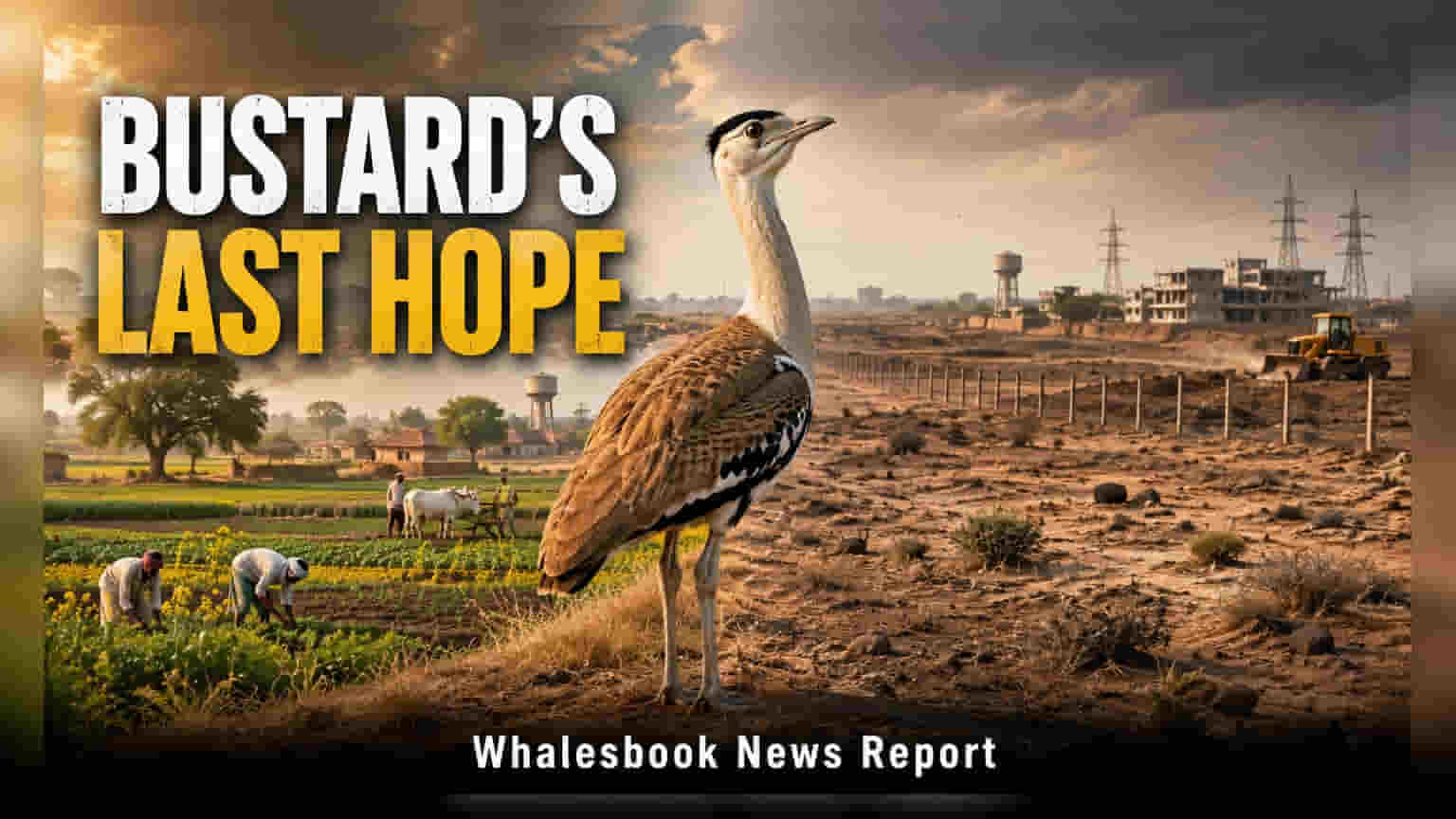
A new research study suggests that reviving traditional farming in the Deccan Plateau could support the critically endangered Great Indian Bustard. While not a corporate or stock-related event, this development signals significant shifts in land-use policy, agricultural focus, and environmental planning in rural India, impacting long-term infrastructure and sustainable development strategies.
A recent study published in the journal Conservation Science and Practice has identified 16 priority areas in the Deccan Plateau totaling 18,000 square kilometers that are essential for the recovery of the critically endangered Great Indian Bustard. The researchers from the Wildlife Institute of India note that the species' survival is tied to the restoration of traditional agricultural landscapes rather than intensive commercial farming.
While this is a matter of wildlife conservation and ecological policy, it carries implications for broader rural economic trends and regulatory landscapes that interest long-term observers of India's rural economy. The findings highlight the growing tension between commercial agriculture and habitat preservation. For those monitoring the rural sector, the study underscores how shifts in land-use patterns—specifically the transition from traditional pulses and oilseeds to high-intensity cash crops—affect local ecosystems and soil health.
This research is particularly relevant for those tracking infrastructure and renewable energy planning in the Deccan region. There is a documented conflict between the conservation of open grassland habitats required by the Great Indian Bustard and the expansion of infrastructure projects, such as wind and solar farms. Environmental regulations in these priority zones could influence future land acquisition timelines, project approvals, and environmental compliance requirements for developers in the renewable energy sector.
From an agricultural policy perspective, the study advocates for a return to traditional cropping systems. If government policy aligns with these ecological goals, there could be subtle shifts in subsidies, crop incentives, and rural development programs targeting specific types of farming. These changes can influence the demand for specific agri-inputs like seeds and fertilizers over the long term, as the composition of crops planted in the region changes to meet sustainable development goals.
Investors and market observers monitoring rural development and energy policy should watch for any subsequent government notifications regarding land-use restrictions in these 16 identified zones. The interplay between ecological preservation, infrastructure development, and agricultural incentives remains a key, albeit indirect, component of the regulatory landscape in the Deccan region.