

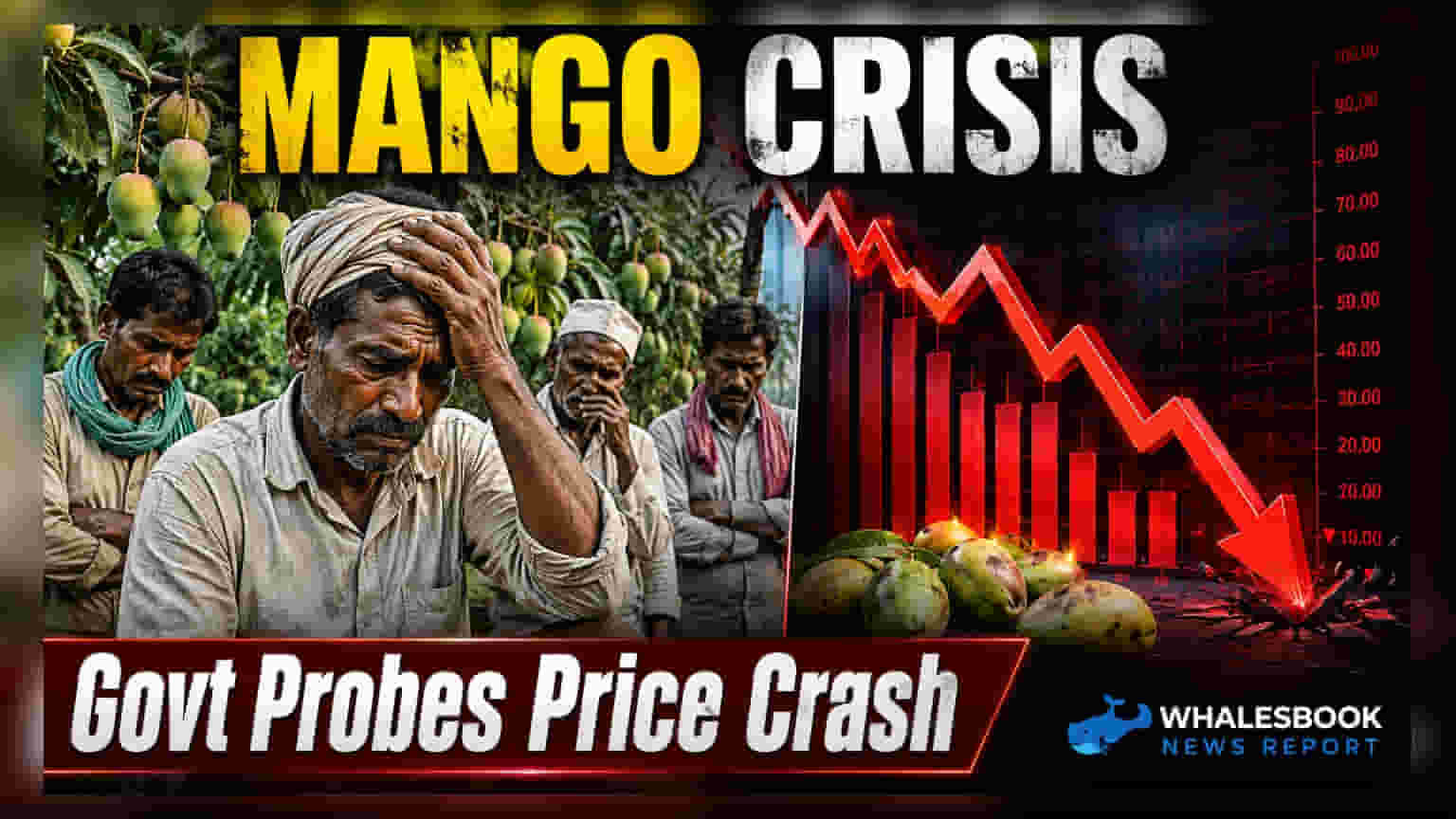
The Ministry of Agriculture has launched a high-level investigation into the sharp decline in Totapuri mango prices in Andhra Pradesh. This committee aims to identify market bottlenecks and provide recommendations for price stabilization to support farmers and the processing industry.
What Happened
The Union Ministry of Agriculture has set up a high-level committee under the Indian Council of Agricultural Research (ICAR) to investigate the recent collapse in Totapuri mango prices. Totapuri is a key variety widely used by the fruit pulp and processing industry. The investigation follows reports of significant income losses for mango farmers, particularly in Andhra Pradesh, who recently raised the issue with the Union Agriculture Minister, Shivraj Singh Chouhan.
Committee Mandate and Scope
The committee, consisting of agricultural scientists and representatives from relevant institutions, is tasked with a complete review of the Totapuri mango supply chain. The scope of the inquiry covers cultivation costs, processing efficiency, domestic market dynamics, and export performance. The team is expected to visit the primary growing regions in Andhra Pradesh within ten days to hold direct discussions with local farmers, processors, exporters, and state officials.
Why It Matters For The Processing Sector
While the primary goal of the investigation is to address farmer distress, the findings carry weight for the food processing industry. Many publicly traded and private food companies rely on Totapuri mango pulp for juices, beverages, and other processed food products. A decline in price is often linked to supply-demand imbalances or inefficient processing capacity utilization. If the government proposes new price stabilization mechanisms or changes to supply chain policies, it could influence how processors source raw materials and manage their input costs.
Business Context and Risks
The profitability of the fruit processing sector is often sensitive to raw material availability and pricing. When prices crash, it can signal either an oversupply in the market or a lack of demand from processing plants. If the committee identifies bottlenecks—such as a lack of cold storage, limited processing capacity, or export hurdles—the government may push for infrastructure investment. For investors, the risk lies in potential regulatory interventions or shifts in procurement policies that could alter margins for companies operating in the fruit pulp and beverage space.
What Investors Should Track Next
The committee’s upcoming report will be the key document to monitor, as it will likely include recommendations for price stabilization and value-addition initiatives. Specifically, investors should look for potential government support for Farmer Producer Organizations (FPOs) and any mandates that could affect procurement costs for major processors. The timeline for these recommendations and the government’s speed in implementation will determine whether this investigation leads to structural changes in the sector.