

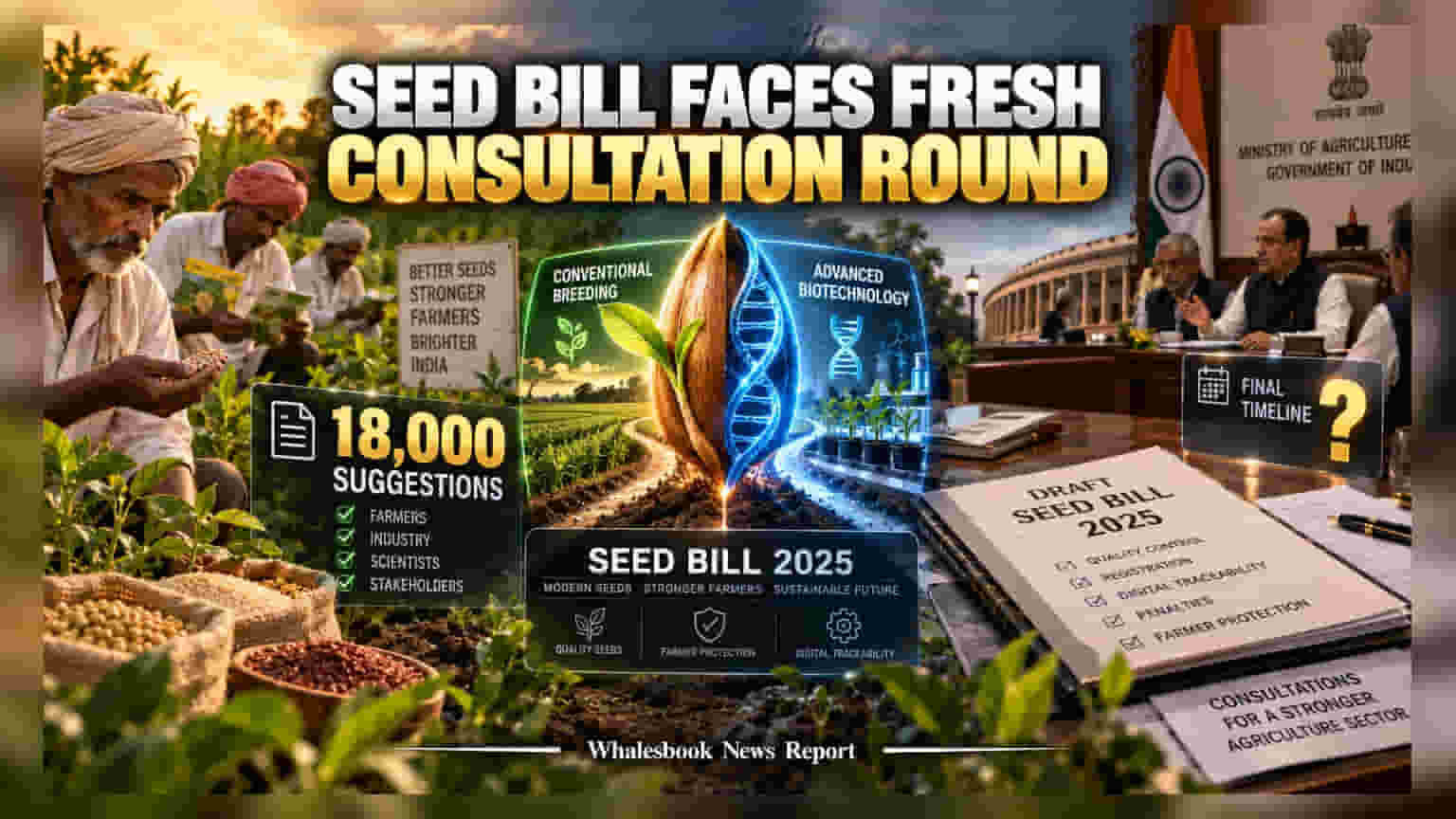
Union Agriculture Minister Shivraj Singh Chouhan has initiated a fresh round of discussions on the draft Seeds Bill, 2025, following 18,000 public suggestions. The government has not provided a firm timeline for the legislation, which aims to update the 1966 seed laws. For investors, the ongoing regulatory uncertainty surrounding GM seed policy and compliance requirements remains a key factor to watch.
The Ministry of Agriculture has launched another phase of consultations regarding the draft Seeds Bill, 2025. Union Agriculture Minister Shivraj Singh Chouhan met with over 20 farmer organizations on September 10, 2026, to discuss the proposed changes. This move comes after the government received approximately 18,000 suggestions from stakeholders since the draft was first introduced in November 2025.
Modernizing the 1966 Seeds Act
The proposed legislation aims to replace the outdated Seeds Act, 1966, and the Seeds (Control) Order, 1983. The government's primary goal is to address modern challenges in the agriculture sector by introducing mandatory registration for all seed varieties and implementing digital traceability through the SATHI portal. These measures are designed to ensure farmers have access to reliable planting material and to curb the sale of spurious or low-quality seeds.
For the industry, the bill proposes enhanced penalties for non-compliance, including fines of up to ₹30 lakh and potential imprisonment for the distribution of counterfeit products. While these stricter rules could help organized players by reducing the market share of unorganized and spurious operators, they also imply a higher compliance burden for established seed companies.
Key Areas of Disagreement
The lack of a clear timeline for the bill's introduction in Parliament has created an environment of regulatory uncertainty. A significant portion of the ongoing debate centers on the inclusion of genetically modified (GM) technologies. Farmer groups have expressed concerns regarding the classification of transgenic seeds, with some unions arguing against their inclusion in the law, fearing that it might prioritize corporate interests over traditional farming practices.
Conversely, industry representatives and agricultural scientists have highlighted the necessity of adopting next-generation technologies like gene editing and molecular breeding to improve productivity and reduce reliance on imports. These conflicting viewpoints make it difficult for the government to reach a consensus that satisfies all parties.
Investor Monitorables
Another sensitive issue remains the lack of clear, direct provisions for farmer compensation in cases of seed failure. The government has indicated that farmers would likely need to approach consumer forums for damages rather than relying on a direct compensation clause within the bill. Additionally, the policy on pricing, which the government intends to leave largely to market forces except in exceptional circumstances, will influence the revenue models of seed manufacturers.
Investors in the agricultural input sector should track the upcoming parliamentary sessions for any updates on the final draft. The core monitorable is how the final law balances the need for rigorous quality control and technology adoption against the requirements for farmer protection and affordability. Any shifts in the policy regarding GM seeds will particularly affect the future product pipelines and research investments of companies in the seed space.