

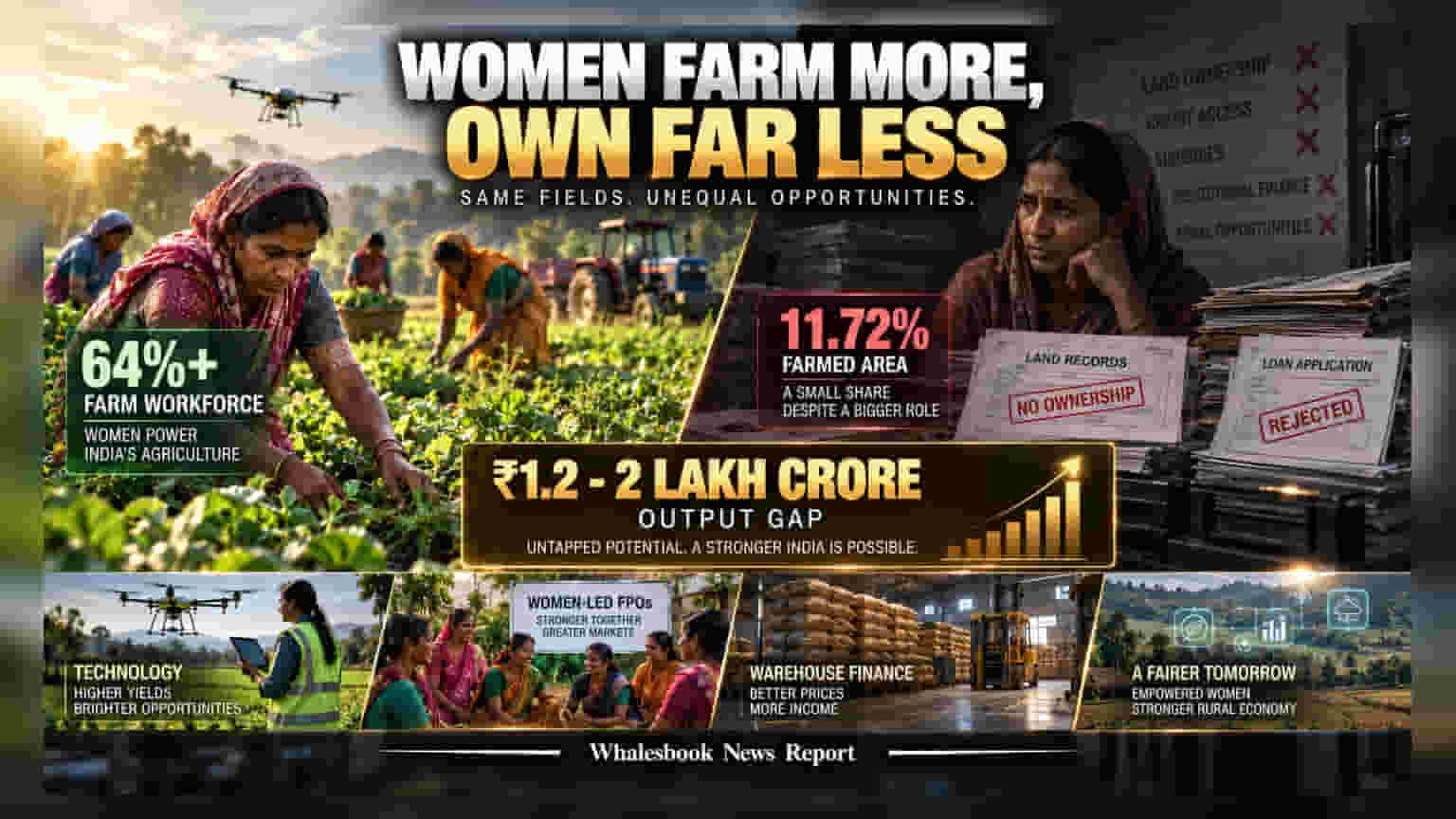
Women form over 64% of India’s farm workforce but hold only 11.72% of land, creating a significant productivity gap. A new report estimates that addressing these disparities could unlock up to ₹2 lakh crore in annual economic value by improving access to credit and technology.
A new report by Arya.ag has highlighted a sharp imbalance in India’s agricultural sector, showing that while women drive the majority of farm work, they remain largely excluded from land ownership and formal economic benefits. Women now account for more than 64% of the agricultural workforce, yet they manage only 11.72% of the country’s farmed land. This exclusion creates a structural barrier that limits rural economic growth and restricts the overall potential of India’s agriculture sector.
The economic consequences of this gender disparity are substantial. Because land ownership acts as the primary gateway for accessing formal credit, government subsidies, and essential agricultural support, women often find themselves locked out of vital financial services. The report estimates that if women had equal access to the same resources and tools as their male counterparts, yields on their farms could improve by 20% to 30%. The failure to close this gap is estimated to cost India between ₹1.2 lakh crore and ₹2 lakh crore in annual agricultural output.
Nearly half of all women in the sector are classified as unpaid family helpers, a stark contrast to men, of whom only about one-fifth fall into this category. This reliance on unpaid labor often masks the true contribution of women to the rural economy and limits their ability to invest in better inputs, storage facilities, or modern technology. When farm workers lack legal title to the land, they struggle to secure the institutional loans needed to upgrade from traditional to more efficient farming methods.
Technology and new financial models are increasingly viewed as pathways to bridge this divide. Innovations such as warehouse-receipt financing allow farmers to borrow against the value of their stored crops, providing a buffer against the need for distress sales during harvest seasons. Digital tools, including price monitoring feeds, soil health sensors, and AI-driven farm advisories, can bypass some of the traditional barriers linked to physical land records.
The rise of women-led Farmer Producer Organisations (FPOs) is another positive trend, offering a collective platform to aggregate produce, negotiate prices, and access institutional finance. Furthermore, targeted initiatives, such as training thousands of women to operate agricultural drones, suggest a shift toward high-value roles that could significantly increase rural household incomes. The future trajectory of agricultural productivity in India will likely depend on how effectively these digital and collective models can bypass legacy land-ownership barriers to empower the actual workforce on the ground.