

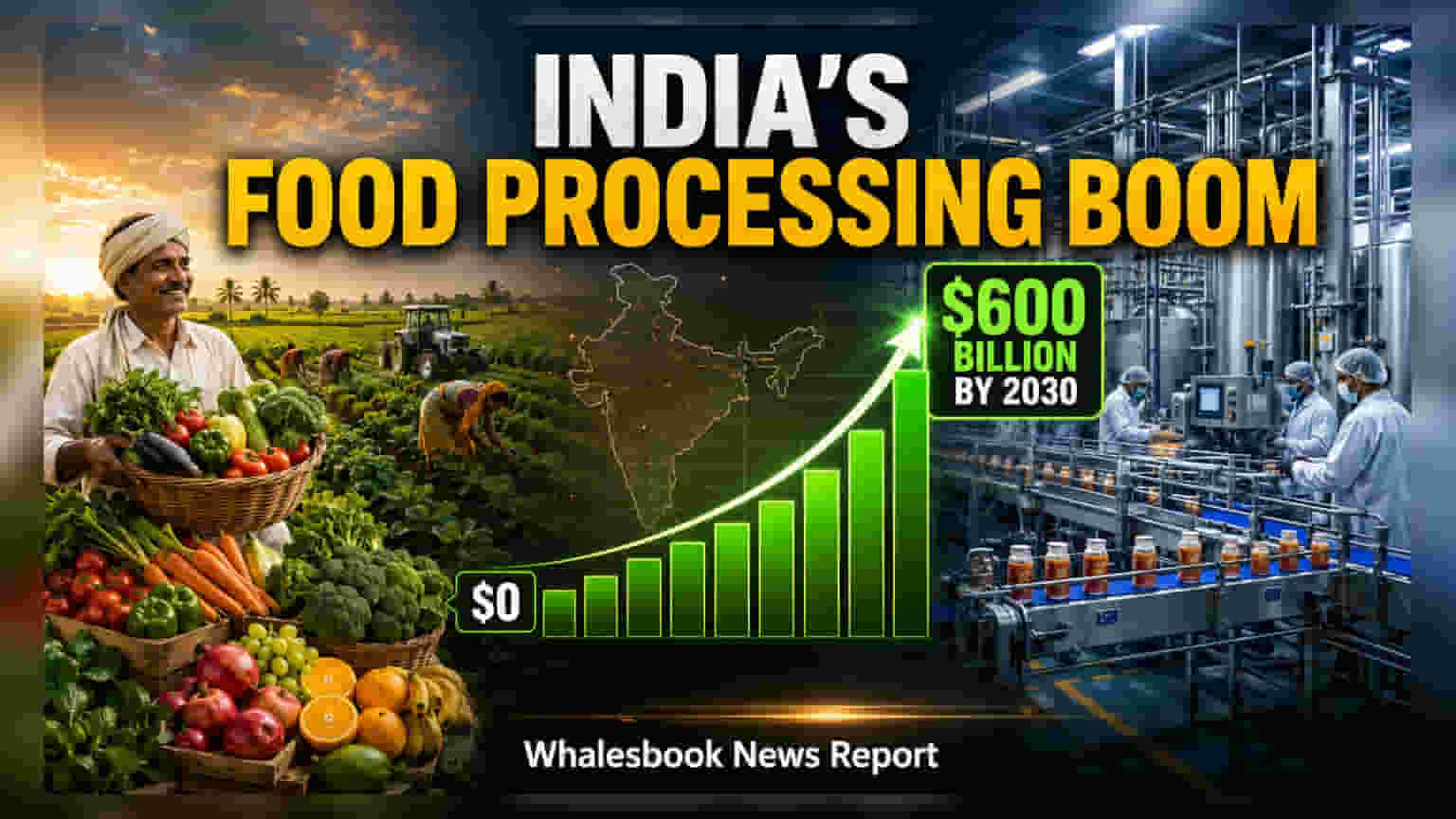
Union Minister Chirag Paswan is pushing for a shift from basic agricultural output to value-added food processing to boost farmer incomes. India currently processes only 12-13% of its food output, indicating significant growth potential for the industry. This strategy aims to reduce harvest waste, increase exports, and support small-scale enterprises.
Detailed Coverage
Union Minister for Food Processing Industries, Chirag Paswan, has set a strategic roadmap for the Indian food sector, advocating for a transition from mere agricultural production to high-value food processing. Speaking at an event marking the 50-year journey of the brand Maaza, the minister highlighted the economic potential of converting seasonal farm produce into year-round consumer products. This shift is intended to modernize the agricultural supply chain and improve the overall profitability of the rural economy.
Scaling the Food Processing Market
A joint report by FICCI and Deloitte suggests that the Indian food processing market has the potential to touch the $600 billion mark by 2030. Achieving this growth requires a significant uptick in technology adoption and investment. Currently, India processes roughly 12-13% of its total food production. This is notably lower than in many developed economies, which points to a large, untapped opportunity for domestic companies to expand their processing capacity and improve supply chain efficiency.
Investment in technologies such as food irradiation is being encouraged to reduce post-harvest waste. By extending the shelf life of perishable items, farmers can avoid distress selling and gain better access to both domestic and international markets. For investors, this represents a multi-year trend toward infrastructure development in cold chains, warehousing, and automated processing units.
Government Support and Rural Economic Impact
The government continues to focus on the PM Formalisation of Micro Food Processing Enterprises (PMFME) scheme to bridge the funding gap for smaller players. By providing financial assistance and training, the scheme aims to decentralize the processing industry. The minister pointed to success stories in regions like Ladakh to illustrate how small-scale processing units can generate local employment and create multi-crore turnover businesses, effectively moving the sector up the value chain.
Building globally competitive brands remains a long-term goal. While the push for processing is strong, the sector’s success depends on the ability of businesses to maintain consistent quality standards while scaling production. Investors looking at this sector should track the rate of capacity utilization, raw material sourcing stability, and the ability of companies to manage regulatory standards as they move toward higher-value product categories. The long-term performance of companies in this space will be tied to their ability to integrate directly with farmers, manage logistics effectively, and scale innovation to meet changing consumer demands.