

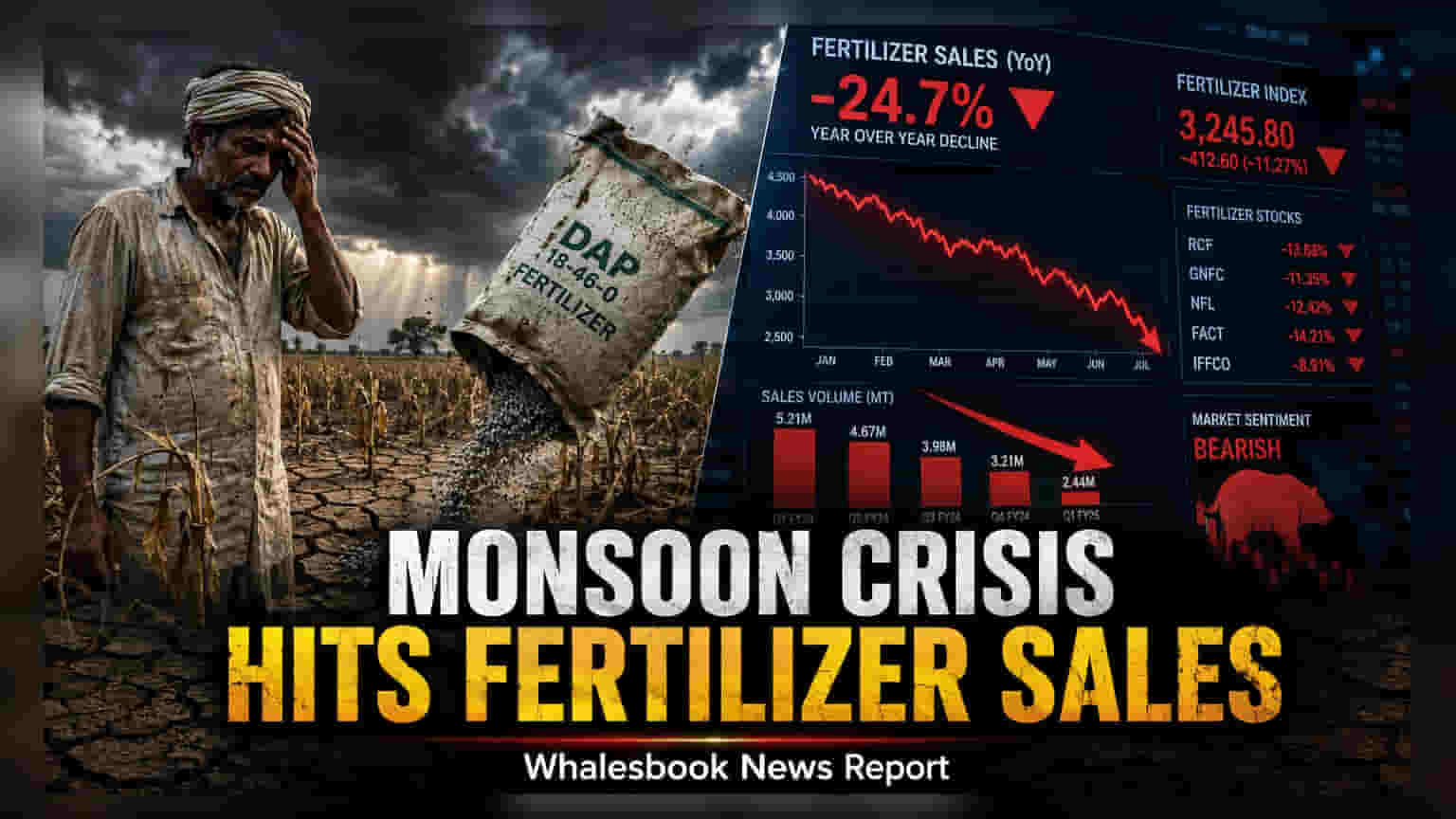
India’s fertilizer sales dropped 13% in July 2026 to 77.44 lakh tonnes, as erratic monsoon patterns delayed planting. With total Kharif sowing area trailing last year by 1.82%, the agriculture sector faces pressure, raising questions about rural demand and inventory management for fertilizer manufacturers.
Fertilizer consumption in India faced a notable decline during July 2026, a month typically critical for the Kharif cropping season. Overall sales across major fertilizers fell 13% to 77.44 lakh tonnes compared to 89.41 lakh tonnes in July 2025. This downturn extends a trend seen since the start of the fiscal year, with cumulative consumption from April to July dropping 9% year-on-year to 191.44 lakh tonnes.
Individual product segments also reflected this weakness. Urea sales, the most consumed fertilizer, fell by 9% to 49.28 lakh tonnes. Complex fertilizers witnessed a steeper decline of 29% to 15.51 lakh tonnes, while Muriate of Potash (MOP) sales dropped by 21% to 1.95 lakh tonnes. Di-Ammonium Phosphate (DAP) saw a more moderate contraction, aligning with trade reports of sales reaching approximately 10 lakh tonnes.
The decline in sales is closely linked to the uneven pace of the monsoon and its impact on agriculture. While rainfall patterns showed improvement in July, the initial deficit in the early part of the season caused delays in sowing across several regions. By August 7, 2026, the total Kharif sowing area reached 967.92 lakh hectares, which is 1.82% lower than the 985.89 lakh hectares recorded at the same time last year. Specifically, paddy acreage—a key driver for fertilizer demand—fell by 4.4% to 344.78 lakh hectares.
For investors, the primary concern lies in how fertilizer companies manage their inventory and distribution when demand is inconsistent. When sales do not align with expected peak season projections, it can lead to higher stock levels in the supply chain, which may impact working capital for manufacturers. The industry also remains sensitive to global supply chain developments. Potential geopolitical tensions, such as those near the Strait of Hormuz, pose risks to the cost and availability of raw material imports.
Moving forward, the sector’s performance will depend on the final yield outcome and the remaining monsoon distribution. If rainfall deficiencies persist in specific districts, it may further affect the final agricultural output and rural income, which acts as a proxy for fertilizer demand. Investors may monitor the August and September sales figures closely, as these will indicate whether the industry can bridge the gap in consumption or if the sluggish start will dampen overall fiscal-year demand.