

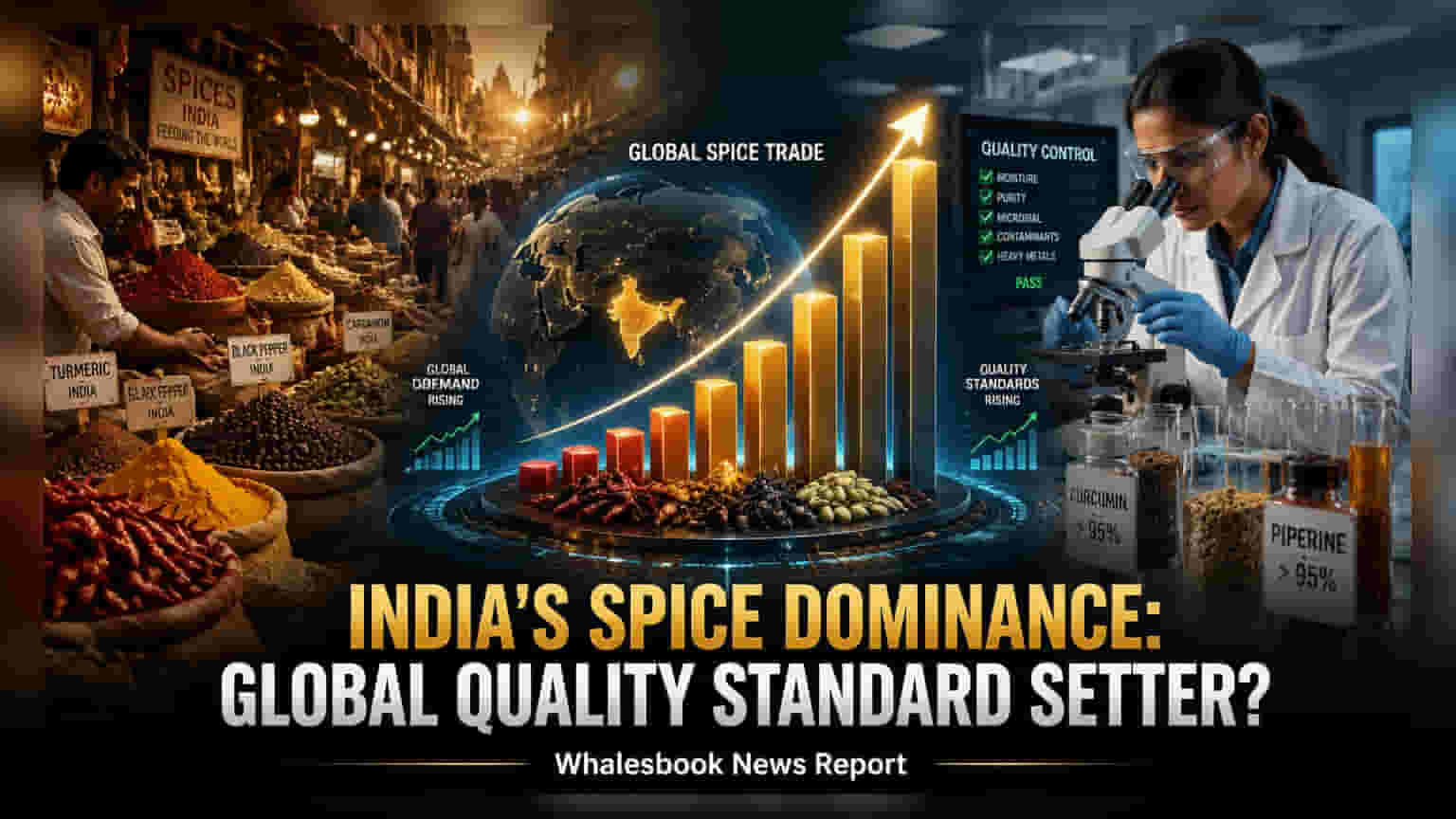
India is working to set international spice safety benchmarks through the Codex Alimentarius. Success depends on the FSSAI upgrading domestic rules to be more precise and enforceable from farm to fork. Investors in the sector should monitor potential changes in quality compliance requirements and supply chain oversight.
India currently leads the global spice market, contributing over 40% of the world's production. As a strategic move to cement its position, the country is leveraging its role at the helm of the Codex Committee on Spices and Culinary Herbs. By working with the Food and Agriculture Organization and the World Health Organization, India aims to influence the Codex Alimentarius, which establishes the global food safety standards that govern international trade.
Refining Domestic Quality Benchmarks
To exert true influence on the global stage, Indian authorities are focusing on addressing gaps in domestic regulation. Analysts and industry experts have noted that current FSSAI norms, such as those regarding the presence of live insects in products like turmeric powder, are often qualitative. To achieve global leadership, there is a push to transition toward quantitative, measurable standards that leave no room for ambiguity. This alignment is expected to eventually benefit domestic producers by reducing trade barriers and improving product acceptance in premium international markets.
Streamlining Regulatory Complexity
One of the structural challenges facing the industry is the existence of multiple, sometimes overlapping, regulatory bodies. Currently, the FSSAI sets mandatory safety standards, while the Bureau of Indian Standards (BIS) and Agmark provide voluntary quality benchmarks. Industry stakeholders have long argued that these voluntary standards should offer higher rigor—such as specific measurements for pungency in chili varieties—rather than just duplicating existing mandates. Reducing this regulatory overlap could simplify compliance costs for major spice exporters and food processors, allowing them to focus resources on enhancing quality rather than navigating redundant filing requirements.
Addressing Supply Chain and Safety Risks
Moving from farm to fork remains the primary challenge for the industry. Investigations into market samples have frequently highlighted issues such as excessive pesticide residues and poor storage conditions, which can lead to quality rejections in export markets. Currently, the FSSAI’s jurisdiction is largely focused on processing and retail rather than the agricultural production phase. Expanding oversight to include farm-level practices is seen as a necessary, albeit complex, step to ensure end-to-end traceability. For companies operating in this space, future regulatory shifts that mandate stricter farm-level documentation or testing could increase short-term operational expenses. However, these measures are essential to mitigate the risk of shipment rejections, which has historically damaged the reputation of Indian exporters in key markets like the European Union and the United States. Investors should watch for future policy updates from the FSSAI regarding the integration of farm-level oversight and potential changes in testing protocols for major export commodities.