

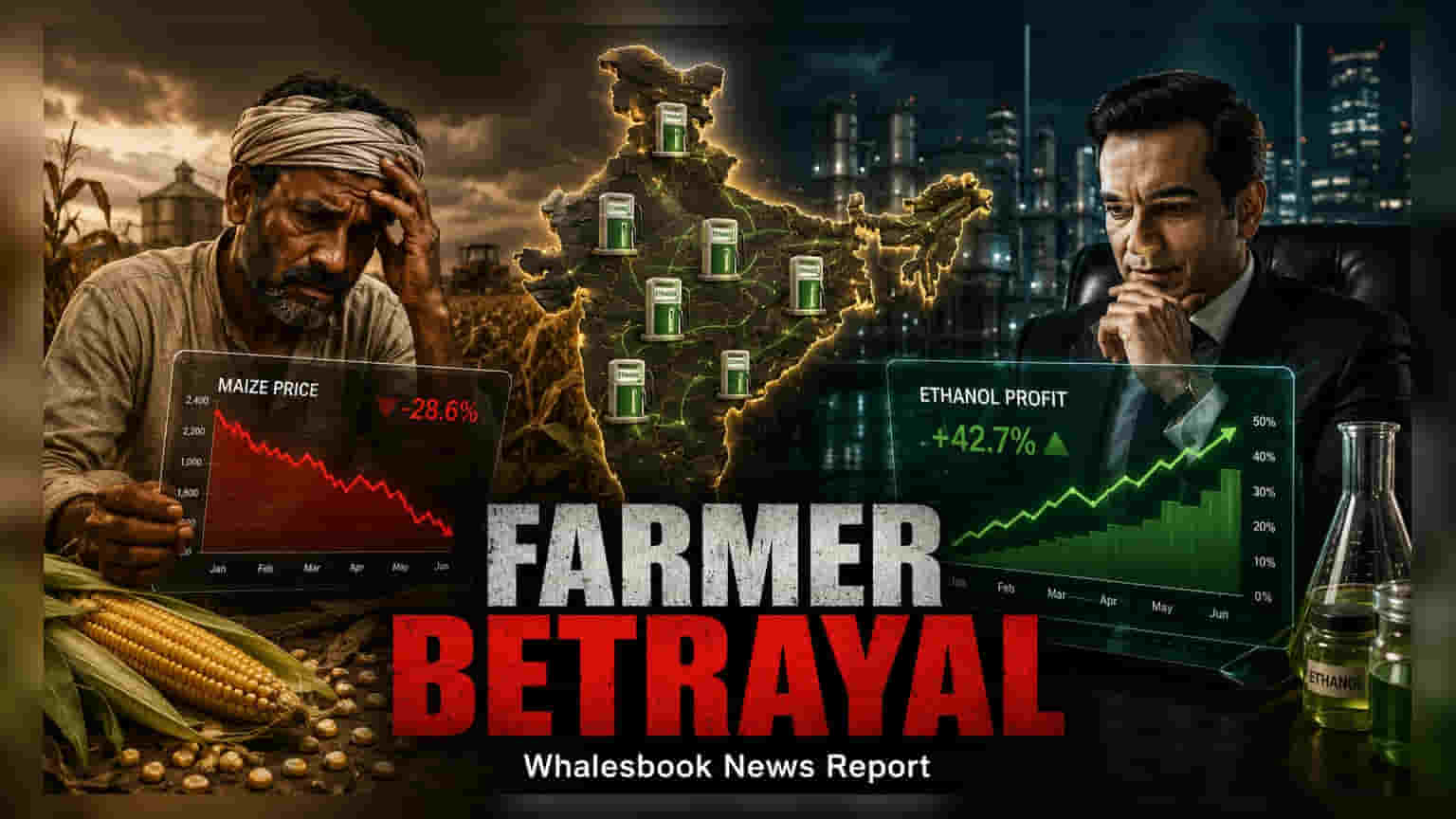
Official data indicates that maize prices consistently traded below the Minimum Support Price (MSP) between March 2025 and August 2026. Despite the government's ethanol blending push intended to support farmers, cheaper subsidized rice and import policies have pressured domestic prices. This creates a challenging outlook for farmers while benefiting distillery margins.
India’s ambitious ethanol blending program, designed to lower fuel imports and boost farmer income, is facing significant criticism due to its impact on agricultural price realization. Recent data from the Union Agriculture Ministry and the Agmarknet portal highlights a disconnect between the government's energy transition goals and the ground-level economic reality for maize and sugarcane producers.
Maize Price Deficit Against MSP
For maize growers, the promised price support from rising ethanol demand has not materialized. Market data from March 2025 through August 2026 shows that the average mandi price for maize remained consistently below the government-set Minimum Support Price (MSP). The disparity was particularly sharp in November 2025, when the average market price of ₹1,634.74 per quintal fell significantly short of the ₹2,400 MSP, representing a deficit of over ₹765 per quintal. By August 2026, maize continued to trade at ₹2,008.69, which is approximately ₹391 below the announced MSP. This persistent price gap raises concerns about the actual reach of government procurement support for non-paddy crops.
Industry Policy and Input Costs
Industry experts and government data suggest that the price pressure on maize is exacerbated by regulatory choices regarding feedstock. Distilleries have been provided access to rice at a subsidized rate of ₹23.20 per kilogram, which was lower than the MSP for paddy. This move allowed ethanol manufacturers to favor subsidized rice over maize as a primary raw material, effectively reducing demand in the open market for maize farmers. Additionally, trade policies allowing the import of maize have increased local supply, further dampening domestic price recovery. These distortions essentially prioritize lower feedstock costs for the distillery industry over price stability for local farmers.
Challenges for Sugarcane Revenue Sharing
Sugarcane farmers are raising similar concerns regarding the distribution of profits from the ethanol value chain. Although sugar mills utilize sugarcane juice and molasses for ethanol production, the current pricing formula for sugarcane remains tied strictly to weight and sugar recovery. There is no existing mechanism for farmers to receive a portion of the revenue generated specifically from ethanol sales. While the government maintains that the program helps mills improve cash flow and clear dues faster, farmers argue that timely payment is already a legal requirement and not a benefit of the ethanol policy. Consequently, demand is growing among sugarcane growers for an ethanol premium to ensure they share in the gains of the energy transition.
Investors monitoring the sugar and distillery sector should track whether government policy shifts toward incentivizing domestic crop procurement over subsidized alternatives. The long-term success of the ethanol blending mandate may depend on balancing the financial health of the distillery industry with sustainable income levels for the agricultural sector, which remains a key monitorable for potential changes in ethanol pricing or procurement norms.