

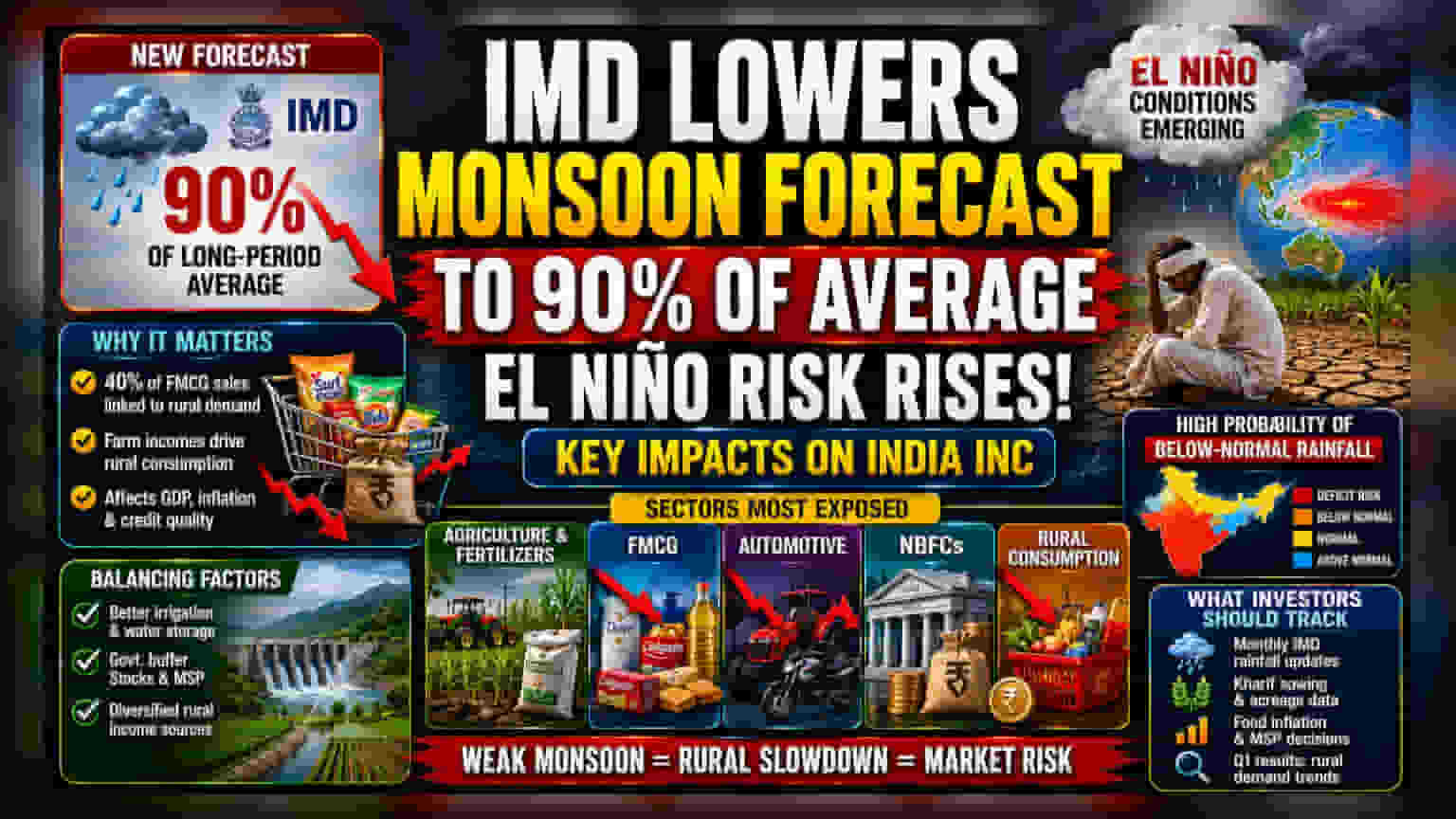
The India Meteorological Department has lowered its monsoon forecast to 90% of the long-period average, citing developing El Niño conditions. This outlook suggests a risk of below-normal rainfall, which could impact rural demand and farm incomes in the second half of the year. Investors are closely watching how this might affect companies in the agriculture, FMCG, automotive, and NBFC sectors.
What Happened
The India Meteorological Department (IMD) has revised its monsoon forecast downwards, now projecting rainfall at 90% of the long-period average. This adjustment, driven by the emergence of El Niño conditions in the equatorial Pacific, indicates a higher probability of a below-normal southwest monsoon season. The National Stock Exchange (NSE) recently highlighted this climate phenomenon as a significant macroeconomic risk for 2026, noting that the probability of deficient rainfall is particularly notable in key agricultural regions.
Why It Matters For The Business Economy
In India, the monsoon remains a critical driver of the rural economy, which contributes significantly to consumer demand. Approximately 40% of FMCG sales and a substantial portion of rural automotive and credit demand are linked to farm incomes. When rainfall is below normal, it can affect crop yields, increase food price volatility, and reduce the purchasing power of rural households. For investors, this creates a potential headwind for companies that depend on steady rural consumption to drive volume growth.
Sectoral Impact and Exposure
The impact of rainfall distribution is rarely uniform, and different sectors face varying levels of vulnerability:
- Agriculture and Fertilizers: Companies in the fertilizer and agrochemical space, such as Coromandel International and Chambal Fertilisers, typically monitor soil moisture and acreage data. A poor monsoon may lead to reduced demand for crop inputs if farmers lower their sowing intensity to manage costs.
- FMCG: For consumer goods giants like Hindustan Unilever, ITC, and Godrej Consumer Products, rural markets are a core pillar of growth. Weak farm income can force these companies to manage margin pressure if rural shoppers switch to lower-priced alternatives or reduce their overall purchase volume.
- Automotive: The demand for entry-level two-wheelers and tractors is closely tied to the rural economy. Manufacturers like Mahindra & Mahindra and Escorts Kubota often see volume fluctuations that mirror monsoon performance, as rural buyers tend to defer large purchases during periods of income uncertainty.
- NBFCs: Non-banking financial companies (NBFCs) with significant exposure to rural, tractor, or small-business loans may face asset quality risks. If agricultural cash flows are disrupted, credit stress and loan repayment delays could rise in portfolios managed by firms like Mahindra Finance.
The Balancing Factor
While the monsoon is a vital indicator, the Indian economy has shown increasing resilience over time due to better irrigation, diversified rural income sources, and government-led infrastructure spending. Not all companies are equally exposed; those with strong urban market presence or diversified product portfolios often maintain a buffer against rural volatility.
What Investors Should Track Next
Investors will be monitoring the IMD’s month-by-month rainfall data, specifically for the Monsoon Core Zone, which covers the primary rainfed agricultural regions. Early data on kharif sowing acreage will also be an important indicator for the agriculture and fertilizer sectors. For broader market sentiment, analysts will look for commentary in upcoming quarterly earnings reports on rural demand trends and inventory levels across the FMCG and automotive industries.