

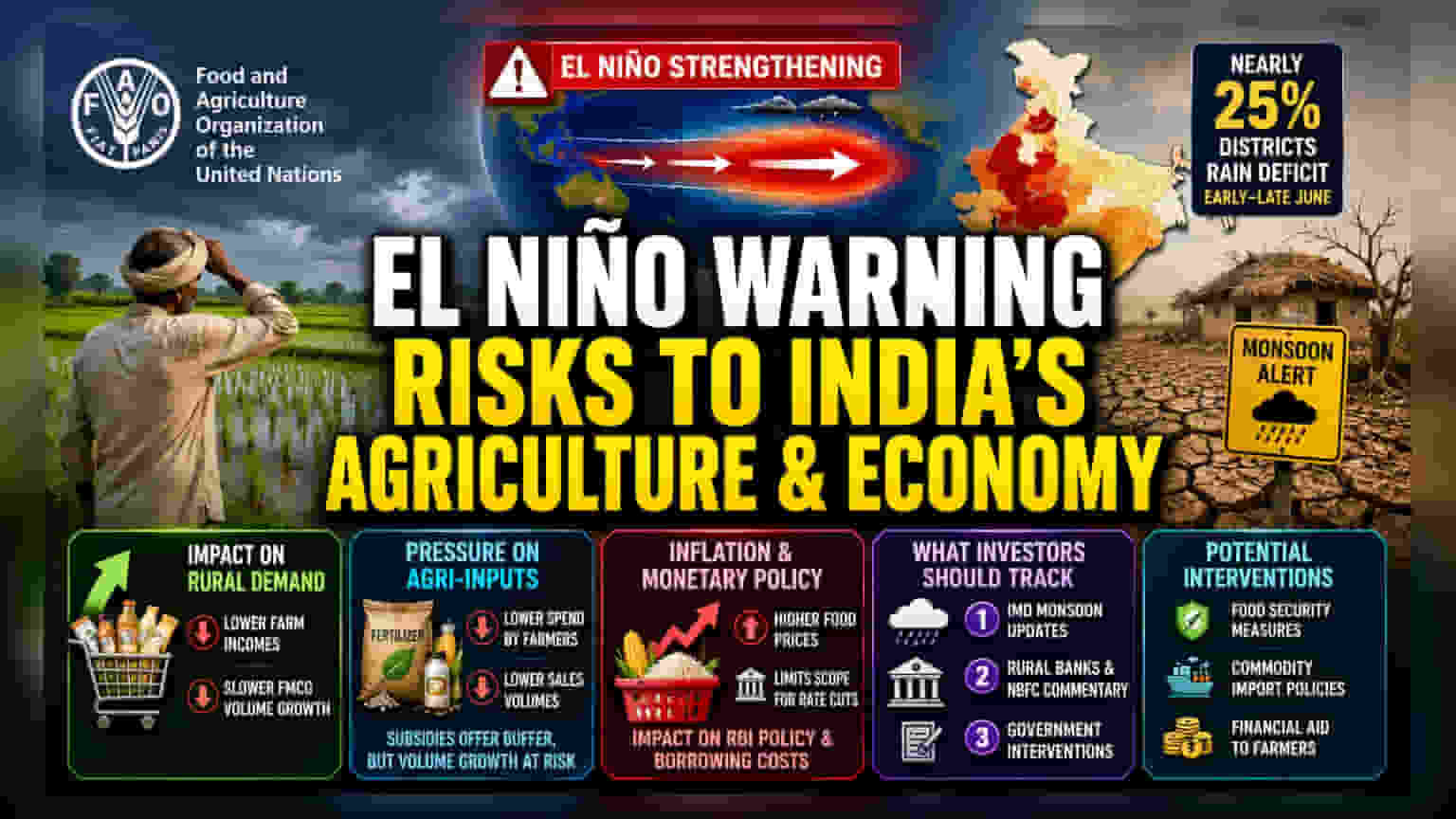
The FAO has warned of rising drought risks in India due to an strengthening El Niño, threatening the crucial kharif crop season. With monsoon rainfall already deficient, the situation has implications for rural demand, food inflation, and the performance of sectors heavily dependent on agricultural health.
What Happened
The Food and Agriculture Organization (FAO) of the United Nations has issued a warning regarding India’s agricultural sector, citing the strengthening of the El Niño weather phenomenon. This weather pattern, which typically warms Pacific Ocean waters, is often linked to suppressed rainfall in the Indian subcontinent. Data suggests that nearly a quarter of India’s districts have already faced large rainfall deficits between early and late June, raising concerns for the ongoing kharif planting season, which is critical for rice and maize production.
Impact on Rural Demand and FMCG
For investors, the health of the monsoon is a direct proxy for rural prosperity. A significant portion of India’s Fast-Moving Consumer Goods (FMCG) sector relies on rural demand. When rainfall is insufficient, agricultural output declines, directly reducing the disposable income of rural households. Historically, companies with high rural distribution networks often see volume growth slow down during years of poor rainfall. Investors typically watch quarterly commentary from major consumer goods companies to assess whether rural demand is holding up or weakening due to weather-related income pressure.
Pressure on Agri-Input Companies
The agriculture input sector, including fertilizer manufacturers, seed producers, and pesticide makers, is highly sensitive to the monsoon. If farmers anticipate lower rainfall, they may reduce expenditure on high-yield seeds and fertilizers to cut costs. This can lead to lower sales volumes for companies in this space. While government subsidies often provide a buffer, the volume growth is largely dependent on a healthy sowing season. Investors often monitor monsoon progression reports to gauge the potential demand for these products.
Inflation and Monetary Policy
The broader economic impact of a poor monsoon is typically linked to food inflation. Crops like rice and maize are essential food commodities. A supply-side disruption caused by drought often leads to higher food prices, which contributes to overall retail inflation. This is a critical factor for the Reserve Bank of India (RBI). Sustained food inflation can influence the central bank's interest rate decisions, as higher inflation generally limits the scope for rate cuts, impacting the cost of borrowing across the economy.
What Investors Should Track
Investors monitoring the potential impact of this weather event may focus on several key areas. First, official rainfall updates from the India Meteorological Department (IMD) regarding the progress of the monsoon in the coming months are vital. Second, management commentary from rural-focused banks and NBFCs regarding asset quality and loan collections in agricultural belts provides insight into the ground-level economic situation. Finally, any government-led interventions, such as food security measures, commodity import policies, or financial aid to farmers, are key monitorables that may influence sector-specific outcomes.