

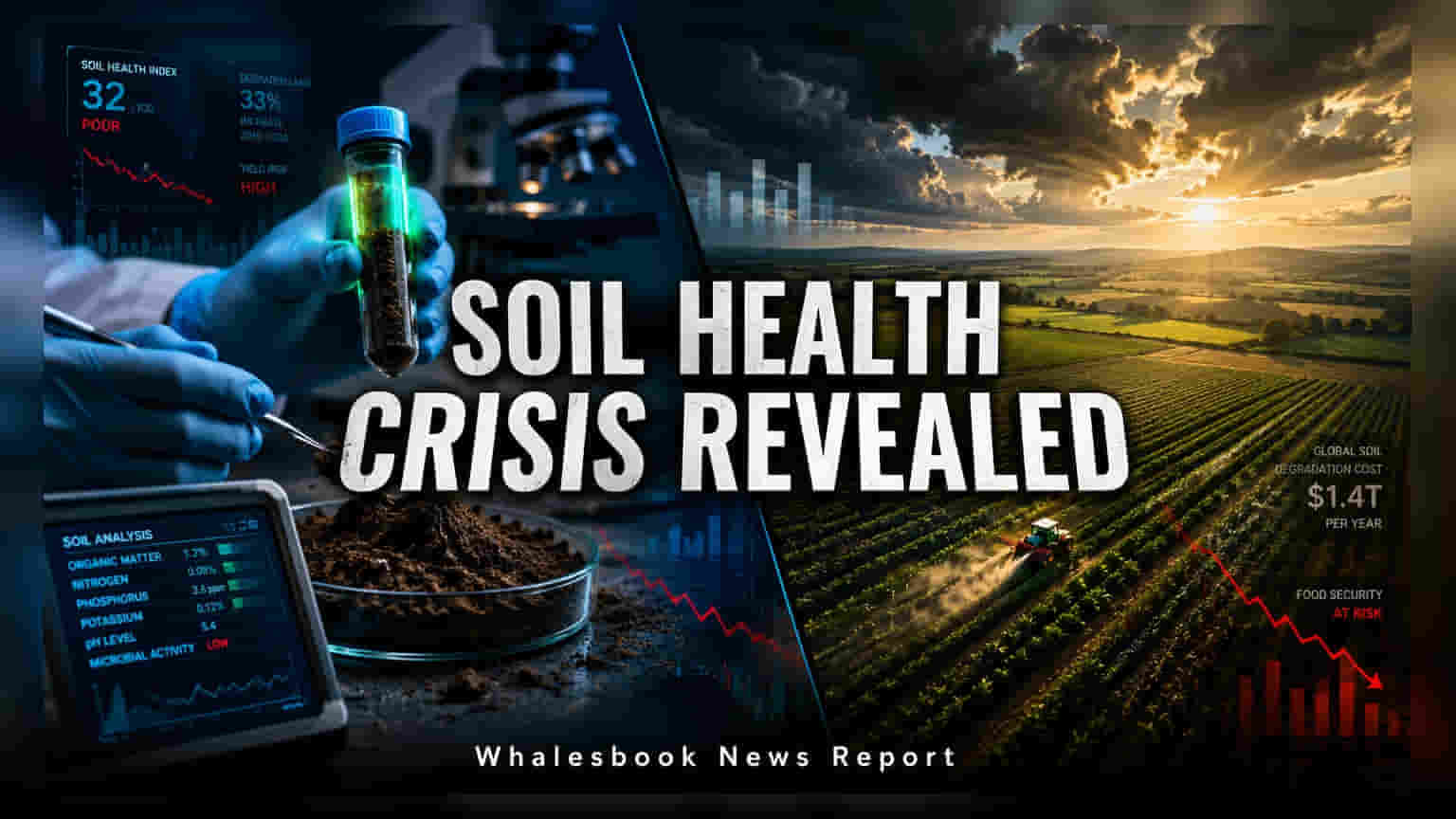
Dr. Reddy’s Foundation is expanding its Hyderabad soil testing lab capacity to process 100,000 samples before the Rabi season. This initiative aims to address gaps in soil health data and promote sustainable farming practices, providing farmers with more precise nutrient management advice.
Dr. Reddy’s Foundation is significantly increasing the operational capacity of its soil testing laboratory in Hyderabad, aiming to process between 75,000 and 100,000 samples ahead of the upcoming Rabi cropping season. This expansion marks a substantial increase from the 20,000 samples processed in its first year of operation, which began in January 2025. The foundation, which operates as a corporate social responsibility entity associated with Dr. Reddy's Laboratories, launched this facility to support its regenerative agriculture initiatives.
Filling Data Gaps in Soil Health
The initiative addresses persistent challenges within the national Soil Health Card scheme, where the scale of required testing often outpaces existing infrastructure. According to the foundation, the need for reliable, timely soil data is critical as farmers face changing climate patterns and fluctuating fertilizer availability. By establishing in-house testing, the foundation aims to bypass issues with consistency and long turnaround times that it previously encountered when utilizing external partners, including various agricultural universities and research institutes.
Technical Scope and Nutrient Management
The laboratory focuses on a broader range of indicators than traditional testing, which often limits its scope to 12-14 chemical parameters. The foundation’s analysis covers physical, chemical, and biological soil properties. Chemical indicators like pH levels and organic carbon are typically re-evaluated every two to three years in intensive farming, while biological properties—essential for long-term soil productivity—are assessed annually. This detailed data allows for the creation of farm-cluster-specific nutrient advisories, moving away from broader district-level recommendations.
Collaboration with ICAR
To standardize its efforts and enhance the reach of its findings, the foundation recently signed a Memorandum of Understanding with the ICAR-Indian Institute of Soil Science, based in Bhopal. This partnership is designed to integrate the foundation's field data with the scientific expertise of ICAR. The collaboration will prioritize the development of a digital soil health repository, high-resolution soil mapping, and advanced climate-smart advisory tools.
Operational Impact and Next Steps
Beyond lab analysis, the foundation is actively providing extension support to farmers, including training on balanced fertilization and the use of biological solutions, such as NPK-soluble bacterium consortiums, to unlock residual nutrients. Investors and industry observers will monitor whether this increased sampling throughput successfully translates into improved crop yields and reduced fertilizer costs for the farming clusters involved. The next major milestone for the initiative will be the completion of its target sample processing count before the Rabi planting season concludes, which will serve as a benchmark for the scalability of its regenerative agriculture model.