

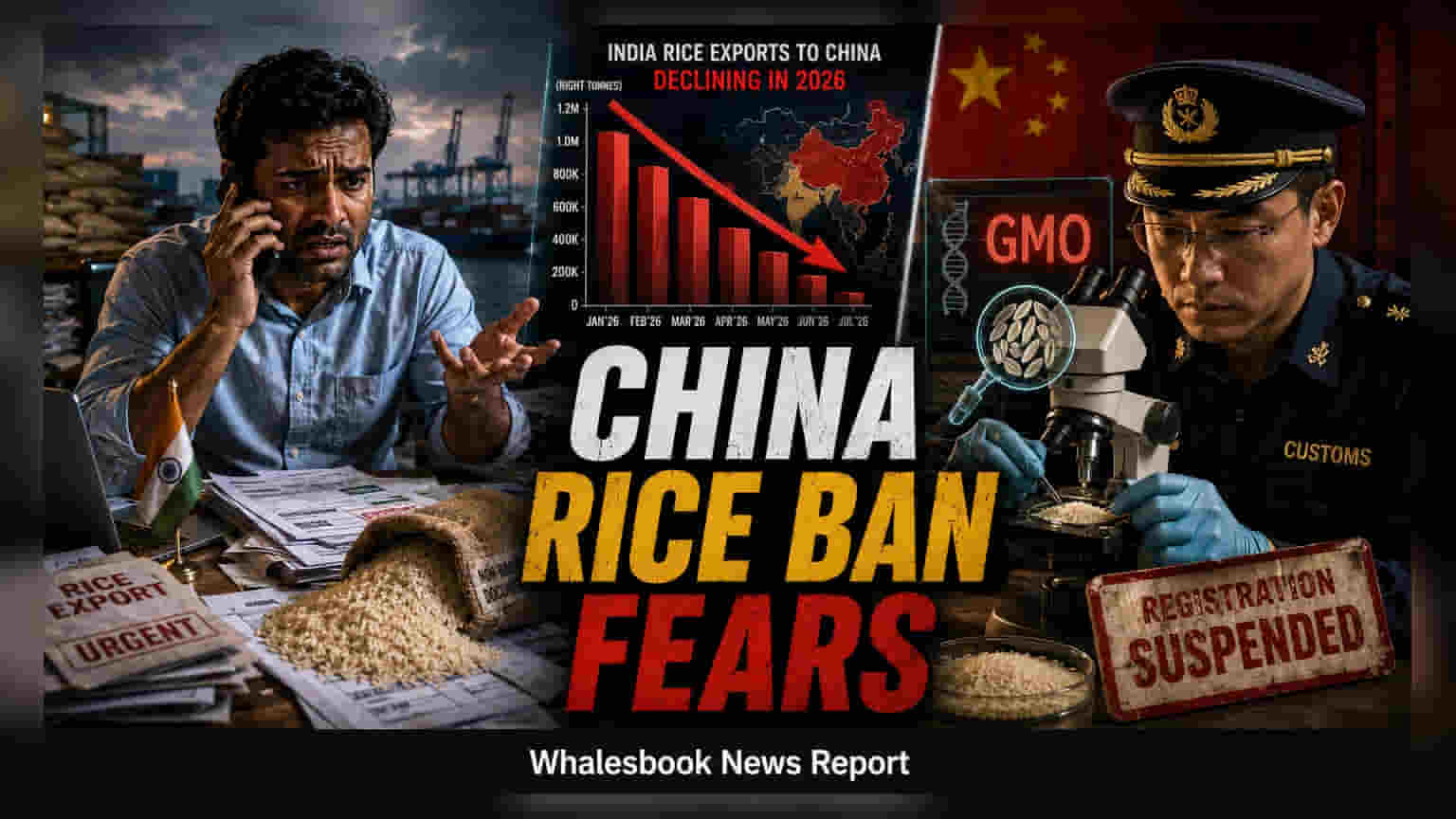
China’s customs authority has suspended seven Indian rice exporters, citing alleged genetically modified organism (GMO) contamination. The move has prompted an urgent appeal for government intervention, as Indian industry bodies maintain that India does not commercially cultivate GM rice. This trade friction highlights potential risks for Indian agricultural exports and the importance of resolving international food safety verification standards.
The trade relationship between India and China in the agricultural sector is facing fresh pressure after the General Administration of Customs of China (GACC) suspended the registration licenses of seven Indian rice exporters. The suspension is based on allegations that these shipments contained traces of genetically modified organisms, a claim that industry stakeholders in India are strongly contesting.
The Rice Exporters Association of Chhattisgarh has formally approached Commerce Minister Piyush Goyal to request central government intervention. The association argues that the Chinese findings contradict the reality of Indian agriculture, where the commercial cultivation of genetically modified rice is strictly prohibited. According to the association, the affected export consignments had successfully passed local testing and certification protocols for being non-GMO before they were cleared for shipment.
This is not an isolated incident. Reports indicate that China had previously rejected at least 70 consignments of Indian non-basmati rice earlier in 2026. The escalation from rejections to the full suspension of export licenses has created significant financial and operational stress for the affected companies, many of which are small and medium-sized enterprises. These exporters often operate on thin profit margins, and the inability to clear goods or maintain buyer confidence can lead to liquidity pressure and inventory build-up.
Technical discrepancies between laboratory results in India and those conducted at the destination port in China appear to be at the heart of the dispute. The Indian industry is calling for a joint scientific and technical review to compare testing methodologies, sampling protocols, and standard laboratory procedures. Such a review would be essential to determine why test results differ and to establish a consistent framework that prevents future trade disruptions.
For the broader agricultural sector, the risks extend beyond this specific dispute. If these allegations are not addressed through diplomatic and scientific channels, they could damage India's reputation as a reliable supplier of high-quality, non-GMO rice. This is particularly concerning as other major importers, such as those in the European Union, typically apply strict scrutiny to food imports. If international buyers perceive a recurring quality issue, it could lead to stricter testing requirements or, in a worst-case scenario, trade restrictions, which would impact export volumes and price competitiveness.
Investors and stakeholders in the agricultural export sector will likely track whether the Indian government can facilitate a successful dialogue with Chinese authorities to reinstate the licenses. The outcome of these talks will serve as a key monitorable for the stability of rice export trade. Additionally, market participants may watch for any potential impact on domestic rice prices if the blocked export volumes remain unsold and are redirected into the local market, potentially creating a supply glut.