

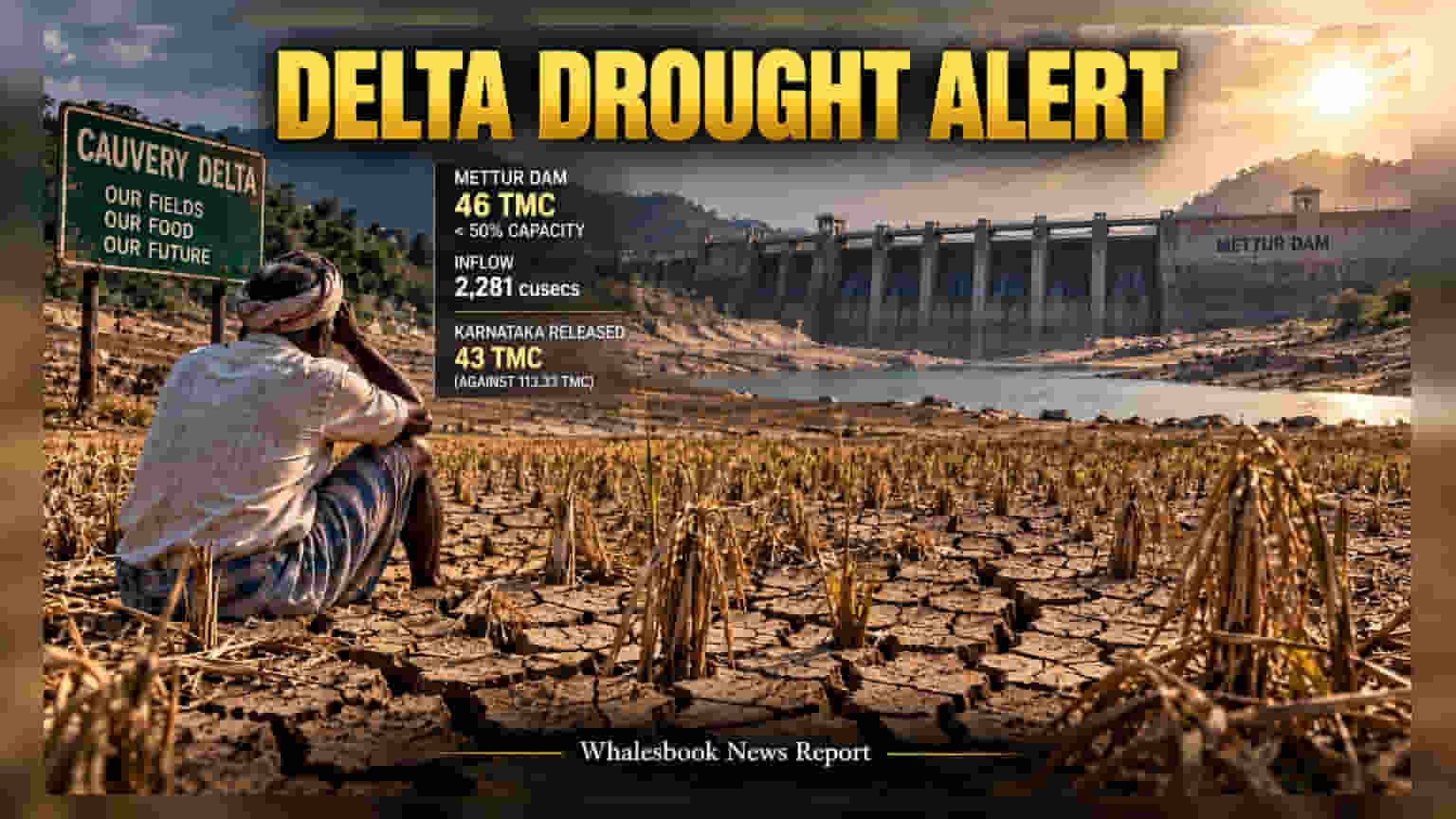
The Mettur Dam’s water level has dropped to 46 TMC, leaving a 70 TMC shortfall compared to tribunal mandates. This threatens 40% of the Cauvery delta’s paddy cultivation and could disrupt rural demand and agricultural input sales in the region.
The Mettur Dam is facing a severe water shortage, with storage levels dropping to 46 TMC, which is less than half of the dam's total capacity. Current inflows have slowed to approximately 2,281 cubic feet per second, a rate insufficient to support large-scale irrigation for more than a month. This situation creates significant uncertainty for the upcoming Samba paddy season, which is vital for the agricultural economy of the Cauvery delta.
The current crisis follows a shortfall in water sharing between Karnataka and Tamil Nadu. Data indicates that Karnataka has delivered 43 TMC of water against the mandated 113.33 TMC required by the Supreme Court and the Cauvery Water Disputes Tribunal as of September 22. This results in a deficit of 70 TMC. With Karnataka’s own usable water reserves reported at 37 TMC, the likelihood of sufficient water releases in the near term remains low, leaving the Tamil Nadu delta without a viable surface irrigation source.
For the broader economy, the impact of this agricultural disruption could be significant. The delta region is a major contributor to state paddy production, and a decline in output often translates into reduced rural income. If farmers are unable to initiate cultivation, the demand for agricultural inputs such as high-yield seeds, fertilizers, and farming equipment may decrease. This shift in spending power may affect companies in the agri-input and rural-focused consumer sectors that operate within the Tamil Nadu market.
Political and agricultural leaders are calling for immediate state-level financial intervention to manage the crisis. Proposed relief measures include a direct compensation package of Rs 25,000 per acre for farmers unable to plant crops, and an additional input assistance package of Rs 10,000 per acre for those attempting to save their harvest. There is also rising pressure on the state government to guarantee consistent three-phase electricity supply until February 2027 to help farmers utilize groundwater for irrigation.
Investors in the rural economy and agricultural sector may monitor upcoming government announcements regarding fiscal aid, crop insurance payouts, and electricity policies. Additionally, a reduced crop harvest could lead to volatility in local rice prices. The key monitorable for the next few months will be how the state government handles the compensation requests and any changes in water sharing negotiations, which will ultimately determine the harvest outcome and the resilience of rural consumer demand in the affected region.