 Whalesbook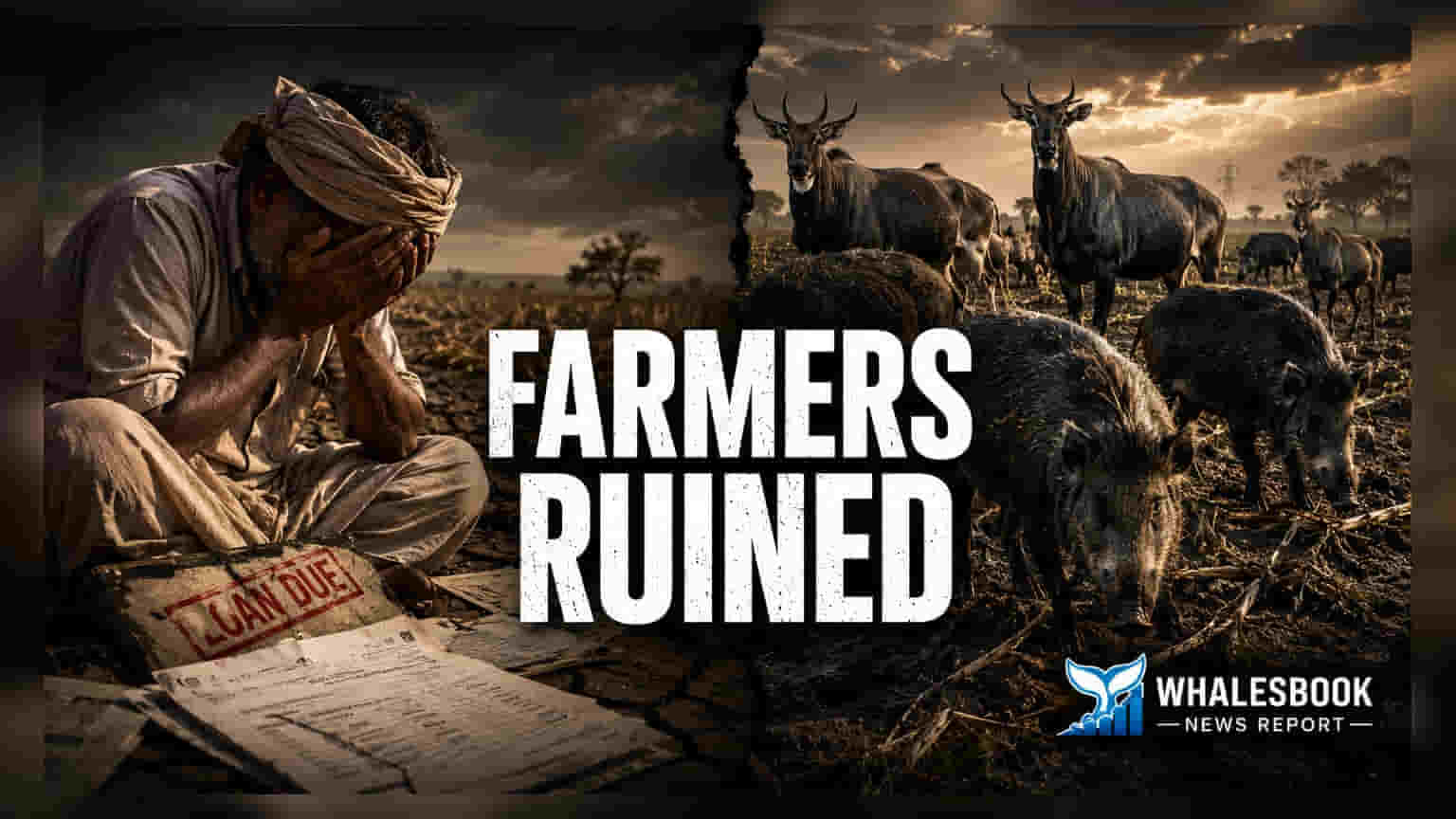


The Structural Shift in Agrarian Risk
While historical narratives regarding Bundelkhand have long centered on moisture deficits and water scarcity, the primary risk to agricultural output has migrated toward biological destruction. Farmers are no longer calculating viability based on rainfall patterns or irrigation access, but rather on the daily probability of total crop annihilation by nilgai and wild boar. This creates a high-cost environment where capital expenditure on seeds, fertilizer, and labor is frequently erased within a single night, rendering conventional return-on-investment models obsolete for smallholders.
The Failure of Mitigation Economics
The reliance on deterrent technologies, such as solar-powered fencing, has proven insufficient against the physical adaptability of the region’s wildlife. While non-profit interventions subsidize installation costs, the technical specifications often fail to account for the jumping capabilities and sheer population density of the local nilgai. Consequently, farmers face a persistent operational drag where the cost of protection—whether through fencing or 24-hour physical vigilance—approaches the total projected value of the harvest. This creates a negative-sum game that incentivizes land abandonment over continued cultivation, particularly for high-value pulses and cereals that require stable growing cycles.
The Forensic Bear Case
The long-term viability of small-scale farming in the region faces a structural impasse. Beyond the immediate destruction of produce, the crisis is hollowing out the rural labor force. As household heads migrate to urban centers in search of wage labor, the remaining population is increasingly comprised of the elderly, who lack the physical capacity to manage land or maintain intensive wildlife deterrents. This demographic shift indicates a permanent contraction in the regional labor supply, which will likely exacerbate land idling over the next several growing seasons. Without state-level intervention regarding wildlife corridor management or structural compensation mechanisms, the region risks a cycle of irreversible agricultural decline.
Future Outlook and Policy Gaps
Market participants and policy analysts are increasingly monitoring the trend of rural-to-urban migration as a leading indicator of regional economic stress. The current disconnect between local agricultural policies, which still prioritize water-based mitigation, and the reality of wildlife-driven loss suggests that existing support frameworks are misaligned. Future stability depends less on irrigation expansion and more on the reconciliation of wildlife conservation policies with the necessity of maintaining a viable subsistence and commercial farming base in central India.