 Whalesbook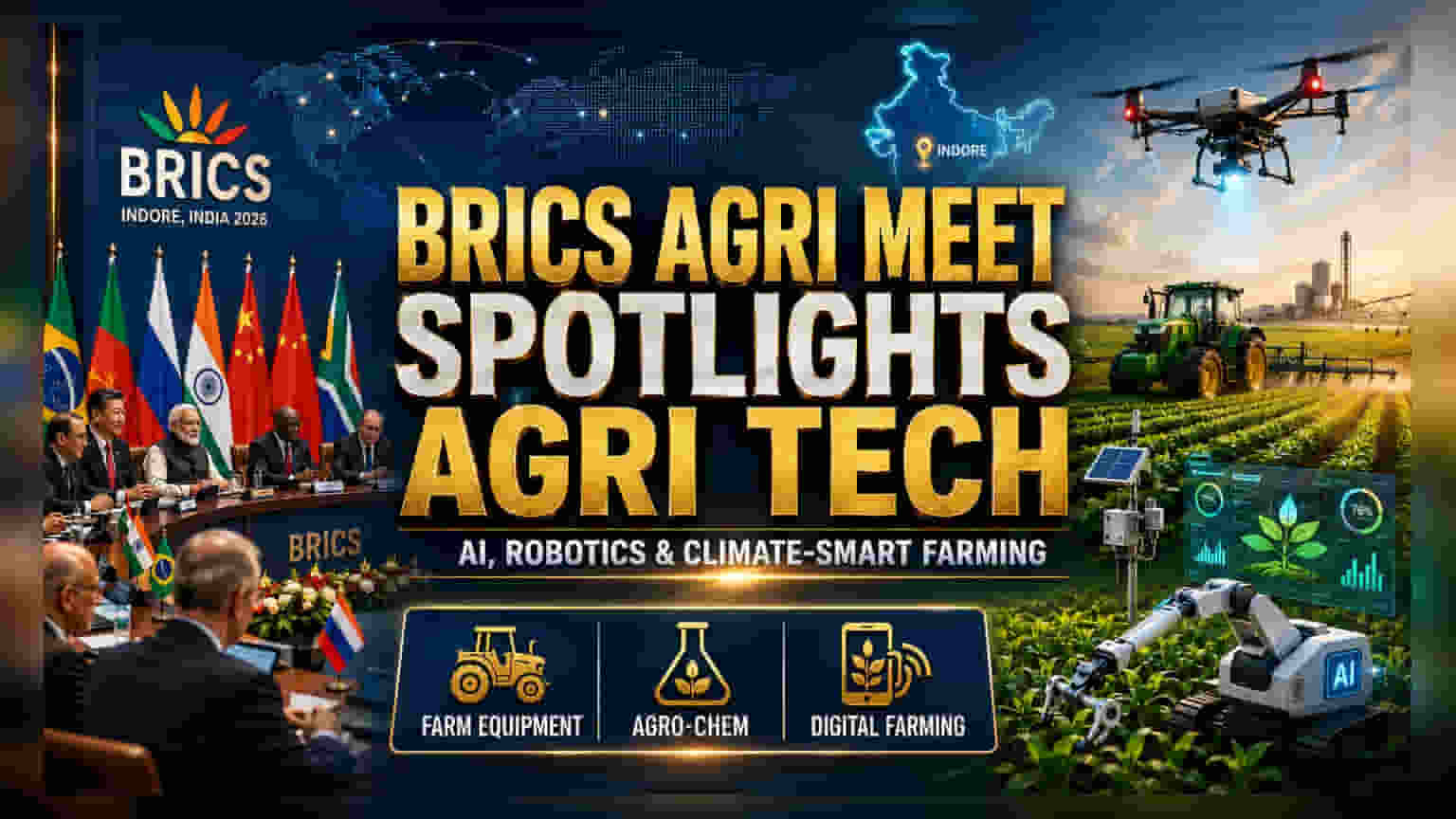


What Happened
Representatives from BRICS nations have gathered in Indore for a five-day agriculture meeting, running through June 11, 2026. The discussions, hosted under India's chairmanship, are centered on critical themes including food security, climate-smart farming, and the integration of technology in agriculture. Delegates are deliberating on joint strategies to address shared agricultural challenges that impact the large populations within these member nations. The working group meetings will conclude with a ministerial-level summit scheduled for June 12 and 13.
The Investment Link: Why This Matters
While the meeting is a diplomatic and policy-focused event, it signals the direction in which governments are steering the agricultural sector. The key areas of discussion—namely climate-smart farming, AI, robotics, and digital agriculture—are not just government targets; they are the future of the private sector in India. As BRICS nations focus on these pillars, it highlights a potential increase in government-backed initiatives, research funding, and trade collaborations. For investors, this environment often precedes policy changes that may favor companies offering modern agricultural solutions, such as mechanized farming equipment or precision-based agro-inputs.
The Tech Shift in Agriculture
One of the most notable aspects of the agenda is the emphasis on AI and robotics. Indian agriculture is currently transitioning from traditional labor-intensive methods to more mechanized and data-driven systems. If the BRICS deliberations lead to simplified trade or technology-sharing agreements, it could benefit companies that manufacture tractors, harvesters, and implements, as well as firms developing software for crop monitoring and yield management. The goal of 'climate-smart' farming implies a shift toward products that help crops withstand extreme weather, which may also boost the market for high-quality seeds and efficient agro-chemicals that improve soil health without excessive waste.
Sectors to Watch
Investors typically view these macro-level meetings as indicators of upcoming industry focus. Three major sectors are often impacted by such shifts. First, farm equipment manufacturers, who stand to gain if there is a push for greater farm mechanization to improve productivity. Second, agro-chemical companies that focus on research and sustainable inputs, as climate-smart farming requires more precise chemical application. Third, agri-tech companies and large conglomerates with agriculture divisions that are investing in digital farming, AI monitoring, and supply chain infrastructure.
Risks and Realities
It is important to understand that diplomatic meetings do not guarantee immediate financial gains for companies. The transition to advanced farming techniques is a long-term process and faces significant hurdles. For instance, high initial costs for farmers to adopt AI or robotics can slow down sales for manufacturers. Additionally, supply chain and logistical challenges in rural India remain a persistent risk for growth. Furthermore, while trade collaboration is discussed, global trade dynamics and regulatory barriers can often limit the actual impact of such agreements on bottom-line profitability for listed companies. Investors should remain cautious not to overstate the immediate impact of policy discussions on company earnings.
What Investors Should Track
Beyond this meeting, investors should track several practical developments. First, watch for any concrete announcements or joint declarations that follow the ministerial meeting on June 13, specifically regarding technology transfer or trade standards. Second, observe if domestic policies in India align with these discussions, such as new subsidies for mechanized farming or tax incentives for agri-tech startups. Finally, monitor quarterly updates from listed agricultural firms to see if they are highlighting increased demand for newer, technology-backed products, which would confirm that these government discussions are translating into real-world business.