

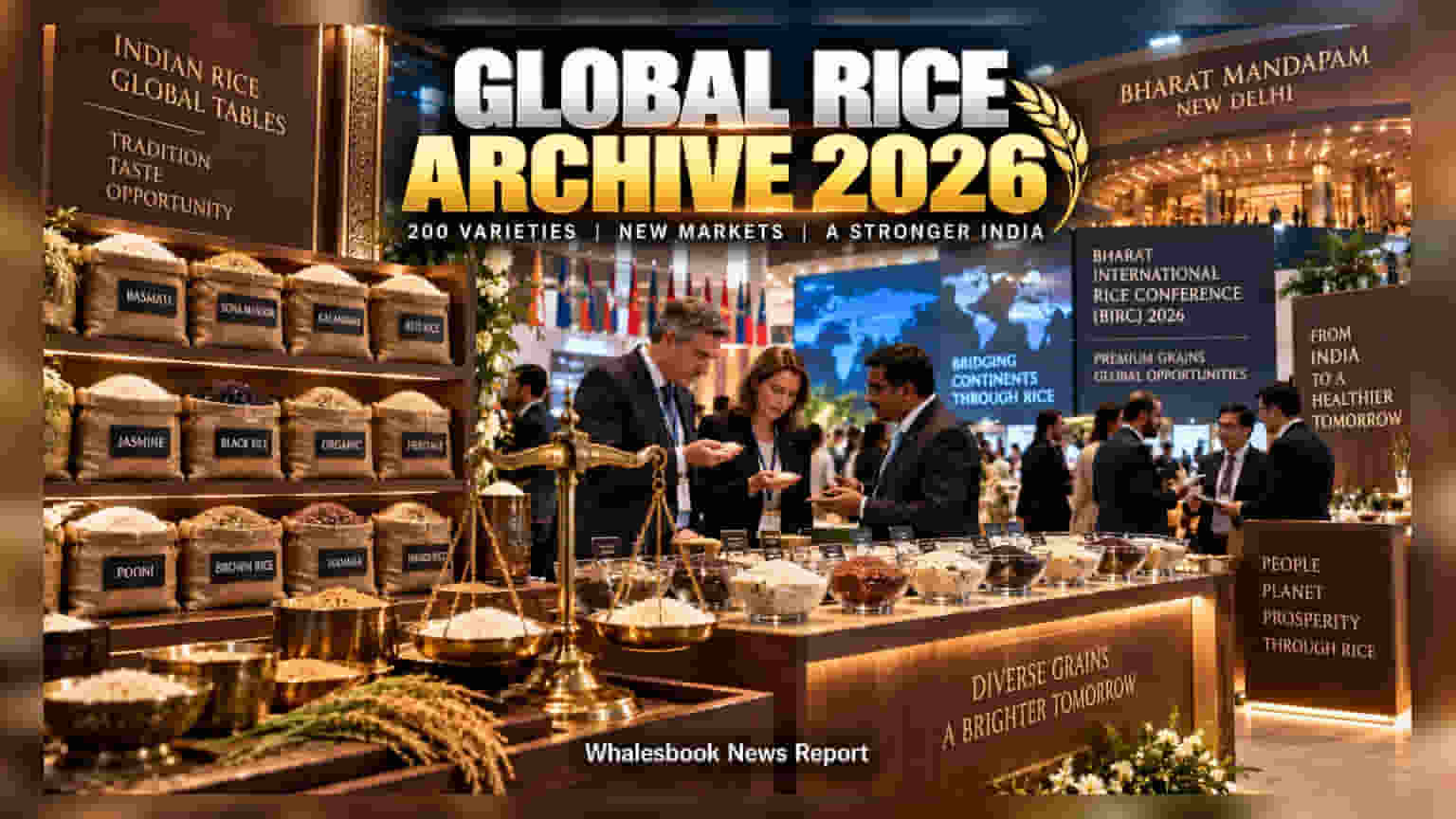
The Bharat International Rice Conference 2026 in New Delhi will launch a Global Rice Archive on October 23. The project aims to drive premium rice exports by showcasing 200 varieties to global buyers, helping exporters shift toward high-value segments amid changing trade policies.
The Bharat International Rice Conference (BIRC) 2026, scheduled for October 23 at Bharat Mandapam in New Delhi, is set to introduce a Global Rice Archive. This platform will display 200 different rice varieties to international buyers. The goal is to move beyond price-only competition and encourage global importers to source value-added and specialty rice directly from Indian suppliers. The archive will feature premium Basmati lines and rare regional heritage grains, while also including international varieties to serve as a benchmark for quality and characteristics.
For investors, this shift toward value-added products is significant. India’s rice export market has often faced volatility due to government policy changes, including periodic export restrictions or bans on non-basmati white rice aimed at controlling domestic food inflation. By focusing on premium and aromatic rice segments, exporters can potentially insulate their profit margins from the regulatory risks that frequently affect bulk commodity shipments. This strategy aligns with the broader Rice Sector Vision 2047, which seeks to professionalize the sector and improve realization per tonne.
Listed players in the Indian rice sector, such as LT Foods, which owns the Daawat brand, and KRBL, known for India Gate, have long focused on the premium Basmati and aromatic rice markets. These companies benefit when the industry successfully attracts international retailers and distributors who prioritize consistent branding and quality over low-cost commodity trading. Other players like Chaman Lal Setia Exports also compete in these higher-value segments. The success of this archive in facilitating B2B trade could strengthen the competitive standing of these firms in global markets.
However, the outlook for the sector remains tied to government trade policy and global demand. While premium Basmati rice typically receives more lenient treatment, any sudden change in government export policy or global trade tariffs remains a key business risk. Additionally, the ability of exporters to maintain margins will depend on raw material costs, which can fluctuate based on local harvest yields and weather conditions. Investors should monitor export volume growth in premium segments and any updates to government agricultural export policies, as these factors will determine the actual financial benefit of such trade-focused initiatives.