

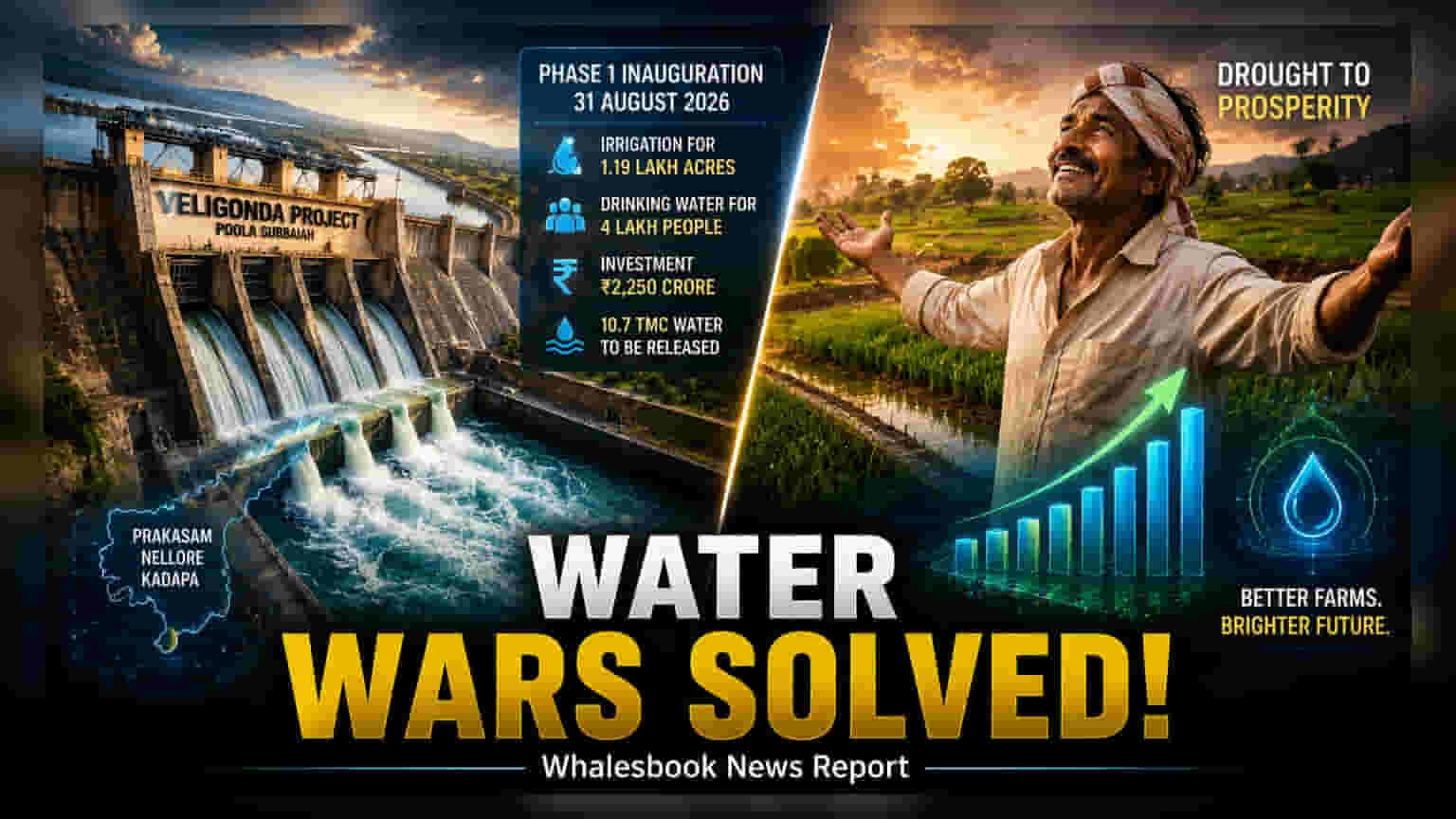
Andhra Pradesh Chief Minister N. Chandrababu Naidu has confirmed that Phase 1 of the Poola Subbaiah Veligonda Project will be inaugurated on August 31, 2026. This major irrigation and drinking water project aims to benefit drought-prone districts. As a government-owned infrastructure project, it is not a publicly listed entity, but it represents a significant development for the region's agricultural economy.
Andhra Pradesh Chief Minister N. Chandrababu Naidu has announced that the first phase of the Poola Subbaiah Veligonda Project will be officially inaugurated on August 31, 2026. This milestone is set to impact the drought-prone regions of Prakasam, Nellore, and Kadapa districts by providing access to irrigation and drinking water.
Project Scope and Economic Impact
The Veligonda Project is a large-scale government infrastructure initiative designed to divert surplus waters from the Krishna River. Phase 1 is expected to irrigate 1.19 lakh acres of land and provide drinking water to approximately 4 lakh people in the region. The state government has directed significant resources toward this phase, with expenditure reaching approximately ₹2,250 crore over the last two years to reach this stage of completion. A key part of the project involves filling the Nallamala Sagar reservoir, with officials planning to release 10.7 TMC of water during the upcoming ceremony.
For those following the state's economic development, this project is part of a broader push to improve water security in inland districts. The government has also disbursed ₹768 crore in rehabilitation and resettlement compensation to over 6,000 families to clear hurdles for the project’s execution.
Understanding Project Context
It is important for readers to note that the Veligonda Project is a public infrastructure initiative managed by the state government and is not a publicly traded company. Consequently, there are no stock price movements, exchange filings, or equity-related metrics associated with this development.
While the inauguration marks a major operational step, the project has a long history of challenges that have shaped its current timeline. The initiative was first conceptualized in 1996, and progress has been slowed over the decades by complex land acquisition requirements, rehabilitation and resettlement challenges, and necessary budget revisions. Past reports from the Comptroller and Auditor General of India have also highlighted concerns regarding historical planning and execution processes, which have contributed to time and cost overruns.
Monitoring Future Developments
Looking ahead, the success of the project will depend on consistent water management. The infrastructure’s ability to deliver on its irrigation goals relies heavily on timely and sufficient inflows from the Krishna River. Stakeholders will be watching to see how the state manages the operational phase and whether the water diversion reaches the targeted reservoirs as planned. Any future updates regarding the timeline for Phase 2, which aims to cover an additional 3.283 lakh acres, will likely be a key monitorable for the regional agricultural economy.