

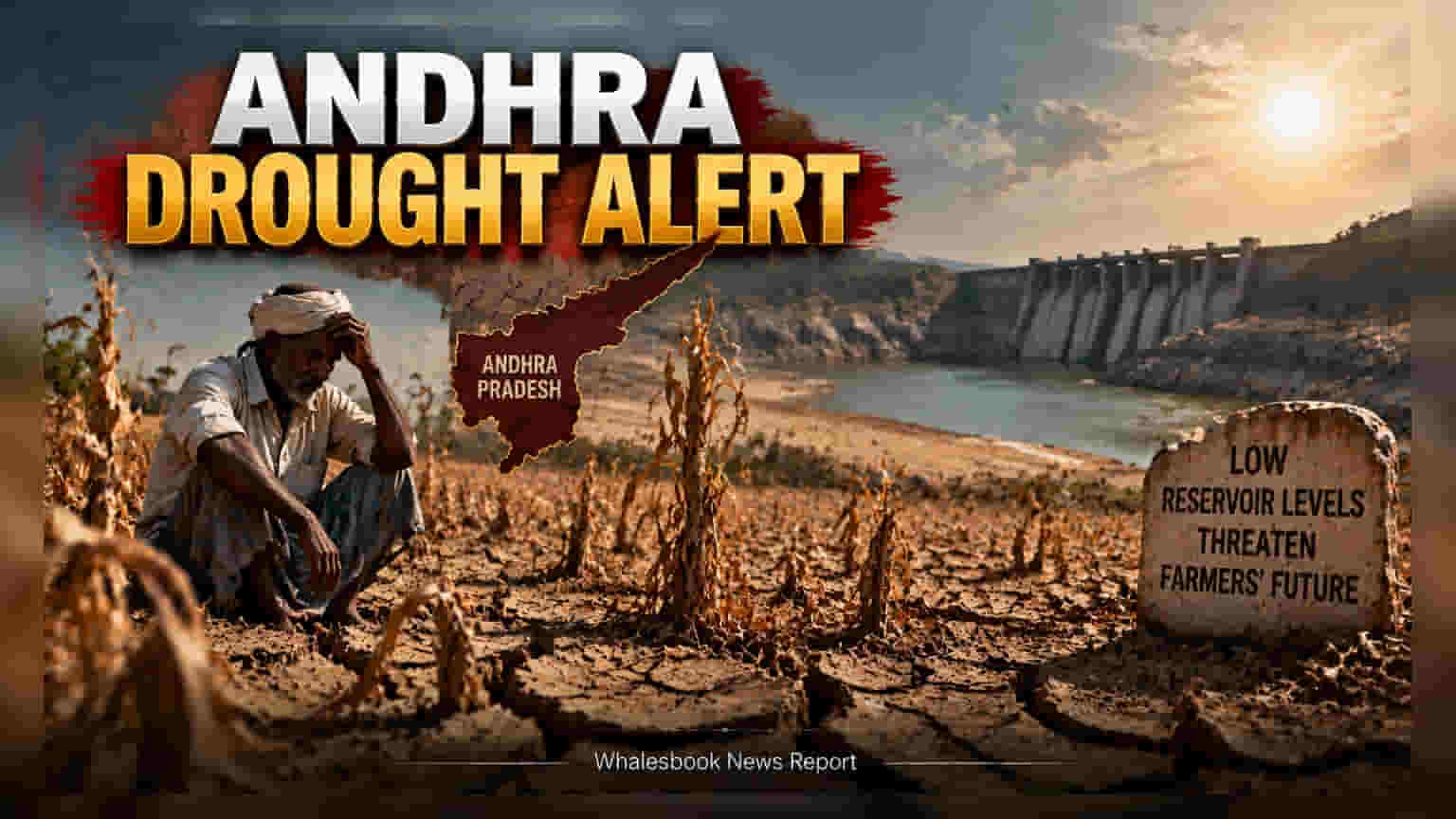
Andhra Pradesh faces a severe agricultural challenge with a 54.2% rainfall deficit since June, restricting Kharif sowing to 74% of its target area. The drought is causing widespread crop wilting and moisture stress, raising concerns over rural income stability and potential cooling of consumption demand in the state's agrarian economy.
The state of Andhra Pradesh is currently navigating a significant agricultural crisis as the southwest monsoon has underperformed, leading to a 54.2% rainfall deficit recorded between June 1 and September 12, 2026. This lack of adequate precipitation has severely hampered the Kharif planting season, with total sowing operations reaching only 26.50 lakh hectares, which is just 74% of the normal expected area.
The physical impact on fields is becoming increasingly evident. Reports indicate that moisture stress is affecting over 2.4 lakh hectares, with essential crops such as paddy, cotton, and groundnut bearing the brunt of the dryness. A substantial portion of these crops is currently facing severe wilting, while smaller patches have suffered complete drying. This water crisis is further compounded by critically low levels in key reservoirs, particularly in the Pennar basin. Dams like Somasila and Kandaleru are showing storage levels significantly below historical norms, leaving little buffer for irrigation needs in the critical final stages of the growth cycle.
From an economic perspective, the situation is a point of concern. Given that approximately 62% of Andhra Pradesh’s population relies on the agricultural sector for their livelihood, a poor harvest cycle often leads to reduced disposable income for rural households. Investors observing the state’s economic activity should note that prolonged crop stress can pressure rural consumption levels. This slowdown often ripples through industries with high exposure to rural spending, including fast-moving consumer goods, fertilizers, and agricultural machinery providers.
Beyond the immediate damage, the inability to meet planting targets increases the risk of lower yields and reduced quality for major foodgrains and cash crops. The financial burden on the farming community may also rise as producers attempt to mitigate losses with higher input costs. The immediate outlook for the agrarian sector will depend heavily on any late-season recovery in rainfall or government-led relief interventions. Market participants are likely to monitor the state government’s efforts to provide protective irrigation or financial aid, as these actions will determine the extent of the economic impact on the local economy in the coming quarters.