

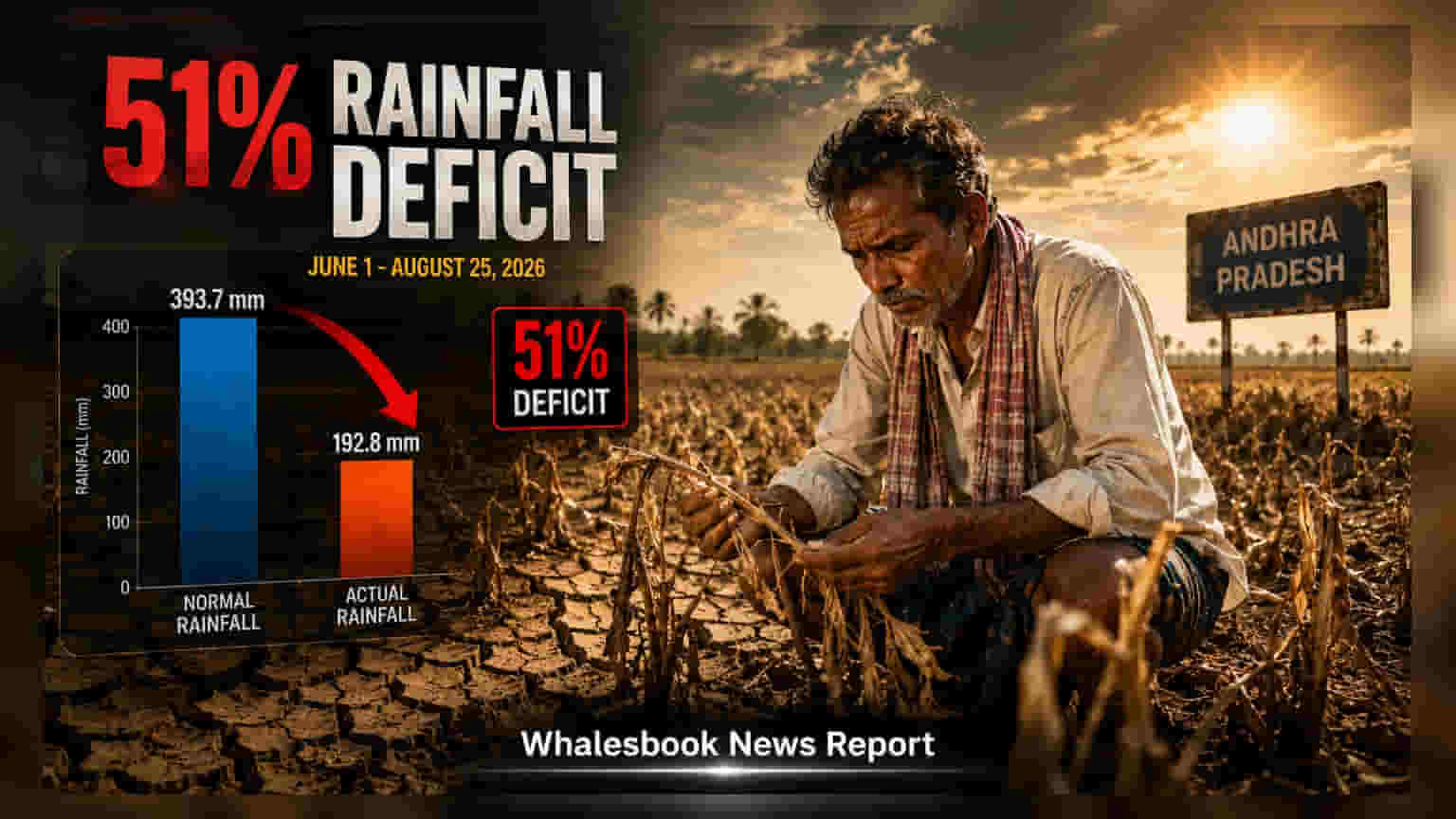
Andhra Pradesh reports a severe 51% rainfall deficit this monsoon, causing a decline in Kharif sowing area. The state has shifted toward less water-intensive crops, but investors may monitor risks to rural income, agriculture input sales, and potential stress on farm loans in the region.
Andhra Pradesh is currently facing a significant agricultural challenge as the state recorded a 51% rainfall deficit between June 1 and August 25, 2026. Data shows the state received only 192.8 mm of rain against the normal seasonal expectation of 393.7 mm, placing all 28 districts under moisture stress. This weather pattern, driven by the El Niño phenomenon, has led to a noticeable contraction in the Kharif crop sowing area, which has fallen to approximately 20.35 lakh hectares from 25.63 lakh hectares during the same period last year.
The reduction in water availability has forced a change in farming patterns. Paddy, a water-intensive crop, has seen a decrease in acreage, while the state has encouraged a transition toward pulses, which saw a 23.6% increase in cultivated area compared to the previous year. While this shift reflects a strategic attempt to manage water scarcity, it highlights the broader pressure on the agricultural sector in the region.
For stock market investors, this development carries implications for several sectors with exposure to the rural economy of Andhra Pradesh. Companies in the agriculture input space, such as fertilizer and pesticide manufacturers, may face pressure on volume sales. If farmers reduce expenditure or scale back planting due to water shortages, it can dampen demand for crop protection products and soil nutrients. Investors often track this sector closely, as Andhra Pradesh is a significant market for many large fertilizer producers operating in Southern India.
Financial institutions with large exposure to rural credit and agricultural loans in the state may also face scrutiny. Prolonged moisture stress and potential yield losses can impact the repayment capacity of farming communities. In past instances of severe weather-related disruption, lenders have faced challenges regarding the asset quality of their rural portfolios, leading to a rise in potential bad loans. Markets often monitor the delinquency rates in agricultural credit portfolios when such climate events occur.
Beyond input and finance sectors, FMCG companies with strong distribution networks in rural Andhra Pradesh might experience a softening in demand for non-essential goods. When farm income is threatened by lower output or higher costs for water management, consumer spending in rural pockets typically slows down.
The state government has implemented a four-pillar contingency strategy, focusing on water management, climate-resilient farming, protection of allied agricultural sectors, and increased crop insurance coverage to mitigate these risks. As the El Niño phenomenon persists, the key monitorable for investors will be the upcoming Rabi season sowing data and updates on groundwater levels. Any announcement regarding government relief measures or changes in irrigation policies may also influence the sentiment for companies linked to the rural economy in the state.