 Whalesbook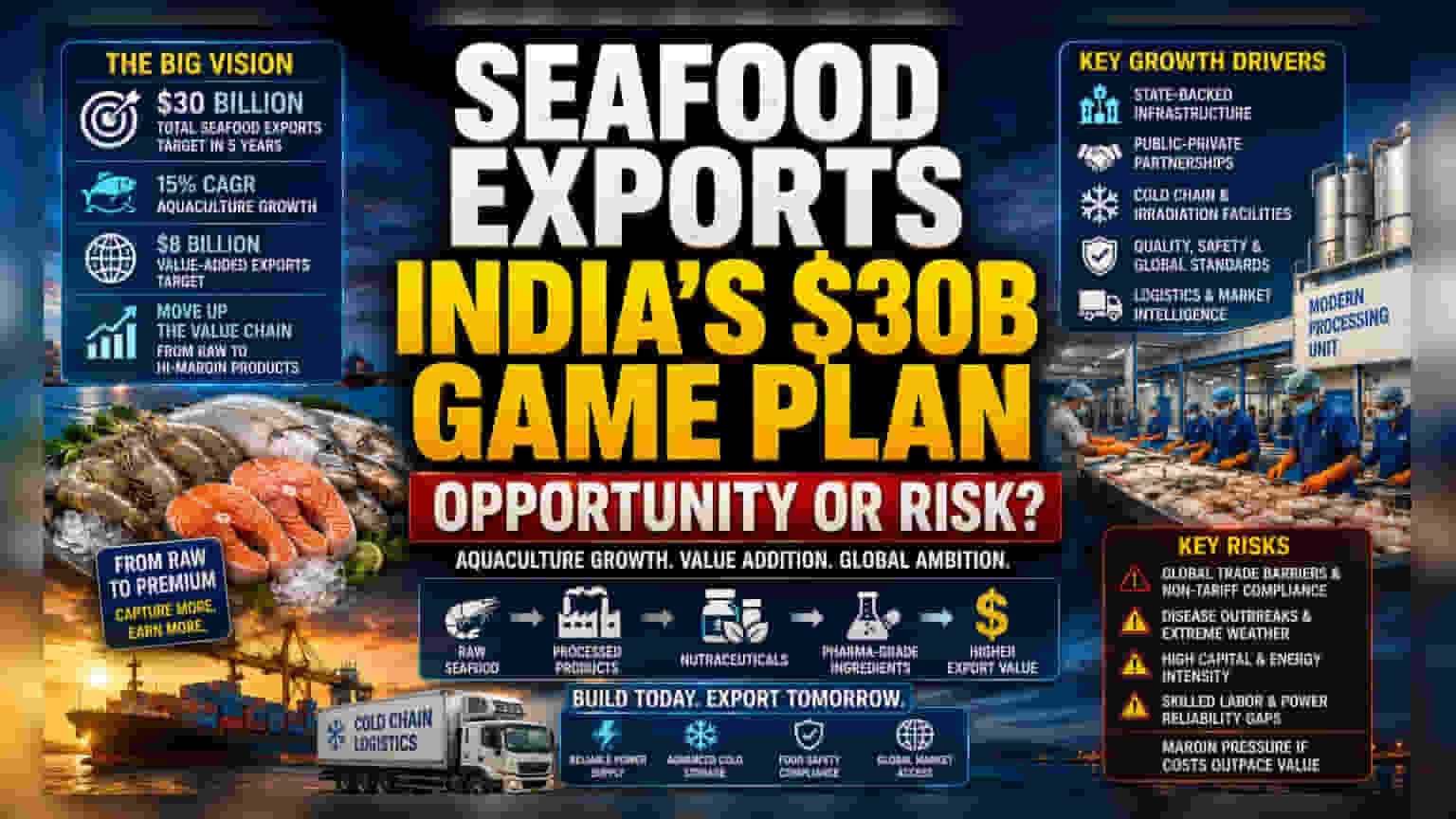


The Shift to High-Margin Exports
The ambition to capture a larger share of the global seafood market reflects a structural pivot in India's agrarian-industrial focus. By prioritizing value-addition—transforming raw seafood into nutraceuticals and pharmaceutical-grade ingredients—the state seeks to bypass the current reliance on third-party processors in markets like Vietnam and Ecuador. This transition addresses a chronic leakage in the supply chain where Indian producers currently capture only a fraction of the final product’s retail value. With aquaculture expanding at a 15% annual clip, the push for state-backed infrastructure aims to convert raw volume into higher-margin export revenue.
Infrastructure and the Capital Gap
The reliance on public-private partnerships represents an attempt to solve the dual problem of capital intensity and technical expertise. While the regional government is lobbying for central soft loans, the heavy lifting of modernization—cold chain logistics, irradiation facilities, and standardized processing units—falls on private players. Historically, the seafood sector has faced volatility due to inconsistent feed quality and fragmented supply chains, which often led to antibiotic residue issues in international shipments. Investors should note that without standardized, large-scale processing, the target of $8 billion remains speculative, as current facilities struggle with the scale required to meet international food safety benchmarks.
The Forensic Bear Case: Structural Vulnerabilities
While the objective is ambitious, the path to capturing significant value is fraught with systemic risk. The sector is acutely sensitive to global geopolitical trade barriers; reliance on exports to the European Union and North America leaves producers vulnerable to sudden shifts in non-tariff trade barriers, particularly regarding environmental and safety compliance. Furthermore, past performance shows that the Indian aquaculture industry has frequently grappled with extreme weather events and disease outbreaks in shrimp farming, which can decimate production output within a single fiscal quarter. Additionally, the move toward complex processing requires human capital and energy stability that many rural processing hubs currently lack. Unless the government can guarantee reliable power and high-speed logistics, the increase in processing depth may actually lead to higher operational costs without a commensurate increase in net margins.
Market Outlook and Competitive Positioning
The goal to hit $30 billion in total national exports within five years positions fisheries as a potential pillar of the national economy. However, success depends on whether the state can move up the value chain faster than international competitors who are already entrenched in the premium seafood segment. Analysts remain cautious, watching for concrete budgetary allocations and the specific timeline for the deployment of irradiation and specialized cold storage technology across the coastal corridors.