

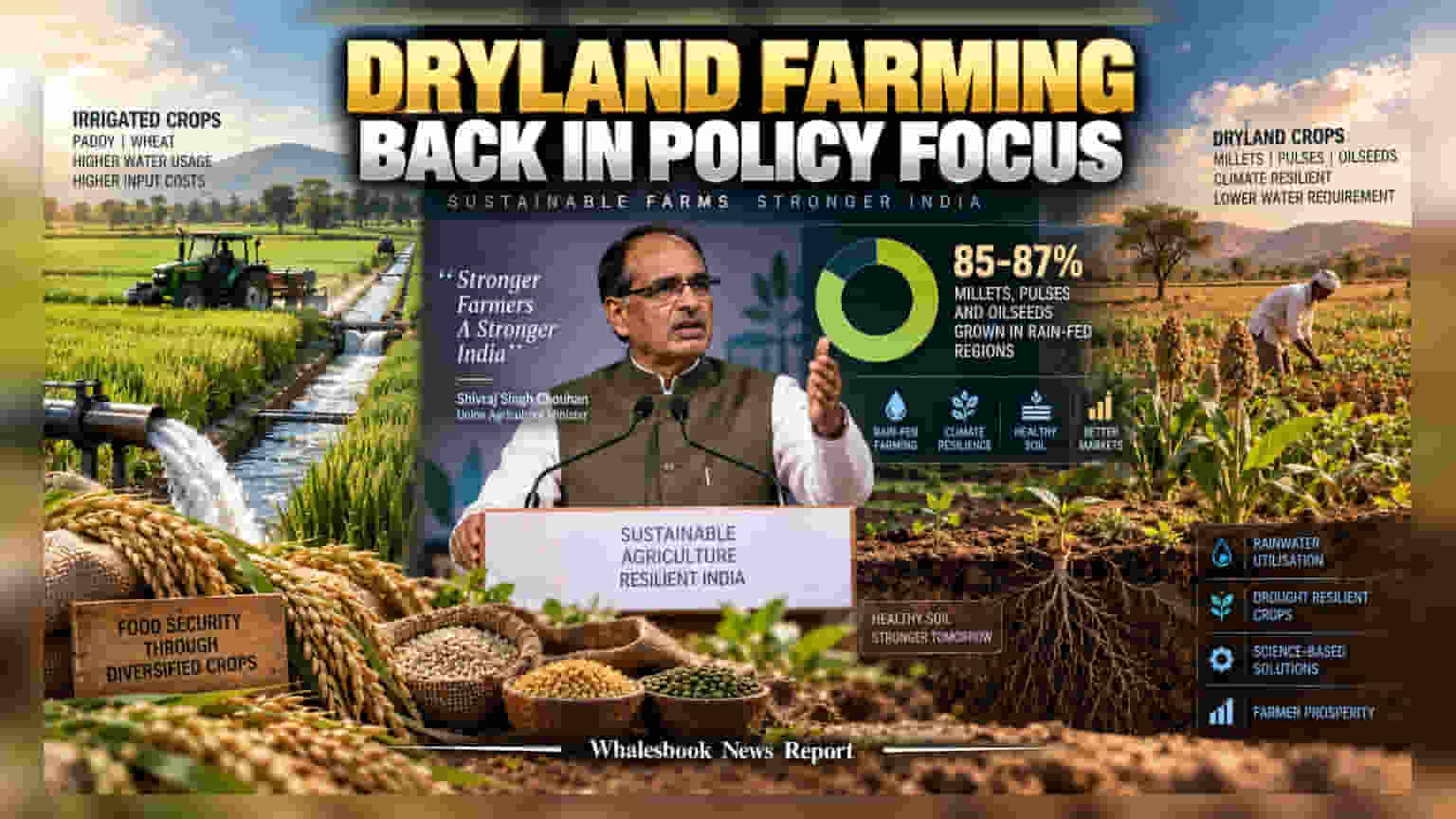
Union Agriculture Minister Shivraj Singh Chouhan is pushing for a move toward dryland crops like millets and pulses to conserve water. The push aims to address the unintended consequences of water-intensive crop rotations, which may influence future agricultural policies, procurement strategies, and the demand for climate-resilient farm inputs.
Union Agriculture Minister Shivraj Singh Chouhan has emphasized the need for a structural shift in India's agricultural priorities, advocating for greater focus on dryland farming. Speaking at the Global Dryland Congress 2026 in New Delhi, the minister noted that while irrigation expansion has historically boosted overall farm output, it has led farmers to favor water-intensive crops like paddy and wheat over traditional, resilient options such as millets, pulses, and oilseeds.
The Shift to Water-Efficient Crops
The minister pointed out that about 65% of India’s land area remains reliant on rain-fed conditions. In these regions, the push for water-intensive farming often conflicts with long-term ecological sustainability. The government's current stance suggests that the next phase of agricultural policy will likely focus on improving the viability of dryland crops. This includes integrating better scientific interventions and improved market access to ensure that farmers do not view these crops as less profitable alternatives to water-heavy cereals.
Implications for the Agriculture Sector
For businesses operating in the agricultural sector, this policy direction signals potential shifts in the demand for inputs and technology. Seed companies may face increased pressure to develop high-yield, climate-resilient varieties for dryland crops, while agricultural technology providers could find opportunities in precision farming tools designed for rain-fed conditions. Additionally, food processing companies involved in the millet and pulse value chain could see support from government initiatives aimed at strengthening procurement and building better supply chains.
However, the transition involves significant hurdles. Farmers often prefer paddy and wheat because these crops benefit from well-established government procurement systems and Minimum Support Price (MSP) support. A significant challenge for the government will be creating a comparable economic incentive for dryland crops. Without profitable markets and reliable procurement, farmers may be reluctant to move away from traditional cereal rotations, regardless of the water efficiency of the alternatives.
Challenges to Monitor
Long-term farm economics are also tied to soil health, which the minister identified as a critical concern. Intensive farming practices in both irrigated and dryland regions have contributed to declining soil organic carbon. As the government explores ways to balance productivity with ecological health, investors and market participants should watch for potential policy updates regarding subsidies, research and development grants for climate-resilient seeds, and expanded procurement programs for pulses and millets. The success of this initiative will ultimately depend on whether it can provide dryland farmers with stable incomes competitive with those of irrigated-crop farmers.