

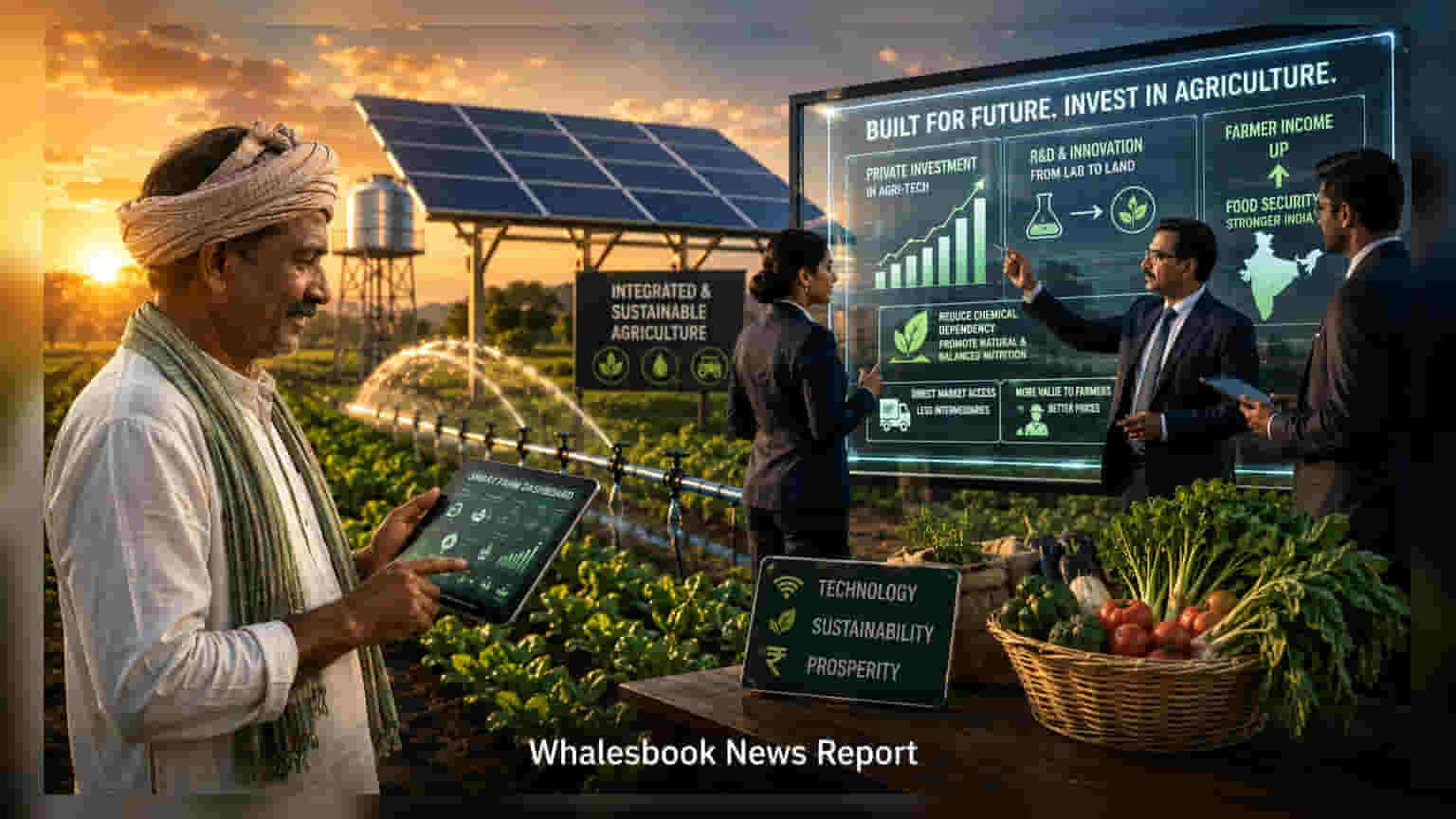
Union Agriculture Minister Shivraj Singh Chouhan has called on the corporate sector to increase investment in agri-tech and sustainable farming infrastructure. This policy push aims to improve farmer incomes by reducing reliance on chemical fertilizers and addressing supply chain inefficiencies. For investors, this signals a long-term focus on companies integrating technology and sustainable practices into the agricultural value chain.
Union Agriculture Minister Shivraj Singh Chouhan has called for a significant increase in private sector participation to modernize India’s agricultural landscape. In recent engagements, the Minister has emphasized the need for the industry to move beyond traditional trade and invest directly in agri-tech infrastructure, R&D, and sustainable farming practices to ensure long-term food security and higher farmer incomes.
The government's recent push is focused on bridging the gap between laboratories and fields. This strategy involves fostering stronger partnerships between the Indian Council of Agricultural Research (ICAR) and the private sector to accelerate the transfer of technology. The Minister has specifically highlighted the need for private companies to utilize Corporate Social Responsibility (CSR) funds to build capacity at the grassroots level, focusing on climate-smart agriculture and balanced crop nutrition.
A central theme of this initiative is the reduction of dependence on excessive chemical fertilizers and the promotion of natural or integrated farming methods. This represents a potential shift in the operating environment for agricultural input companies. The government is actively exploring collaborations, including international partnerships like those discussed with Japan, to bring affordable, accessible machinery and digital tools to small and marginal farmers.
Addressing price volatility remains a priority for the ministry. The government has identified the high disparity between farm-gate prices and retail costs as a critical inefficiency. By pushing for a more integrated value chain where industry players collaborate directly with farmers, the government aims to eliminate unnecessary intermediaries. This could impact firms involved in the current agricultural supply chain, as the administration seeks to improve the share of the final consumer price that actually reaches the farmer.
For investors, this policy direction highlights a long-term structural shift in the agricultural sector. Companies that are pivoting toward precision farming, organic or balanced nutrient solutions, and digitized supply chains may benefit from the government's supportive stance. Conversely, firms heavily reliant on the distribution of traditional synthetic fertilizers or those dependent on inefficient intermediary models may face pressure to adapt to these changing regulatory and market expectations.
The implementation of these reforms will be a key area for investors to track. Challenges such as the adoption rate of new technologies among small landholders, the actual reduction in chemical fertilizer usage, and the logistical hurdles in creating direct farm-to-market channels remain significant. Investors may watch for future updates on how these public-private partnerships translate into scalable business models and whether specific sector policies are introduced to incentivize these transitions.