 Whalesbook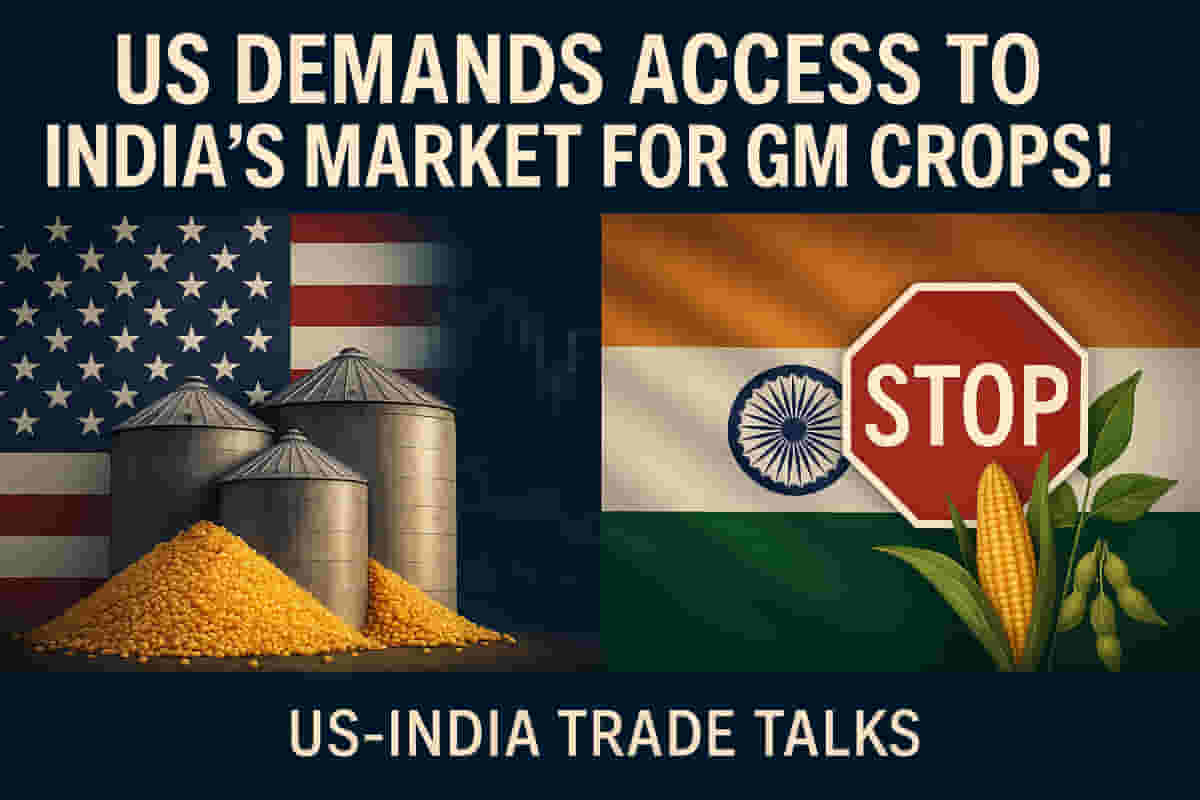
The Core Issue: US Demands vs. India's GM Stance
A high-level United States trade delegation recently intensified pressure on India to grant market access for American soya and corn. This demand is a critical component of the ongoing bilateral trade pact negotiations between the two nations. India, however, maintains a firm stance against importing genetically modified (GM) crops, citing significant health, environmental, and food safety concerns.
US Farm Crisis Fuels Aggressive Lobbying
The aggressive lobbying from the US is reportedly fueled by a severe farm crisis within the United States. Sources indicate that American producers are struggling with a massive production surplus, financial strain, and global market disruptions. The Trump administration is keen on finding alternative markets to appease its agricultural sector, viewing India as a crucial opportunity.
Negotiation Details and Previous Offers
The delegation, led by Deputy US Trade Representative Rick Switzer, engaged in discussions with India's Commerce Secretary Rajesh Agrawal and chief negotiator Darpan Jain in New Delhi. The talks covered sensitive areas including market access for agricultural products like soya, corn, and meat. Prime Minister Narendra Modi also held a phone conversation with President Trump during this period. Previously, India had offered enhanced market access for several goods in October, aiming to finalize the first phase of the trade pact and secure a rollback of American tariffs.
India's Rationale: Health, Environment, and Food Safety
New Delhi has consistently explained to Washington its inability to source GM crops due to a national ban. India's policy on GM crops is very strict, with Bt cotton being the only GM crop approved for commercial cultivation for over two decades. Concerns range from health and safety, environmental risks including gene flow and the emergence of superweeds, to biodiversity loss and impacts on vital pollinators like bees. Furthermore, India fears that importing GM produce, even for animal feed, could lead to contamination of the food chain, negatively impacting domestic farmers and potentially jeopardizing exports to markets like the European Union.
Potential Impact on Trade Talks
The US insistence on market access for GM soya and corn presents a significant hurdle in finalizing the trade agreement. Failure to resolve this deadlock could delay or derail the pact, impacting India's efforts to gain tariff relief on its exports and potentially leading to continued trade friction. The situation highlights the complex balancing act between international trade objectives and national regulatory policies.
Impact
This trade negotiation deadlock could have considerable economic implications for both countries. For India, it affects its agricultural policy and potential trade benefits from the pact. For the US, it means continued challenges in addressing its farm surplus and supporting its agricultural sector. The standoff also underscores the growing global debate around GM technology and international food trade standards.
Impact Rating: 7/10
Difficult Terms Explained
- Genetically Modified (GM) crops: Plants whose genetic material has been altered using genetic engineering techniques, often to introduce desirable traits like pest resistance or herbicide tolerance.
- Gene flow: The transfer of genetic material from one population to another, which can occur between different plant species or varieties.
- Superweeds: Weeds that have developed resistance to one or more herbicides, making them difficult to control using conventional methods.
- Biodiversity loss: A reduction in the variety of life forms within a given ecosystem, habitat, or region.
- Pollinators: Organisms, such as bees, butterflies, and other insects, that transfer pollen from the male part of a flower to the female part, enabling fertilization and seed production.
- Soymeal: The residue left after oil is extracted from soybeans, commonly used as a high-protein ingredient in animal feed.
- Bilateral trade pact: An agreement on trade between two countries.