 Whalesbook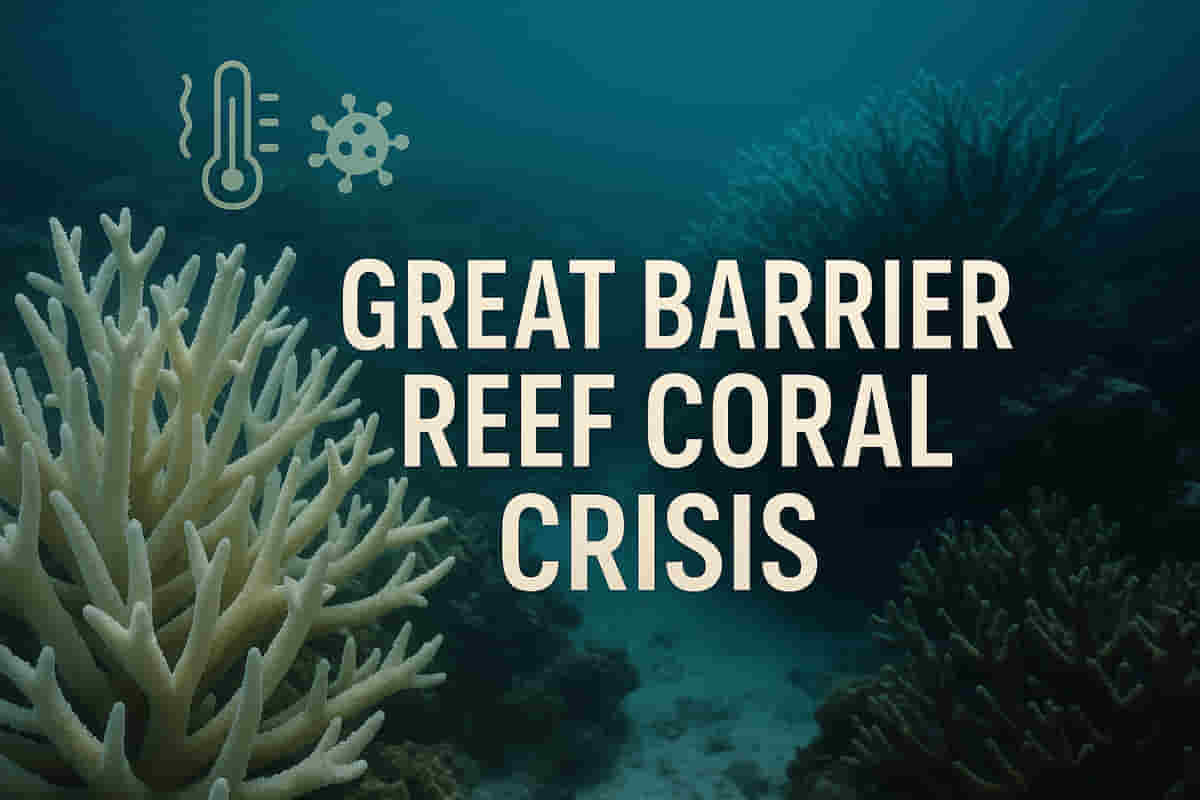
Alarming Coral Mortality at Great Barrier Reef
Scientists have reported a significant ecological crisis unfolding at the Great Barrier Reef, where extreme heat stress combined with a rare coral disease has led to the decimation of approximately 75 percent of coral colonies at a key monitoring site. This devastating loss highlights the escalating threats posed by climate change to delicate marine ecosystems worldwide.
The Deadly Combination: Heat Stress and Black Band Disease
Researchers investigating One Tree Reef (OTR) discovered that severe coral bleaching, triggered by record ocean temperatures, was aggressively followed by an outbreak of black band disease (BBD). BBD is a rare but potent bacterial infection that rapidly spreads across and kills coral tissue. The combination proved lethal for a vast majority of corals at the site.
Key Findings and Data
- Scale of Loss: Around 75 percent of coral colonies at the One Tree Reef site were wiped out.
- Contributing Factors: Extreme ocean temperatures causing bleaching, followed by an outbreak of black band disease.
- Global Context: This occurs during the world's fourth global mass coral bleaching event, the most extensive on record.
- Affected Corals: Large, long-lived Porites corals (also known as flowerpot or daisy corals), typically considered thermally tolerant, were significantly impacted, making the mortality rate especially concerning.
- Temperature Data: Water temperatures at OTR exceeded 28°C for 74 consecutive days, peaking at 34-35°C during the bleaching event in early 2024.
- Disease Spread: Black band disease, historically rare in the southern Great Barrier Reef, infected 61 percent of bleached colonies by April 2024, spreading rapidly.
Why This Event is Particularly Concerning
- Thermal Tolerance: The high mortality among Porites corals is unusual, as these species are generally more resilient to temperature fluctuations than others.
- Rarity of Disease: Black band disease is uncommon in this region of the Great Barrier Reef, making its widespread appearance linked to bleached corals a significant concern.
- Offshore Location: One Tree Reef's offshore location suggests that coastal stressors like pollution are unlikely culprits, pointing more strongly to climate-driven factors.
Climate Change Link Strengthened
Scientists emphasize that increased ocean temperatures not only cause bleaching but also directly link to the increased virulence of coral diseases. Bleached corals are left weakened and highly susceptible to infections, with warm conditions exacerbating the pathogens' ability to spread and cause mortality. While corals can recover from bleaching if temperatures decrease, their compromised health leaves them vulnerable to secondary threats like disease.
Broader Implications for Reefs and Biodiversity
Professor Maria Byrne from the University of Sydney warned that the loss of these crucial, structure-forming corals will have profound impacts on reef biodiversity, coastal protection, and even global food security. She stated that "Coral reefs support more than a billion people worldwide" and that "the natural resilience of these ecosystems is collapsing." Urgent global action to reduce emissions was called for as the only path to coral reef survival.
Impact
This ecological disaster has severe implications for marine biodiversity, impacting countless species that rely on coral reefs for habitat and food. It also threatens coastal communities by reducing natural protection against storms and waves. Global tourism and fishing industries dependent on healthy reefs face significant economic losses. The event serves as a stark warning about the urgent need for climate action to prevent further ecosystem collapse.
Impact Rating: 8/10
Difficult Terms Explained
- Coral Bleaching: A process where corals expel the symbiotic algae living in their tissues, causing them to turn white. This usually happens due to stress, most commonly from increased water temperatures.
- Black Band Disease (BBD): A specific type of coral disease caused by a complex of bacteria, characterized by a dark band that spreads across the coral tissue, leading to its death.
- Epizootic: An outbreak of a disease that affects a large number of animals of one species in a particular geographical area, analogous to an epidemic in humans.
- Thermally Tolerant: Able to withstand or survive high temperatures without significant harm.
- Virulence: The degree or intensity of pathogenicity of a microorganism or virus; its ability to cause disease.