 Whalesbook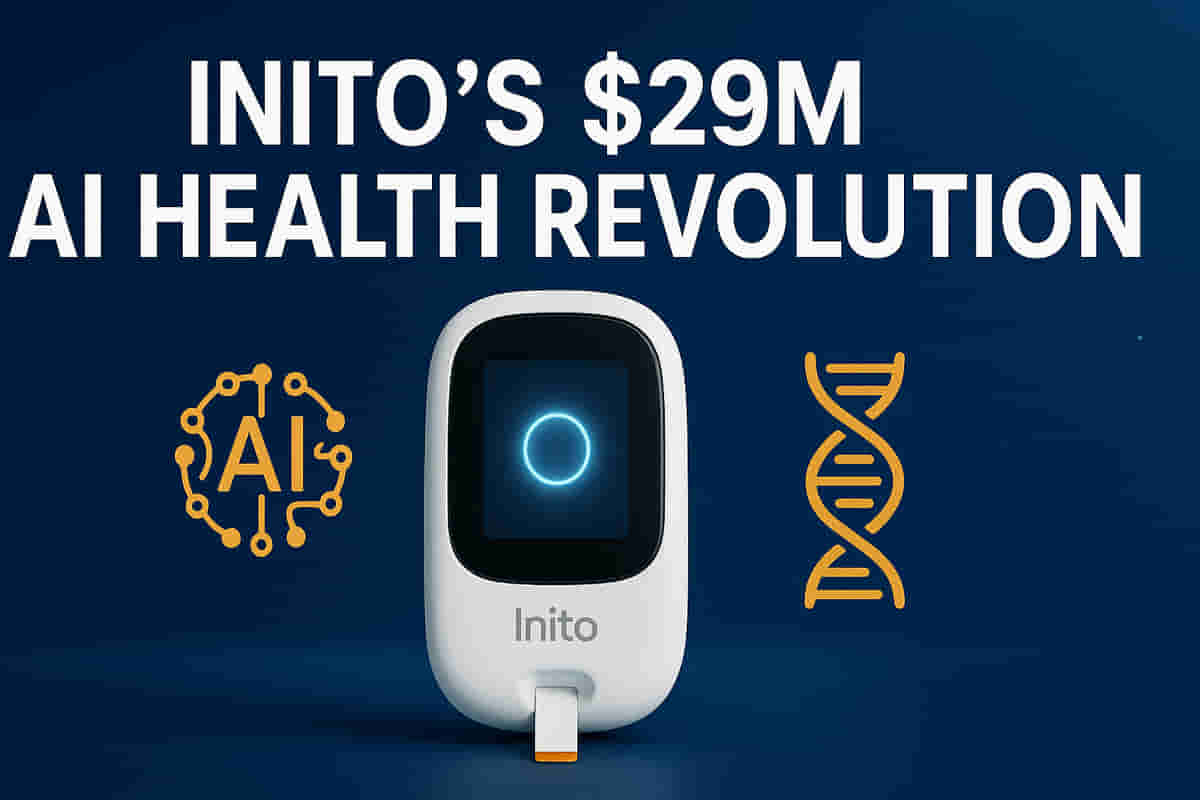
Inito, a startup focused on transforming at-home health diagnostics, has successfully raised $29 million in its Series B funding round. This investment is earmarked to accelerate the development and implementation of its cutting-edge AI-designed antibodies, a technology poised to significantly enhance the accuracy and scope of its diagnostic tests.
Funding and Technological Advancement
The funding round was co-led by Bertelsmann India Investments and Fireside Ventures, bringing Inito's total funding to approximately $45 million. The core of this capital infusion will be dedicated to advancing Inito's proprietary AI antibody engineering platform. This novel approach deviates from traditional antibody development, which is often slow and costly, relying on animal-based screening. Inito's AI-driven method involves predicting protein folding, designing synthetic antibodies, and virtually testing millions of variants. This process is expected to yield antibodies that are substantially more sensitive, consistent, and stable.
Evolution of Inito's Platform
Launched in 2021, Inito initially focused on making quantitative fertility hormone testing accessible at home. Its current platform allows women to measure multiple hormones, including estrogen, Luteinizing Hormone (LH), and progesterone metabolite PdG, along with FSH, on a single test strip. The associated AI models then interpret these levels to provide insights into fertility patterns and confirm ovulation. To date, Inito has analyzed over 30 million fertility hormone data points, establishing a strong user base and data foundation.
The company is now strategically expanding its vision beyond fertility tracking. The ambition is to evolve Inito into a comprehensive platform for hormone and at-home health diagnostics, enabling users to measure, track, and gain insights about various aspects of their health across different life stages and needs, directly from home.
Future Expansion and Vision
Inito plans to leverage its AI antibody technology for a new generation of at-home tests. This includes developing capabilities for pregnancy monitoring, menopause tracking, and detecting broader endocrine markers like testosterone. Co-founder and CEO Aayush Rai stated the long-term goal is to "redefine diagnostics altogether," making health monitoring a continuous and accessible process. The funding will also be utilized to scale manufacturing operations and expand the company's global reach, particularly targeting the United States market and other international territories.
Impact
- The advancements in AI-driven antibody technology for at-home testing could democratize access to health diagnostics.
- It empowers individuals, especially women, with greater control and continuous monitoring of their health, potentially leading to earlier detection of health issues.
- This innovation represents a significant step towards personalized and preventative healthcare.
Impact rating: 8
Difficult Terms Explained
- Antibodies: Proteins produced by the body's immune system to identify and neutralize foreign substances. In diagnostics, they are used to detect specific molecules (biomarkers).
- AI-designed antibodies: Antibodies engineered using artificial intelligence algorithms to achieve specific properties like higher sensitivity and stability.
- Fertility monitor: A device used at home to track hormonal changes related to a woman's menstrual cycle and fertility window.
- Luteinizing Hormone (LH): A key hormone that triggers ovulation.
- Progesterone metabolite PdG: A byproduct of progesterone, a hormone essential for confirming ovulation and supporting early pregnancy.
- FSH (Follicle-Stimulating Hormone): A hormone that stimulates the growth of ovarian follicles in women.
- Endocrine markers: Specific substances in the blood or other bodily fluids that indicate the function of the endocrine system, which regulates hormones.