

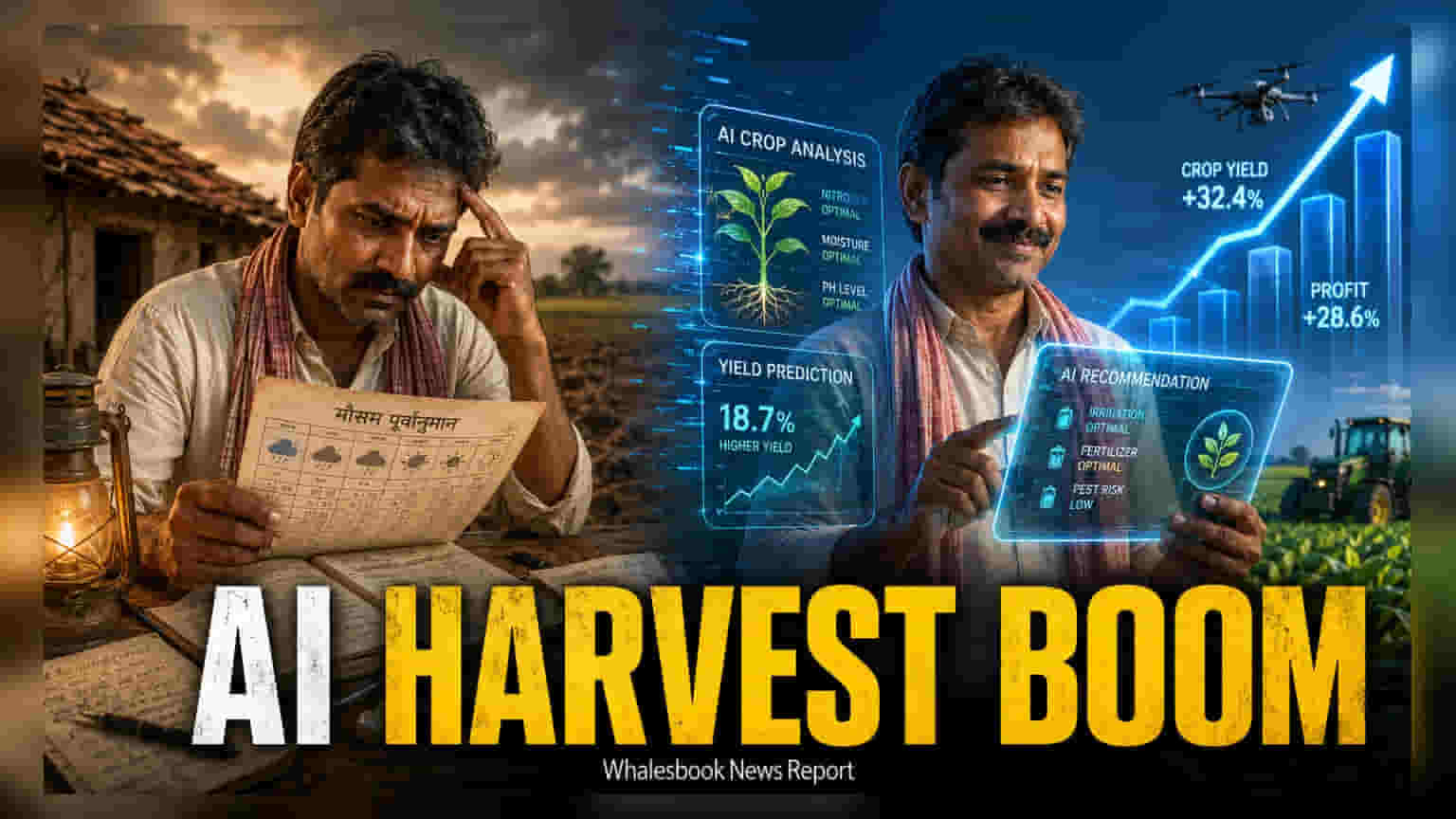
Artificial intelligence is shifting Indian agriculture from historical analysis to real-time predictive insights. By using satellite imagery and hyper-local data, farmers can now optimize crop health, irrigation, and harvest timing. This shift aims to improve yields and financial resilience for the agricultural sector by reducing waste and enabling better market pricing.
The agricultural sector in India is undergoing a significant transformation as artificial intelligence moves from theoretical research to practical farm-level application. For generations, farmers have depended on broad regional data that often arrived too late to influence critical decisions. Today, AI-powered systems are enabling a transition toward hyper-local, real-time monitoring of crop conditions, which directly impacts farm productivity and profitability.
Precision Techniques and Nutrient Management
New AI-driven platforms are utilizing satellite and drone imagery to monitor fields with high precision. These systems identify plant stress, soil moisture levels, and early signs of weed or disease infestation long before they become visible to the human eye. By analyzing these data points, farmers can now employ variable-rate seeding and targeted nutrient application. Instead of spreading fertilizers across an entire field, technology allows for application only where the soil needs it most. This targeted approach is designed to reduce the cost of inputs and minimize the environmental impact of chemical runoff.
Addressing Financial and Climate Risks
Beyond field management, AI is providing tools to manage the financial risks associated with climate volatility. Real-time monitoring allows for automated irrigation adjustments in anticipation of extreme weather events, such as heatwaves. Furthermore, the documented crop data provided by these systems can assist farmers in forward-contracting their produce, potentially securing better market prices by proving harvest quality.
This technology also holds promise for streamlining the crop insurance process. Historically, programs like the Pradhan Mantri Fasal Bima Yojana (PMFBY) have faced delays in claim settlements due to slow data collection. Sensor-backed yield predictions offer a faster, more objective way to verify crop loss, which may accelerate the delivery of insurance payouts to farmers when needed most.
Scalability and Future Monitorables
While the potential is significant, the path forward depends on the widespread adoption of affordable IoT hardware and the integration of these systems into local languages. The industry is currently moving toward voice-enabled platforms that simplify complex AI data into actionable guidance for small-scale farmers.
Investors and stakeholders in the agribusiness and technology sectors should track the pace of infrastructure deployment, such as the spread of sensor networks, and the integration of these AI tools into existing agricultural value chains. The final impact on the broader economy will depend on how effectively these solutions can be scaled across diverse Indian geographies, reducing costs for farmers while improving overall agricultural output.