

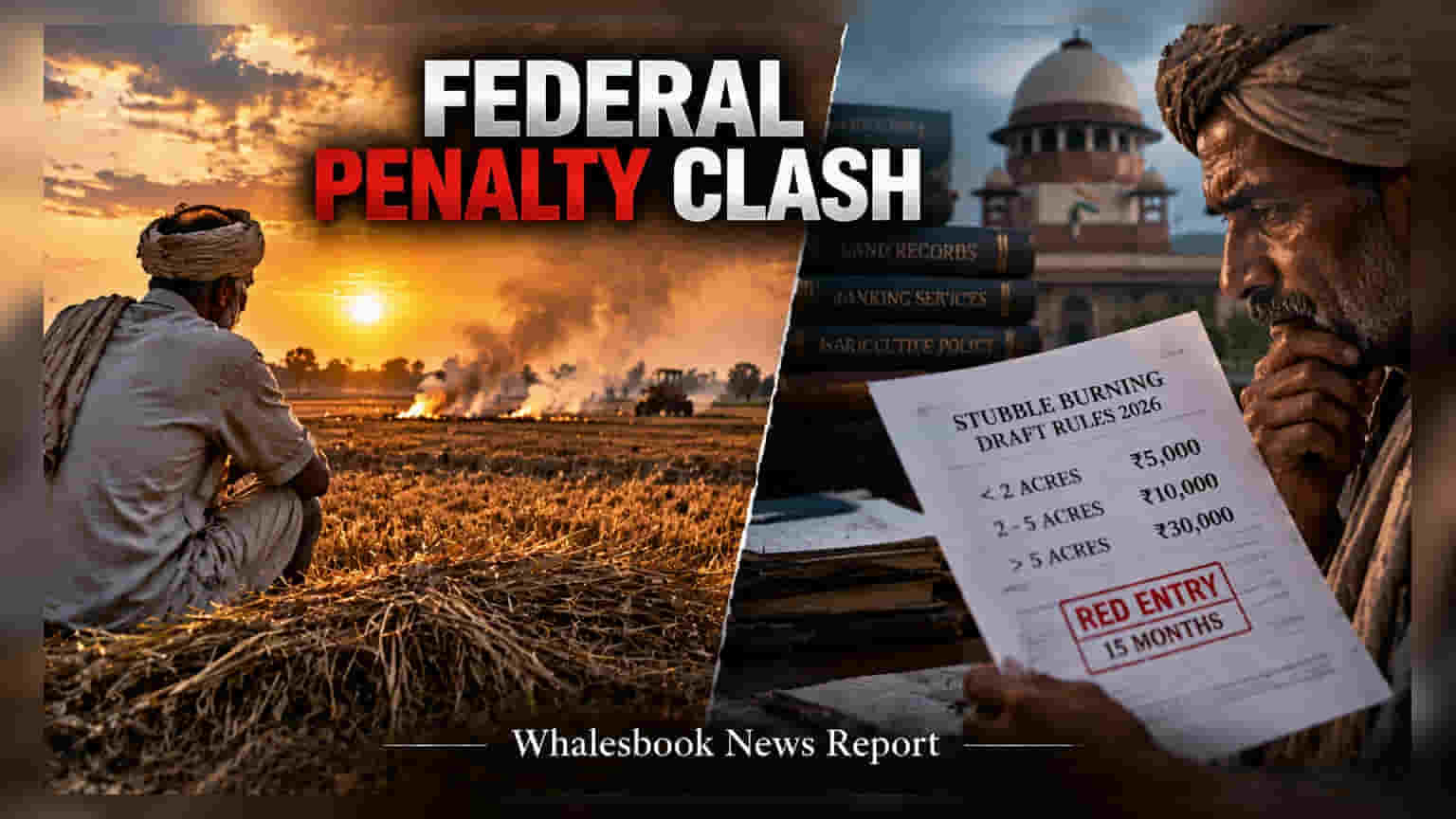
The Aam Aadmi Party has criticized the Centre's 2026 draft regulations, which propose fines of up to ₹30,000 and a 'red entry' marker on land records. These rules, aimed at curbing farm fires, could restrict farmers' access to loans and land transactions. The AAP advocates for market-based incentives instead, citing Punjab's significant reduction in fire incidents over recent years.
The central government’s proposed 2026 draft framework for managing stubble burning has met with opposition from the Aam Aadmi Party (AAP) in Punjab. The draft includes a new system of environmental fines and a mechanism to mark land records with a 'red entry' for 15 months in cases of non-compliance. This regulatory move has raised concerns about the potential impact on farmers' access to formal banking services, as land records are frequently used to secure credit and facilitate property transactions.
Under the proposed rules, the government suggests a tiered structure for fines. Small landholdings under two acres would face a penalty of ₹5,000, while medium holdings up to five acres would incur a charge of ₹10,000. For larger plots, the penalty is set at ₹30,000. The primary point of contention is the ‘red entry’ clause, which critics argue could act as a restrictive barrier for agricultural credit, potentially making it difficult for farmers to obtain loans or sell land during the period the marker is active on their records.
The AAP contends that these punitive measures overlook the state's efforts to manage crop residue. According to official figures, Punjab reported 5,114 fire incidents during the 2025 harvesting season, marking a 53% reduction compared to 2024 and a 93% decrease from 2021. The party suggests that these numbers indicate a shift toward more sustainable farming practices as new biomass and biofuel supply chains begin to take shape.
Instead of aggressive enforcement and financial penalties, the party is pushing for market-based solutions. The argument is that if the government helps build a commercial market for paddy straw, farmers will be incentivized to collect and sell the crop residue rather than burn it. This approach aims to treat the residue as a commercial resource rather than a waste product.
The ongoing debate highlights the friction between the central government’s environmental mandate to improve air quality in the Delhi-NCR region and the agricultural policies of state governments. For stakeholders, the key monitorable will be whether the final policy incorporates market incentives or leans solely toward stricter enforcement, as this will influence both rural economic sentiment and the future of the biomass and biofuel processing industry.