

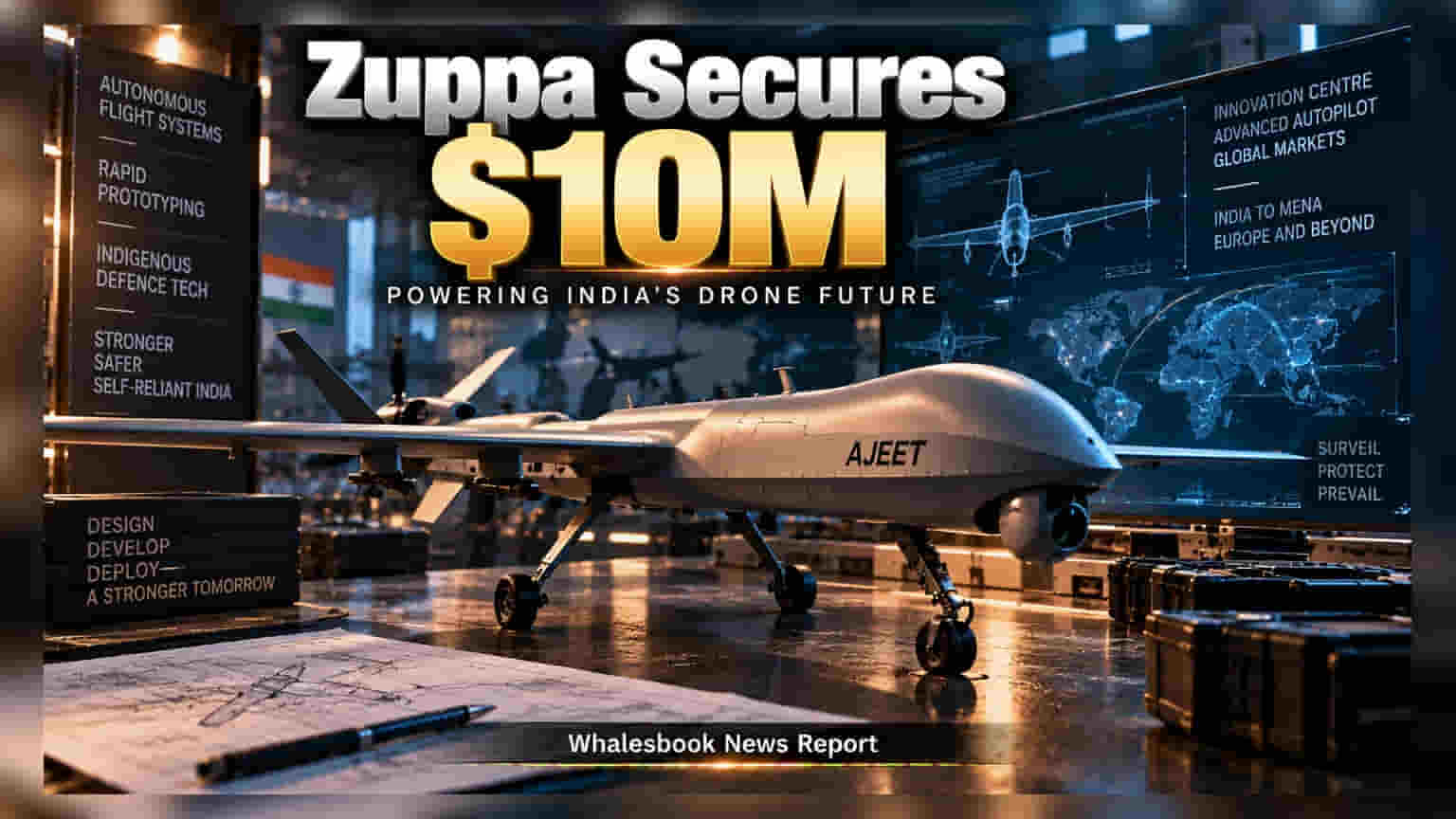
Zuppa Geo Navigation Technologies is looking to raise $10 million to boost its defense drone research and manufacturing. The company aims to capitalize on the increasing demand for indigenous defense systems as global markets shift away from Chinese-made components.
Chennai-based Zuppa Geo Navigation Technologies is in discussions to raise $10 million in fresh equity to accelerate its technological development and engineering capabilities. The drone manufacturer plans to channel these funds into establishing a dedicated innovation center to focus on rapid prototyping and the continuous upgrading of autopilot systems. This move follows a period of growth for the firm, which has already supplied 500 units of its 'Ajeet' drone series to the Indian Army.
Expansion and Global Market Focus
The startup is targeting growth not only in India but also in the Middle East, North Africa, and Europe. A key strategic driver for this international push is the global preference for non-Chinese technology in defense infrastructure. As geopolitical dynamics shift, many nations are looking for alternative suppliers, providing an entry point for Indian manufacturers of unmanned aerial systems. The defense drone sector in India has benefited from increased government budget allocations for emergency procurement, which remains a tailwind for domestic manufacturers.
Financial Projections and Execution Risks
Zuppa has set an ambitious goal to grow its revenue to approximately ₹70-80 crore in the current fiscal year, up from ₹8 crore in the previous year. To support this growth, the company is diversifying its product lineup with interceptor drones, also known as loitering munitions, for tactical use. The firm is also testing cost-saving manufacturing methods, such as using industrial plastic pipes instead of traditional composites, to lower production costs while aiming to maintain technical performance.
However, scaling operations to meet these targets carries significant execution risks. Defense procurement is often cyclical and highly sensitive to government budget allocation, lengthy testing, and stringent quality standards. Furthermore, the domestic drone sector is witnessing intense competition, with both established defense manufacturing giants and numerous startups entering the space. For a company at this scale, successfully transitioning from prototype to consistent, large-scale production while navigating the lumpy nature of defense contracts remains a primary challenge. Achieving such a steep increase in revenue requires not only funding but also sustained order flow and operational efficiency.
Investors tracking the broader defense-tech space should monitor the company’s ability to successfully close this funding round, the operational progress of its innovation center, and the actual execution of its revenue projections. While the broader push toward indigenous defense manufacturing provides a supportive backdrop, specific project timelines and order cycles will ultimately determine whether the company can convert these plans into profitable growth.