

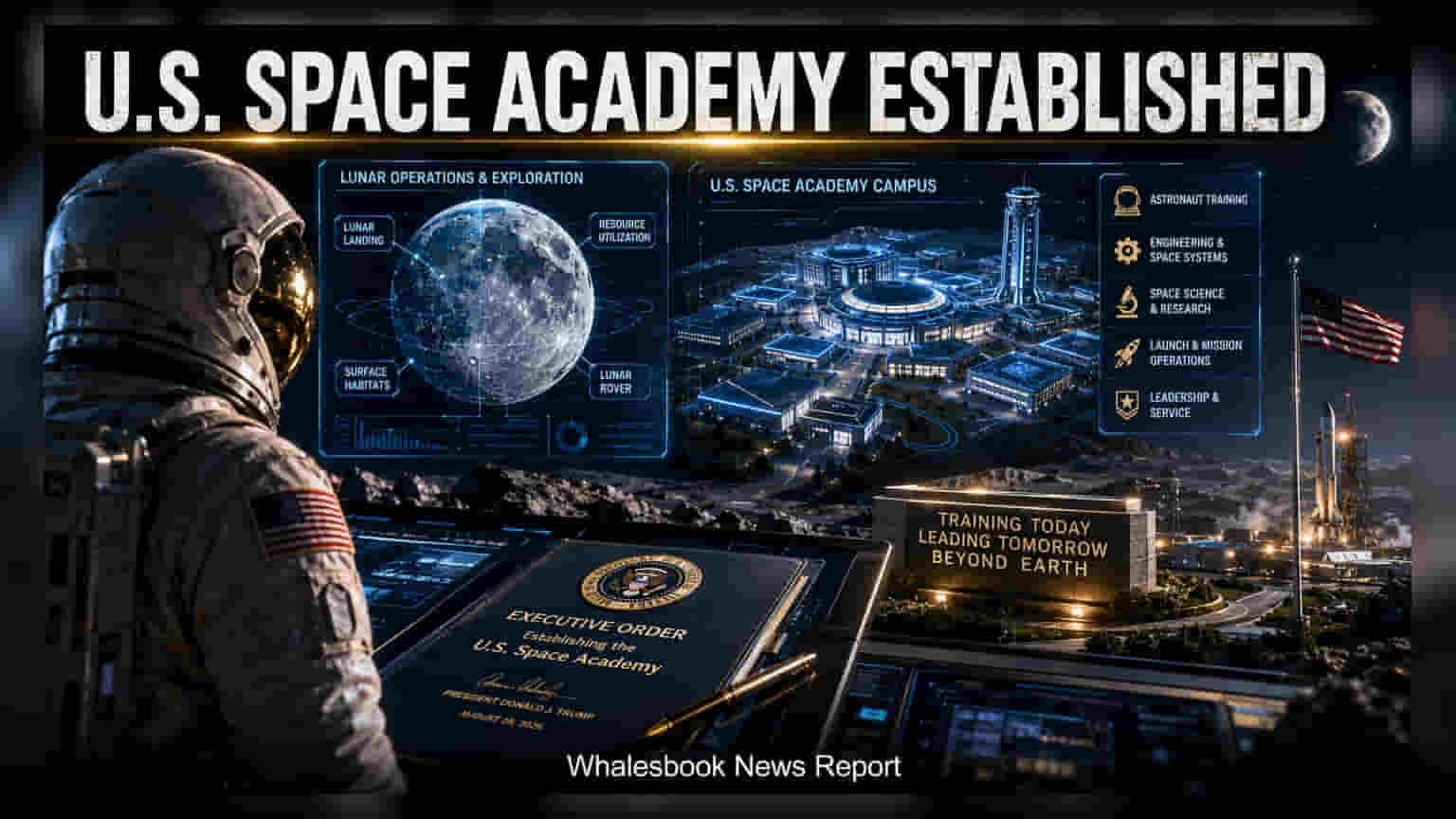
President Donald Trump signed an executive order on August 28, 2026, to establish a U.S. Space Academy. Designed to train future astronauts and engineers, the new institution aims to solve critical labor shortages across the U.S. Space Force, NASA, and the private aerospace industry, potentially easing recruitment pressure for specialized firms.
On August 28, 2026, President Donald Trump signed an executive order establishing a dedicated U.S. Space Academy. The initiative creates a new federal institution modeled after established military service schools like West Point and the U.S. Naval Academy. The primary goal is to formalize a training pipeline for astronauts, engineers, scientists, and technicians to serve both government agencies and the private spaceflight sector.
To oversee the planning and implementation of the academy, the administration has formed a Presidential Commission chaired by NASA Administrator Jared Isaacman. The commission is responsible for defining the curriculum, governance structure, and the integration of both military and civilian training tracks. While the academy aims to support the U.S. Space Force and NASA, it is also designed to benefit the commercial aerospace industry, which has struggled with high recruitment costs and intense competition for specialized labor.
For the private aerospace sector, this move could eventually address long-standing concerns regarding the availability of skilled human capital. Companies involved in satellite deployment, launch services, and lunar exploration have faced significant upward pressure on salaries due to the scarcity of qualified aerospace engineers and technicians. By increasing the annual supply of graduates trained in space-related disciplines, the academy may help stabilize labor costs for these firms over the long term.
Despite the clear objectives, the project faces several hurdles. The most immediate is the legislative process required to secure federal funding. Establishing a new federal institution demands Congressional approval for budgets related to campus construction, faculty hiring, and ongoing operations. Historical precedent suggests that high-cost federal projects often face significant scrutiny and debate in Congress, making the timeline for the academy’s launch uncertain.
There are also logistical questions regarding the curriculum and student body. Stakeholders are debating the extent to which the academy will be accessible to civilian students versus those strictly on a military track. Furthermore, the administration must navigate the potential duplication of efforts with existing institutions that already provide aerospace engineering programs. These factors will likely play a significant role in how the academy is finally structured and funded.
Investors and observers in the aerospace sector will monitor the academy's progress, specifically watching for federal budget allocations and any updates on the curriculum that might impact labor availability. The success of the initiative will depend on whether the government can navigate these legislative and logistical challenges while maintaining its goal of fostering domestic competitiveness in the global space economy.