 Whalesbook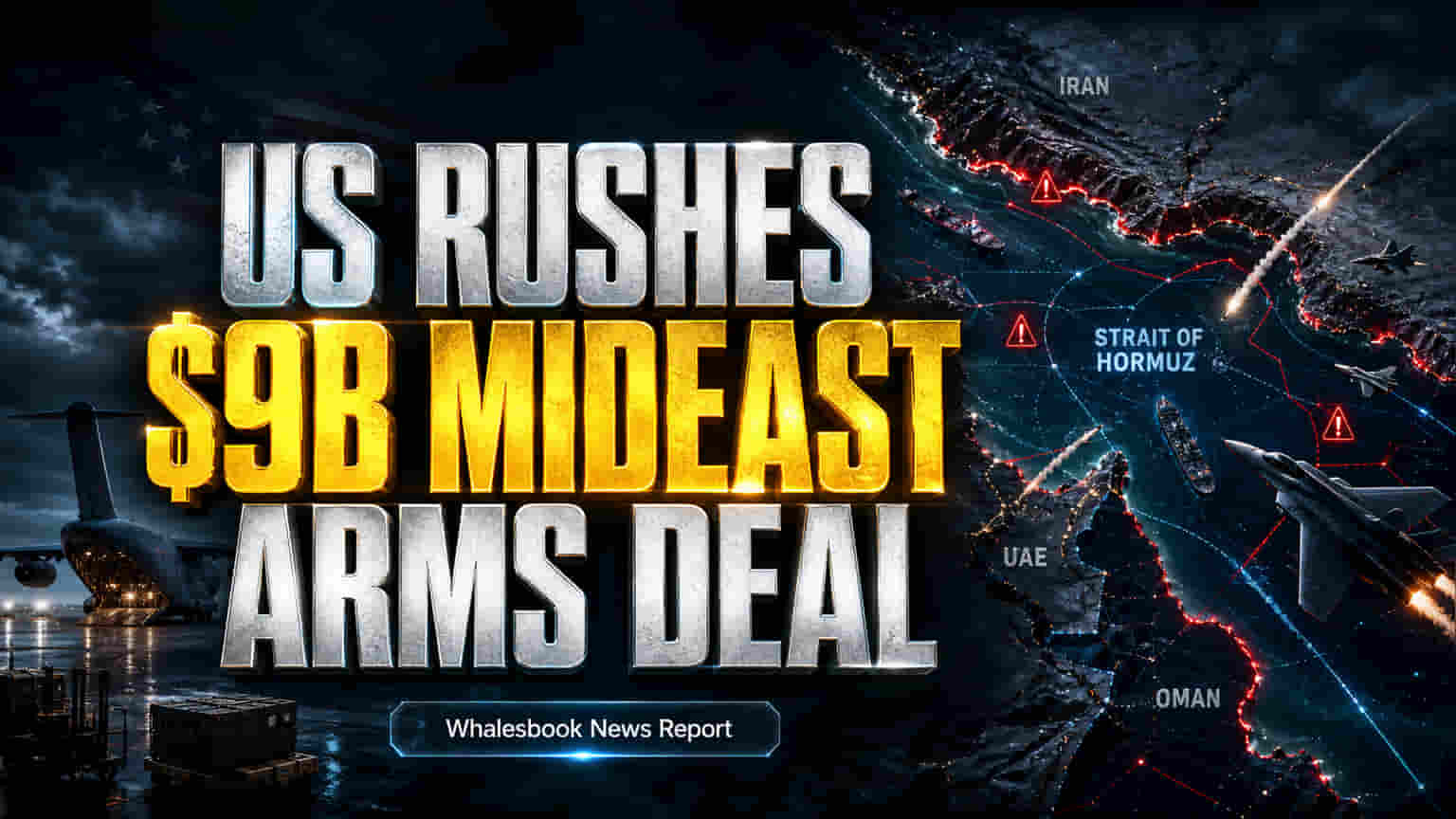


Urgent $9 Billion Arms Deals Approved
Secretary of State Marco Rubio has approved expedited arms transfers totaling around $9 billion to key Middle Eastern allies, including Israel, Kuwait, Qatar, and the United Arab Emirates. This bypasses standard congressional review. The State Department says this is necessary due to an emergency vital to U.S. security interests. This reliance on emergency approvals, seen before in March and late 2023, shows how volatile global conditions are shaping weapons sales. The urgency of these deals directly benefits major defense companies, bringing in steady business amid growing regional instability.
Specific Deals Boost Defense Firms
The approved transfers include large orders, such as up to 10,000 Advanced Precision Kill Weapon System-II (APKWS-II) All Up Rounds for Israel from BAE Systems, valued at $992.4 million. Kuwait is set to acquire Integrated Battle Command Systems and related equipment worth up to $2.5 billion, with Northrop Grumman, RTX Corp., and Lockheed Martin Corp. as main contractors. Qatar will receive up to 200 Patriot Advanced Capability-2 (PAC-2) GEM-T interceptors and 300 PAC-3 interceptors valued at $4.01 billion, with Lockheed and RTX as main suppliers. Another $992.4 million deal for APKWS-II rounds is also set for Qatar. The UAE will procure APKWS and related equipment totaling $147.6 million. These deals significantly boost the order books of these defense giants, strengthening their financial outlook even as other market sectors see ups and downs. RTX's recent Q1 2026 earnings, for instance, showed double-digit organic sales growth and a raised full-year outlook, supported by a record backlog.
Defense Stocks Rise on Global Tensions
This expedited sales approval comes as the Iran war ceasefire remains fragile, and the closure of the Strait of Hormuz continues to disrupt global energy markets, causing price spikes and increasing regional insecurity. Defense stocks, often reacting strongly to global events, have seen strong gains amid these conflicts. Major players like RTX, Lockheed Martin, and Northrop Grumman have seen major gains over the past year as global defense budgets grow. Northrop Grumman has a lower P/E ratio of about 17.97, possibly indicating a more conservative valuation than RTX (around 25.07) or Lockheed Martin (around 24.81). BAE Systems' P/E ratio is higher at about 29.39. Despite recent market volatility, with some defense stocks experiencing short-term pullbacks, analyst sentiment largely remains positive, with 'Buy' or 'Moderate Buy' ratings common for these companies. The sector benefits from a shift towards higher defense spending, driven by global modernization efforts and the need to replenish military supplies from conflicts in Ukraine and the Middle East.
Risks for Defense Firms Tied to Conflict
The reliance on emergency waivers and a continually fragile geopolitical climate for steady revenue carries risks. This model links defense contractors' financial health to ongoing conflict. This makes them vulnerable to changes in international relations, budget priorities, or any easing of hostilities that reduces demand. While current defense budgets are projected to increase, concerns exist about approving future multi-trillion-dollar budgets due to national debt. This could limit long-term growth. Furthermore, the recent Q1 2026 earnings highlighted mixed performance, with Lockheed Martin reporting flat revenue and missed EPS, contrasting with RTX's strong growth. This divergence suggests that market leadership isn't guaranteed, and problems with operations, supply chains, or program delays can greatly affect a company's performance, even in a strong sector. A significant portion of defense revenue often comes from government contracts, creating a dependency on government contracts, which can be affected by politics and national strategy shifts.
Outlook: Continued Demand Expected
Analysts and industry observers anticipate continued demand for defense equipment and services, driven by ongoing global security challenges and the need to restock military supplies. The current expedited sales show immediate needs, while ongoing global tensions point to a steady demand for advanced defense systems. Companies like Lockheed Martin, with its extensive backlog and critical platforms like the F-35 and Patriot missile systems, and RTX, a leader in missile defense and avionics, are well-positioned to benefit from this trend. However, the sector's performance will likely remain sensitive to international conflicts and government spending decisions, making for a volatile but potentially profitable investment environment. The long-term outlook for these companies remains tied to the long-term need for national defense in a more uncertain world.