

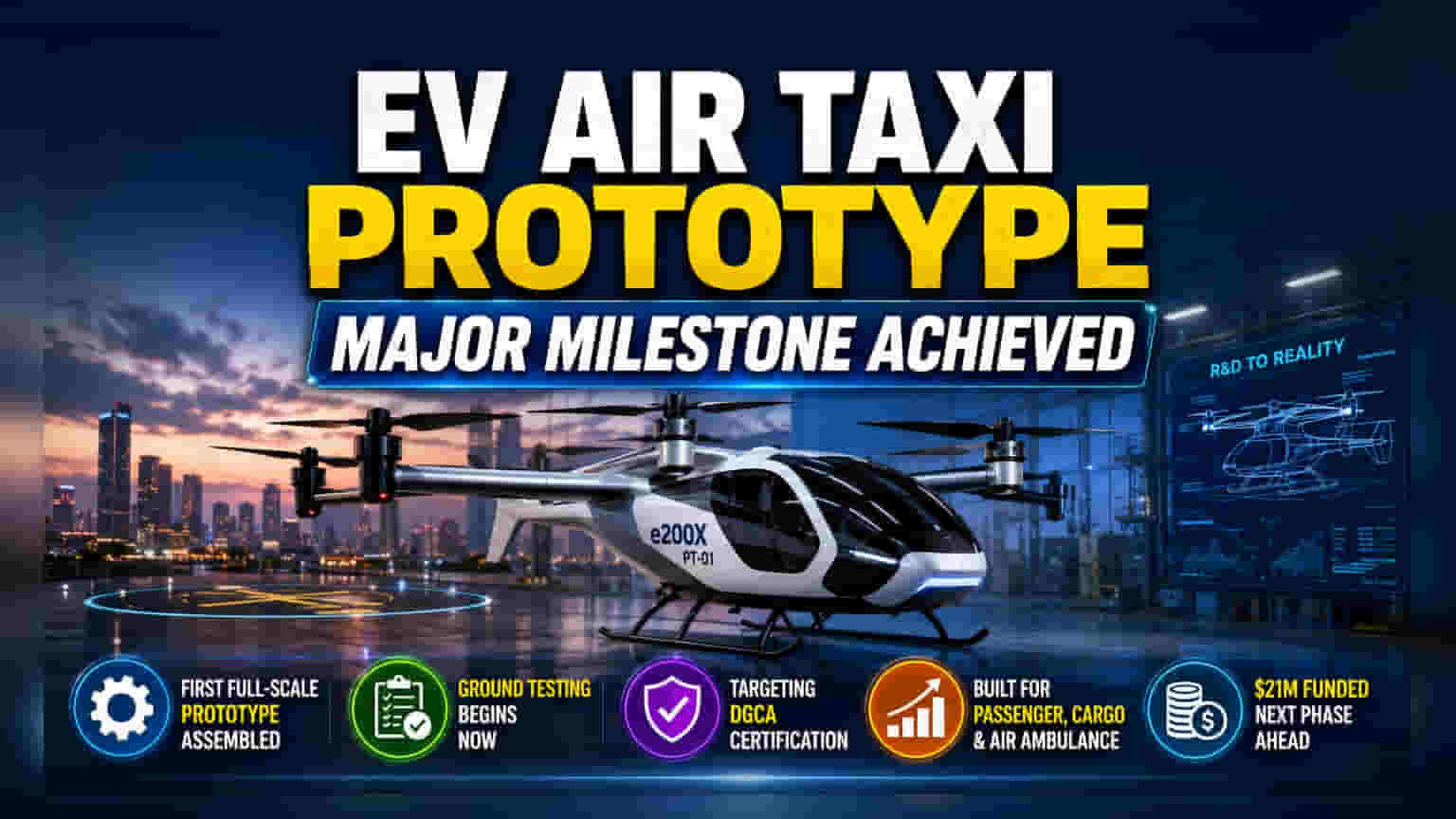
Chennai-based startup The ePlane Company has completed its full-scale e200X electric taxi prototype. The company is now starting ground tests as it prepares to seek aviation safety certification from the DGCA. This milestone moves the project from design to physical testing, though the road to commercial flight remains capital-intensive and subject to strict regulatory oversight.
What Happened
The ePlane Company has hit a significant development milestone by completing the assembly of its first full-scale electric taxi prototype, the e200X (PT-01). The company is now shifting its focus from digital design and simulations to physical ground testing. This phase involves subjecting the aircraft to various mechanical and aerodynamic tests to ensure structural integrity and system performance before any flight attempts are made.
The prototype is designed with versatility in mind, aiming to serve passenger, cargo, and air ambulance applications using a single airframe. The company has stated that the design is compact, intended to fit within existing urban infrastructure rather than requiring cities to build entirely new landing facilities.
The Regulatory Hurdle
For any aviation startup, the biggest barrier is not just building the hardware, but securing official certification. The ePlane Company is aiming for type certification from the Directorate General of Civil Aviation (DGCA), India’s aviation regulator. In the aerospace sector, this is a rigorous, multi-year process. The regulator will require proof of safety, reliability, and airworthiness across hundreds of test hours.
Investors in this space often view regulatory approval as the most critical risk. Unlike software or consumer apps, aviation hardware must meet strict safety standards that evolve as new technologies, like electric vertical takeoff (eVTOL) aircraft, enter the market. The path from prototype to commercial operation involves proving that the aircraft can handle extreme conditions, system failures, and emergency scenarios safely.
Funding and Cash Needs
The ePlane Company has reportedly secured around $21 million in funding. While this is a substantial amount for a startup, developing aircraft is incredibly expensive. Hardware-heavy sectors like aerospace typically require massive amounts of capital for research, testing, facilities, and the long, slow process of certification.
As the company moves from the prototype phase to intensive ground and flight testing, the rate of cash usage—often called "burn rate"—is likely to increase. The company will need to sustain a long development cycle before it can generate revenue from commercial flights. Future progress will depend on the company’s ability to secure additional funding rounds to finance these upcoming, high-cost testing phases.
The Market Reality
The global eVTOL sector is often described as a high-potential but high-risk market. While market research suggests potential for massive growth by 2030, the transition from successful prototypes to fully functional, profitable commercial services is a challenge that many global companies are still facing. The industry faces hurdles such as battery efficiency, range limitations, noise regulations, and air traffic management in crowded urban environments.
Success for The ePlane Company will not only depend on the technology working as expected but also on whether these services can be operated at a cost that makes them a viable alternative to existing ground transport or current aviation services.
What Investors Should Track
For those tracking the progress of the company and the broader sector, the key monitorables include:
- Successful completion of the ground testing phase.
- Timelines for the commencement of flight trials.
- Updates on the engagement process with the DGCA for safety certification.
- Future fundraising rounds, which will indicate investor confidence in the technology and the timeline for commercialization.