

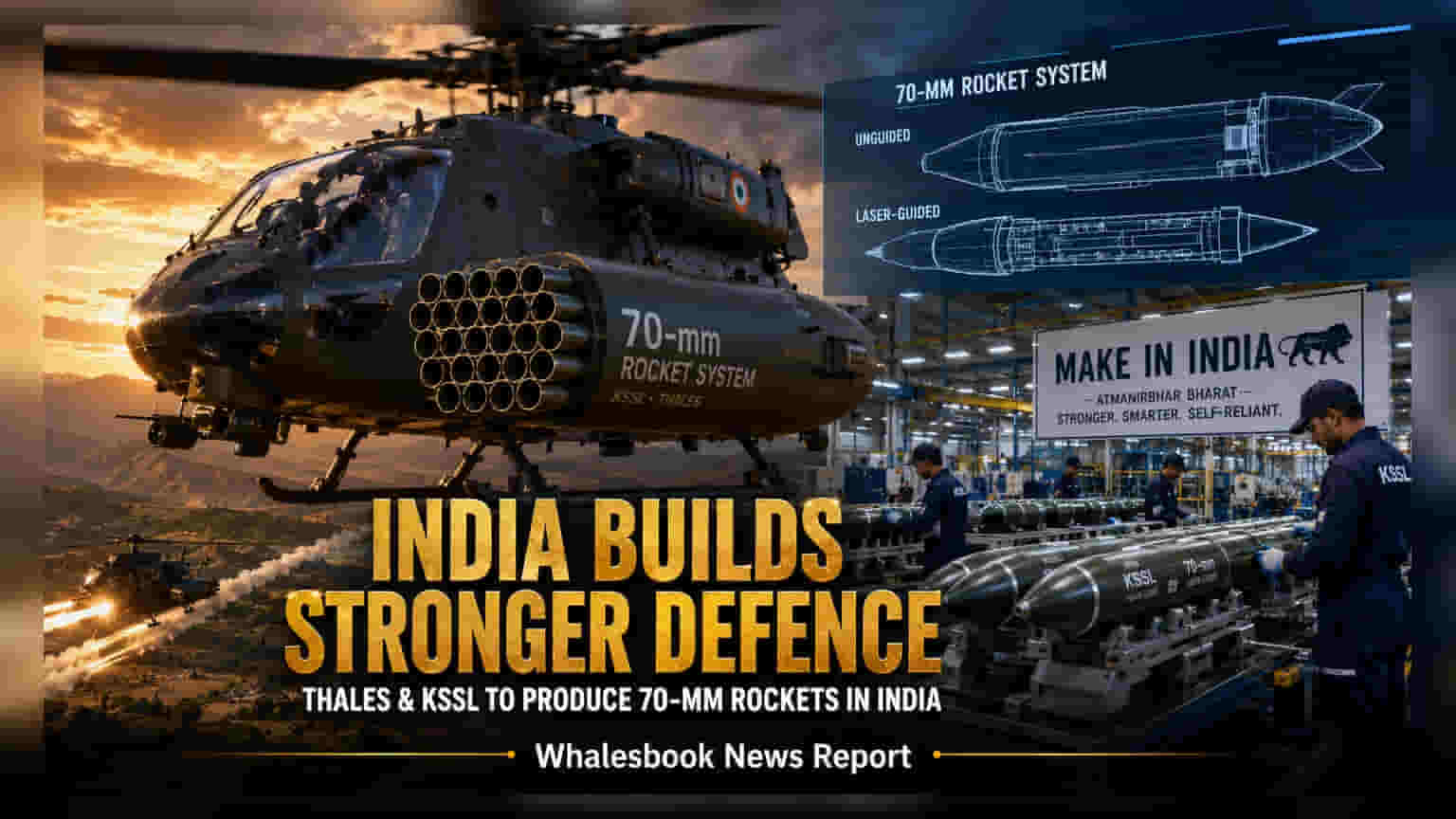
Thales and Kalyani Strategic Systems (KSSL), a subsidiary of Bharat Forge, have partnered to manufacture 70-mm rockets in India. This alliance targets the first indigenously assembled units by early 2027, aiming to support the Indian Armed Forces and boost export capabilities while reducing foreign dependency.
Thales and Kalyani Strategic Systems Limited (KSSL), a wholly-owned defense subsidiary of Bharat Forge, have entered into a strategic alliance to localize the production of 70-mm rocket systems in India. The agreement, signed on September 3, 2026, aims to manufacture both unguided and laser-guided variants of these rockets. This move marks a significant step in the companies' collaboration to indigenize critical defense technology that is currently sourced through international supply chains.
Under the terms of the agreement, KSSL will utilize its domestic manufacturing infrastructure to integrate components from Thales’ qualified suppliers. A central part of this production plan involves KSSL’s facility in Andhra Pradesh, which is being prepared to handle the specialized requirements for rocket system assembly and testing. The companies have set a target for the first fully assembled, India-made 70-mm rocket to be ready by early 2027.
Impact on Defense Manufacturing and Strategy
The initiative is designed to align with the 'Make in India' framework, with a dual focus on meeting the needs of the Indian Armed Forces and expanding into potential export markets. By shifting production to India, the partners aim to create a scalable supply chain for 70-mm rockets, which are currently compatible with several platforms used by the Indian military, including the Advanced Light Helicopter and Light Combat Helicopter. Beyond traditional defense applications, these rocket systems are also being positioned as part of modern counter-drone solutions.
For Bharat Forge, the parent company, this partnership represents a continued effort to strengthen its defense portfolio through KSSL. On the same day as the Thales announcement, KSSL also formalized a separate Memorandum of Understanding (MoU) with FN Herstal for small arms and counter-UAS systems, highlighting an aggressive expansion strategy within the Indian defense sector. These developments are aimed at diversifying KSSL’s order book and reducing reliance on traditional manufacturing segments.
Risks and Execution Factors
While the partnership aims to enhance domestic capabilities, investors and stakeholders should be aware of the inherent challenges in defense manufacturing projects of this scale. The primary monitorable will be the successful transfer of technology from Thales to the Indian facility within the projected timeline. Any delay in regulatory approvals or the complex process of indigenizing high-tech components could impact the 2027 production goal.
Additionally, the success of this venture will depend on the cost-effectiveness of local production compared to global benchmarks, which is critical for competing in export markets. The company will also need to manage supply chain integration carefully to meet international quality standards consistently. Moving forward, the key updates to track will be the progress on facility readiness in Andhra Pradesh, specific contract wins for these rockets, and further details on the technology transfer milestones.