 Whalesbook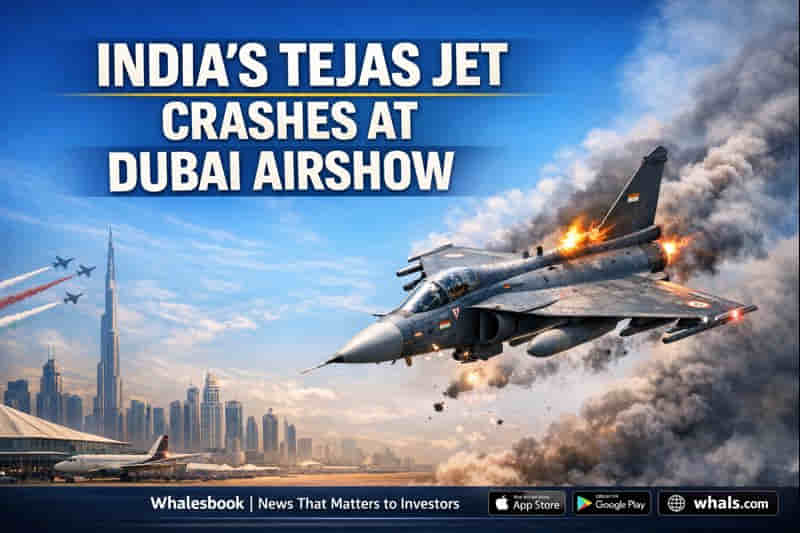
Tejas Jet Crashes at Dubai Airshow, Casting Shadow on India's Export Ambitions
A moment of pride turned into a spectacle of shock on November 21, as a Tejas fighter jet, representing India's advanced defence manufacturing capabilities, crashed during an aerial display at the prestigious Dubai Airshow. The incident, witnessed by a global audience, has sent ripples of concern through the Indian defence sector, raising immediate questions about the safety perceptions and export potential of indigenous military aircraft.
The Core Issue
The crash of the Tejas, manufactured by Hindustan Aeronautics Limited (HAL), a state-owned aerospace and defence company, occurred mid-air, leading to immediate speculation about the reliability of India's flagship fighter jet for potential international buyers. India has been actively promoting the Tejas as a cost-effective and technologically advanced option in the global defence market, aiming to boost its defence export figures significantly. This unfortunate event at such a high-profile international platform could significantly dent those aspirations.
Financial Implications
For Hindustan Aeronautics Limited, a successful export deal for the Tejas would have been a major financial and strategic victory. The company, which has seen increased investor interest due to India's focus on defence indigenization, now faces scrutiny. A tarnished safety record, even from an isolated incident, can deter potential buyers and lead to revised valuations or a slump in investor confidence. Competitor nations might leverage this incident to highlight perceived shortcomings in Indian defence products, potentially impacting HAL's stock performance.
Market Reaction
While the immediate market reaction for HAL, a publicly listed entity, can be inferred to be cautious, such incidents typically trigger concern among investors. Analysts will be closely watching for any official statements from HAL and the Indian government regarding the accident's cause and remedial actions. Any indication of systemic issues could lead to a negative sentiment for the defence manufacturing sector.
Official Statements and Responses
Hindustan Aeronautics Limited was quick to address the incident, stating that the crash was an isolated occurrence. The company emphasized that safety is paramount and assured that a thorough investigation would be conducted to determine the cause. Such rapid official communication is crucial to manage perceptions and reassure stakeholders, including potential international clients and investors.
Future Outlook
India's defence export target is ambitious, aiming to reach substantial figures in the coming years. The Tejas is central to this strategy, alongside other platforms. A single, highly visible incident at an international airshow can have a disproportionate effect on the perception of the entire sector's readiness for global competition. The industry will need to demonstrate robust safety protocols and swift resolution of any technical issues to regain and strengthen international trust.
Impact
- Potential delays or cancellations of export orders for the Tejas fighter jet and other HAL products.
- Temporary dip in investor confidence in Hindustan Aeronautics Limited and the broader Indian defence manufacturing sector.
- Increased scrutiny from international defence agencies regarding the safety and reliability of Indian-made military hardware.
- Possible need for HAL to offer enhanced warranties, after-sales support, or price adjustments to secure deals.
- A setback to India's strategic objective of becoming a significant global defence exporter.
- Impact Rating: 7/10.
Difficult Terms Explained
- Aerial Display: A public exhibition of aircraft maneuvers, often performed at airshows, to showcase their capabilities.
- Export Potential: The capacity or likelihood of a country or company to sell its goods or services to other nations.
- Isolated Occurrence: An event that happens infrequently and is not part of a pattern or connected to other similar incidents.
- Defence Manufacturing: The industrial production of weapons, military vehicles, and other equipment for armed forces.
- Indigenization: The process of developing and producing goods or technologies domestically within a country rather than relying on imports.