

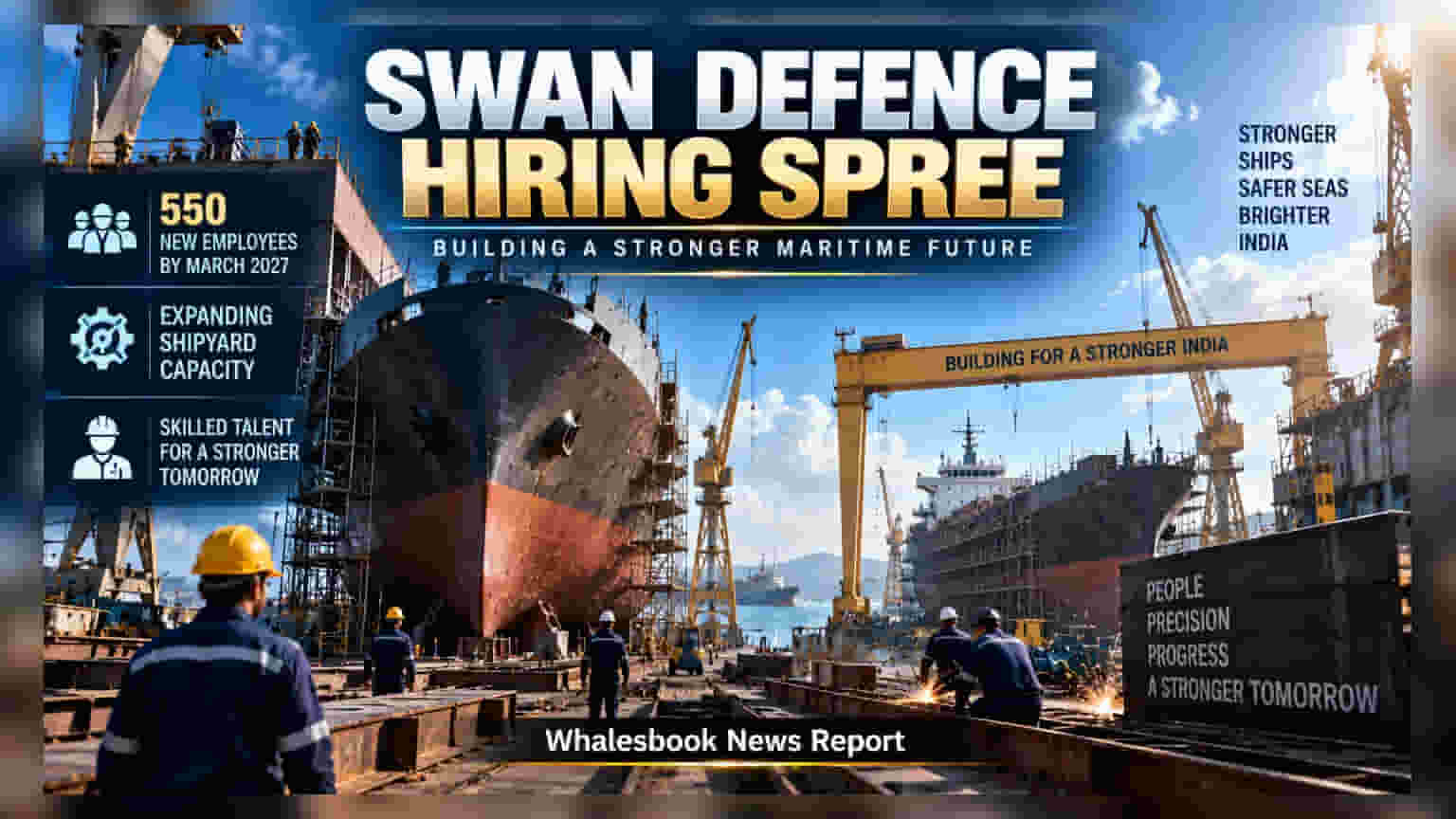
Swan Defence and Heavy Industries aims to recruit 550 new workers by March 2027 to scale its shipbuilding and repair operations. The expansion focuses on specialized roles to boost project delivery capacity, while management estimates the move will create an additional 5,000 indirect jobs within the company’s supply chain.
Swan Defence and Heavy Industries Ltd (SDHI) has announced a plan to add 550 direct employees to its workforce by March 2027. The company is recruiting for a mix of management roles and specialized technical positions to support its ongoing expansion in the maritime shipbuilding and repair sector. This hiring drive is intended to increase the yard’s ability to handle complex maritime projects, which require significant labor expertise in areas like precision welding, pipefitting, and naval design.
Scaling Shipyard Operations
The shipyard is using this recruitment push to better utilize its existing large-scale infrastructure on the west coast of India. The facility includes a dry dock measuring 662 meters by 65 meters, capable of supporting an annual fabrication capacity of 164,000 tonnes. For investors, this move to increase headcount indicates that the company is preparing to ramp up its operational throughput. Shipbuilding is a capital-intensive business, and the ability to execute these large projects on time is a primary factor in maintaining stable profit margins and avoiding penalties for delivery delays.
Addressing Labor and Skill Challenges
To support this growth, the company is continuing to use its SWAVALAMBAN initiative, a program launched last year with academic and government support. This platform focuses on training workers to meet high-precision shipbuilding standards. A common risk in the shipbuilding sector is the shortage of skilled labor, which can often lead to project bottlenecks or cost overruns. By integrating training with shop floor mentorship, the company is attempting to secure a consistent talent pipeline, which is essential to keep projects running as planned.
Strategic and Financial Context
Beyond direct hiring, management estimates that the increased project execution will support approximately 5,000 indirect jobs within the supply chain over the next two to three years. While the expansion aims to strengthen the company’s position in the maritime sector, it also highlights the reliance on external vendors and a complex supply chain network. Investors should track whether the company can effectively integrate this new workforce and if the increased capacity leads to improved order book execution. Future performance will depend on the company's ability to maintain high utilization rates of its facilities while managing the wage and operational costs associated with this expanded workforce. The next important monitorables will be the actual pace of hiring, the speed at which new staff contribute to project delivery, and whether the company secures a steady stream of new orders to justify this capacity expansion.