

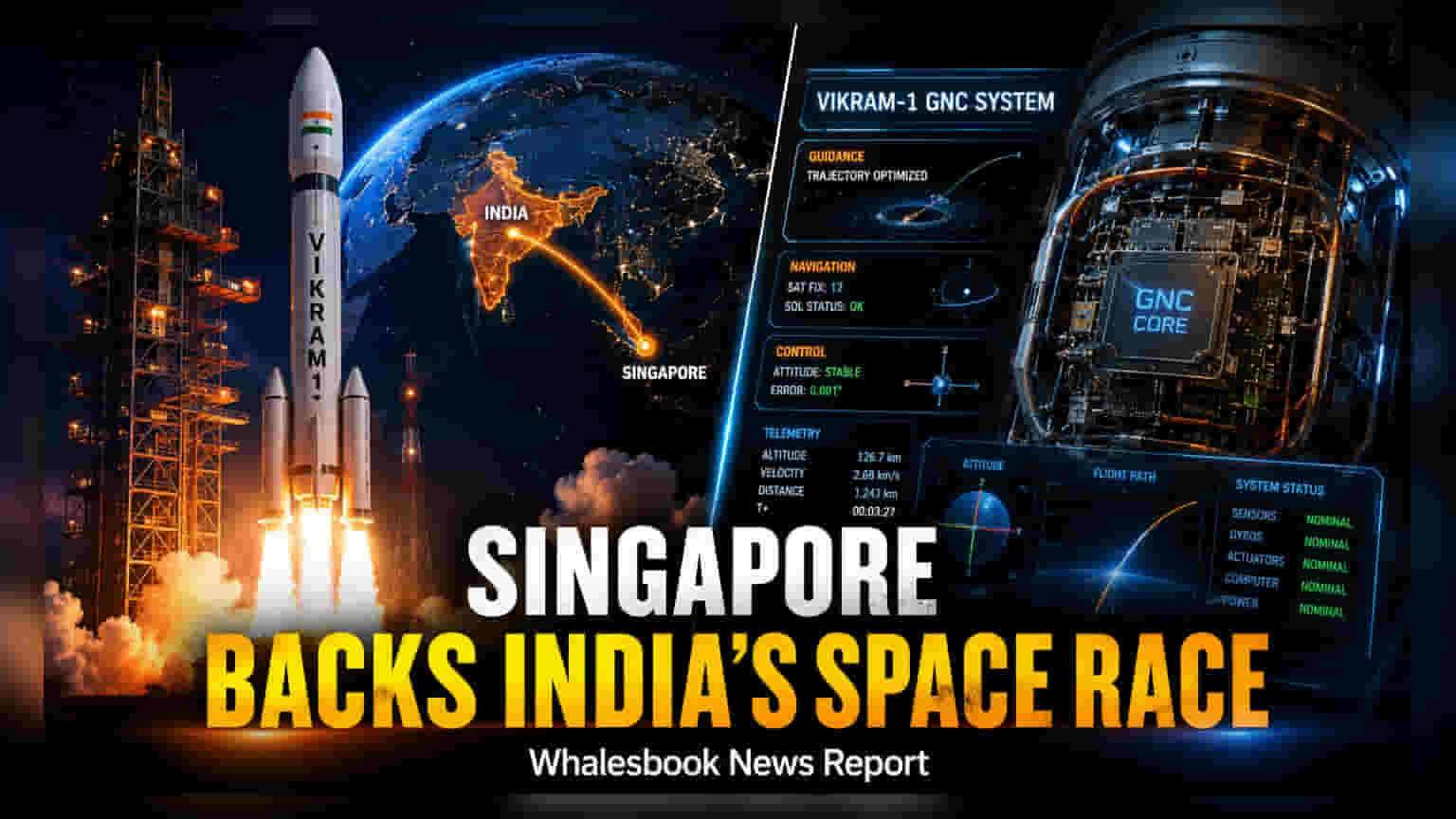
Hyderabad-based Skyroot Aerospace is preparing for the maiden orbital flight of its Vikram-1 rocket on July 18. This mission marks a major milestone for India's private space industry by testing the capability to launch satellites independently. Investors are tracking this launch as a test of the commercial viability of India’s growing private aerospace sector.
Skyroot Aerospace is set to conduct the maiden orbital test flight of its Vikram-1 launch vehicle on July 18 at 11:30 AM from the Satish Dhawan Space Centre in Sriharikota. This mission, officially named Mission Aagaman, represents a significant moment for the Indian private space industry as it seeks to demonstrate the ability to place satellites into orbit independently.
Strategic Backing and Global Interest
The mission has gained international attention, with the Singapore High Commission in India publicly acknowledging the project. The support is partly rooted in financial ties, as Singaporean sovereign wealth funds GIC and Temasek have invested in the company. This institutional backing highlights the growing interest of global investors in India’s commercial space capabilities, which have expanded rapidly following government reforms introduced in 2020.
Technical Capabilities and Mission Design
The Vikram-1 rocket is a 24-meter launch vehicle constructed with a carbon-composite structure, intended to minimize weight while maintaining strength. Its propulsion system consists of three solid-fuel stages paired with a liquid-based orbital adjustment module. The vehicle is engineered to carry payloads weighing up to 350 kg into a 450 km Low Earth Orbit. Among the payloads scheduled for this maiden flight is a lab-grown diamond, known as Diamond Lotus, produced by Bengaluru-based Cosmos Diamonds.
Growth of India's Private Space Sector
The evolution of the domestic space sector is marked by a shift from a limited number of players to a landscape containing over 400 startups. This change is largely attributed to the establishment of the Indian National Space Promotion and Authorization Centre (IN-SPACe) in 2022, which acts as a bridge between the Indian Space Research Organisation (ISRO) and private entities. For the broader industry, the success of Mission Aagaman could prove that private companies can provide reliable and cost-effective launch services, potentially allowing India to secure a larger share of the global small satellite launch market.
Investor Perspective and Future Monitoring
While Skyroot Aerospace is a private company, the success of its mission provides a benchmark for the operational readiness of India’s private aerospace ecosystem. Investors and industry observers will be closely watching the outcome of this launch to assess the reliability of the Vikram-1 technology. Key monitorables for the sector moving forward include the ability of private players to secure sustained commercial orders, manage the costs of recurring launches, and adhere to strict mission timelines as they transition from testing phases to commercial operations.