

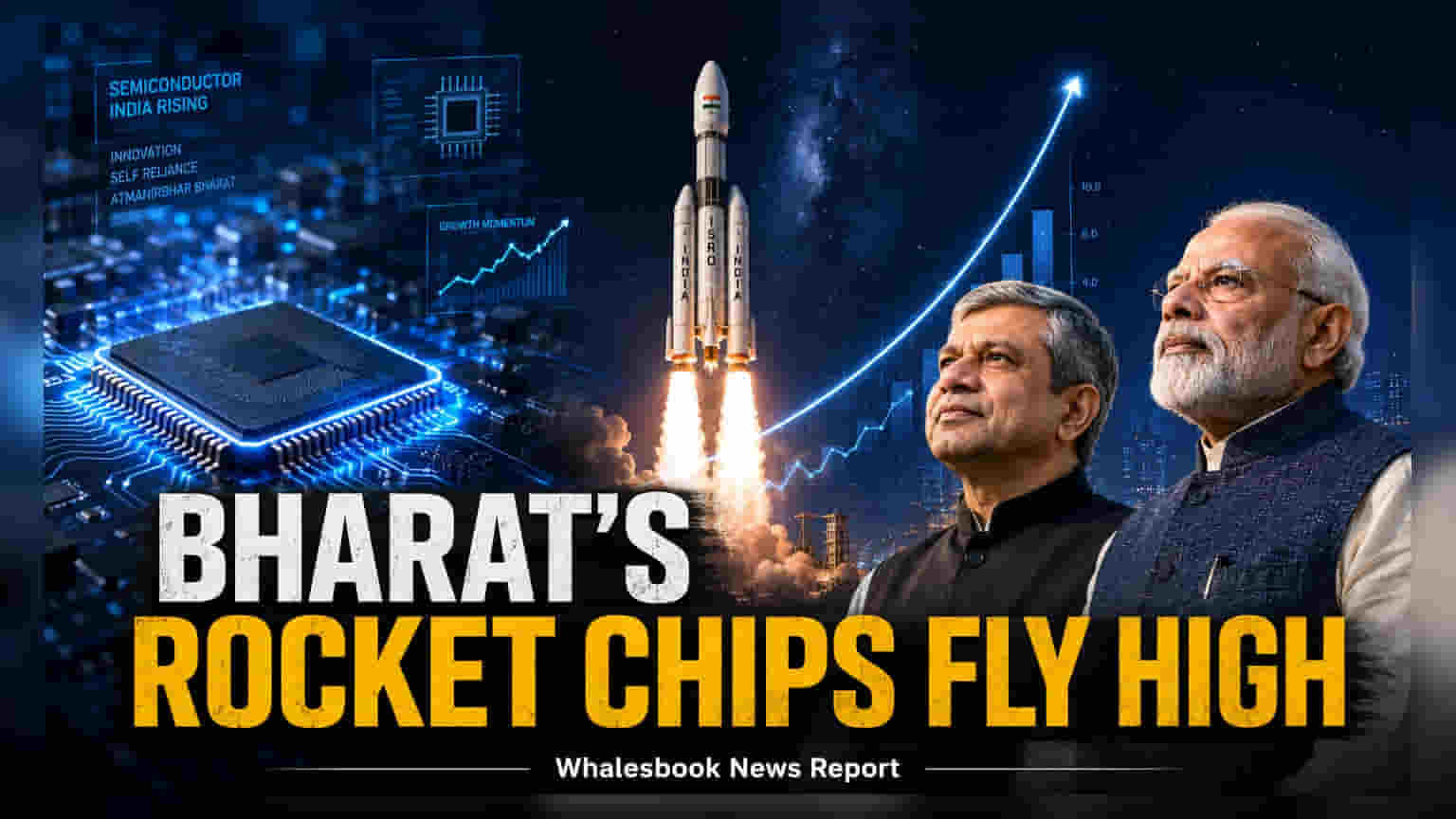
India plans to integrate locally manufactured semiconductors into space launch vehicles, starting with private sector rockets. This initiative aims to strengthen indigenous supply chains in the aerospace industry following the successful orbital flight of Skyroot Aerospace’s Vikram-1 mission.
Detailed Coverage
India’s space technology sector is moving toward deeper self-reliance with a new focus on integrating domestically produced semiconductors into launch vehicles. Union Minister Ashwini Vaishnaw confirmed the push to use 'Made in Bharat' chips, marking a shift from dependency on imported electronic components for space missions.
Skyroot Aerospace and Vikram-1 Milestone
The initiative gained momentum after the successful orbital flight of the Vikram-1 rocket, developed by Hyderabad-based Skyroot Aerospace. This mission was significant as it represented the first orbital-class rocket developed by a private Indian company. Following the mission's success, founders Pawan Chandana and Naga Bharath Daka held discussions with government leadership to align private sector innovation with national manufacturing goals. Prime Minister Narendra Modi acknowledged the achievement, highlighting the role of private startups in expanding India's space capabilities.
Strategic Shift to Indigenous Hardware
For investors and industry observers, the move to include Indian-made chips in rocket technology is part of a broader strategy to lower costs and reduce supply chain risks associated with high-end imported electronics. Currently, the space sector relies heavily on specialized, radiation-hardened chips that are often sourced from international markets. By incentivizing domestic semiconductor manufacturing, the government aims to create a sustainable ecosystem for space-grade hardware.
Skyroot Aerospace has signaled its commitment to this goal, indicating that integrating Indian hardware is a priority for its future rocket development cycles. This alignment between private aerospace startups and the growing domestic semiconductor sector is designed to create competitive advantages for Indian firms in the global satellite launch market.
Key Monitorables for the Sector
While the prospect of using domestic chips is a positive step for indigenous technology, the sector faces inherent execution challenges. Developing space-grade semiconductors requires rigorous testing to ensure they can withstand extreme environments, such as launch vibrations, thermal variations, and radiation in space. Investors may track how quickly these chips move from design to qualification and actual flight deployment. Additionally, the success of this initiative will depend on the scaling of domestic semiconductor fabrication facilities capable of meeting the stringent reliability standards required by the space and defense sectors. Future updates regarding the specific timelines for these chip integrations and the partnerships formed between aerospace startups and semiconductor manufacturers will be critical for assessing the long-term impact on the industry's cost structure and technical independence.